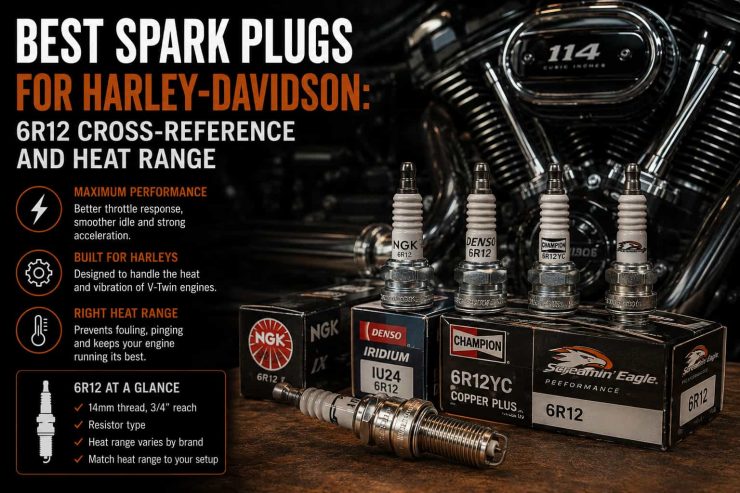
Spark plugs are the cheapest maintenance item on a Harley and one of the few where the aftermarket genuinely improves on what the factory supplies. A set costs less than a tank of fuel and takes twenty minutes to change.
The difficulty is not choosing between good and bad plugs – it is working out which part number your engine actually takes, because Harley uses its own numbering and the aftermarket uses NGK’s. The cross-reference table below solves that.
This guide covers what the Harley part numbers translate to, the real difference between copper, platinum and iridium, why heat range matters more than material, the correct gap, how often to change them, and what a fouled plug is telling you about the rest of the engine.
#1 Pick: Best Spark Plugs for Harley
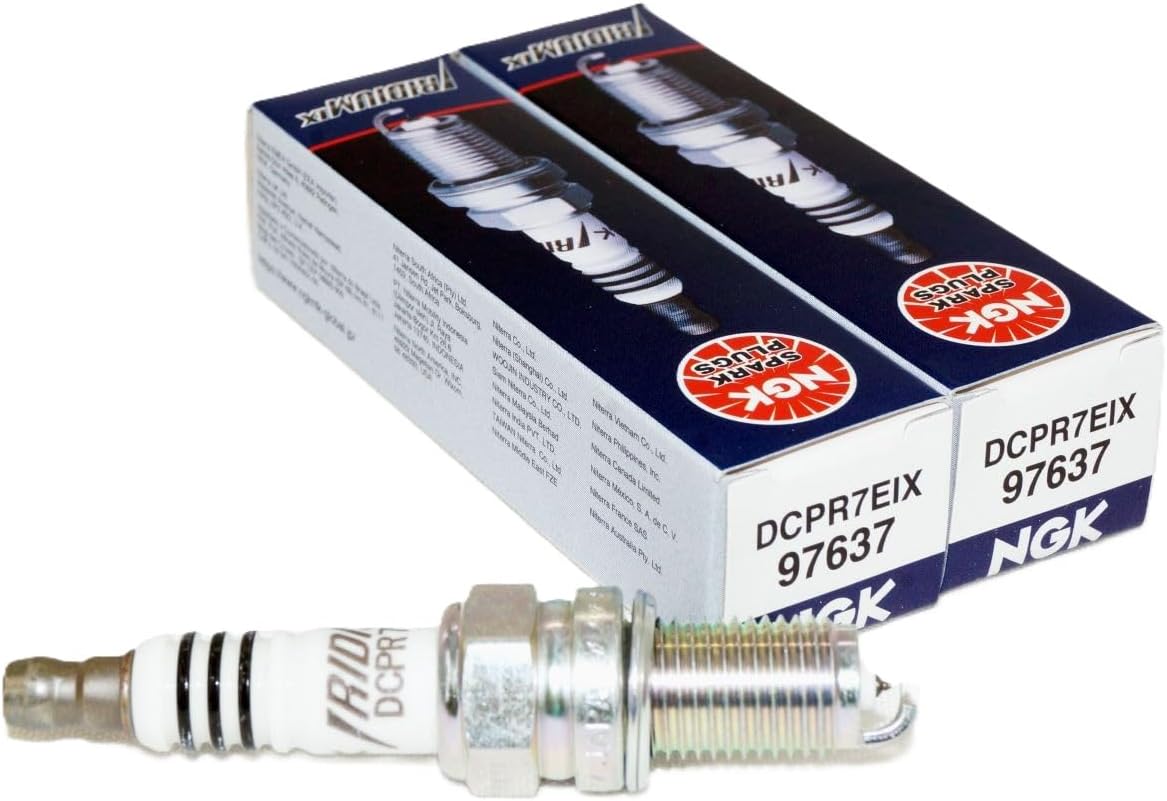
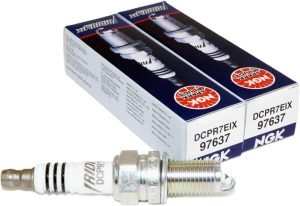
NGK Iridium IX DCPR7EIX Spark Plugs
The DCPR7EIX is the direct iridium cross-reference for Harley’s 6R12 – which covers the whole Twin Cam family, Evolution Big Twins and Evo Sportsters. One part number for most of the fleet, and with nearly 5,000 ratings it is among the most-purchased motorcycle parts on the market.
Riding a Milwaukee-Eight? Different plug entirely – check your manual rather than assuming the 6R12 cross-reference applies. The full cross-reference table is directly below.
The top best product [hide]
Harley Spark Plug Cross-Reference
Harley part numbers do not tell you anything about the plug. NGK’s do. This is the translation most owners are actually looking for.
| Harley part | NGK standard | NGK iridium | Typical application |
|---|---|---|---|
| 6R12 | DCPR7E | DCPR7EIX | Twin Cam 88, 96, 103, 110 and Evolution Big Twin |
| 6R12 | DCPR7E | DCPR7EIX | Evolution Sportster XL883 and XL1200 |
| 10R12A | — | — | Later models – verify against your manual |
The DCPR7EIX is the plug most Harley owners end up buying, and with nearly five thousand ratings on a single listing it is one of the most-purchased motorcycle parts on the market.
A word of caution on Milwaukee-Eight
The M8 uses a different plug from the Twin Cam family, and specifications have changed across model years. Do not assume the 6R12 cross-reference applies. Check the plug currently in the bike or your owner’s manual – it is a two-minute check that prevents an expensive mistake.
Reading an NGK code
The letters and numbers are not arbitrary. In DCPR7EIX: D is the thread diameter, C the hex size, P a projected insulator, R a resistor plug, 7 the heat range, E the thread reach, and IX identifies the iridium construction. The number in the middle is the one that matters most – see the heat range section below.
Copper, Platinum or Iridium?
The material determines the electrode’s durability, not how well the plug sparks. All three ignite fuel perfectly well when new.
Copper (nickel-alloy tip)
The traditional plug and still the cheapest, at around $4 each. Copper conducts heat and electricity better than the alternatives, which means excellent performance when new. The soft electrode wears faster, so the service interval is shorter – typically 10,000 to 15,000 miles on a Harley.
They remain a legitimate choice, particularly on older air-cooled engines and on bikes with performance modifications where you want to read the plugs regularly anyway.
Platinum
A platinum disc welded to the electrode resists erosion far better than nickel. Longer service life than copper at moderate extra cost. A middle option that has largely been squeezed out by iridium on motorcycles.
Iridium
Iridium is extremely hard with a very high melting point, which lets manufacturers make the centre electrode much finer – typically 0.6mm against 2.5mm on a standard plug. A finer electrode needs less voltage to jump the gap, which means a more reliable spark, particularly at low revs and on cold starts.
Service life is roughly double copper. On a Harley, expect 20,000 to 30,000 miles. At around $10 a plug they cost more up front and less per mile.
Which should you buy?
For most riders, iridium. The DCPR7EIX is the standard upgrade, it is what the majority of Harley owners fit, and the longer interval means fewer services. Choose copper if you are diagnosing a running problem and want to read the plugs frequently, if the engine is heavily modified, or if you simply prefer changing cheap plugs often.
What matters more than any of this: buying the correct heat range and setting the correct gap.
Heat Range: The Specification People Get Wrong
Heat range describes how quickly a plug transfers heat away from its tip into the cylinder head. It has nothing to do with how hot the spark is, and getting it wrong causes real damage.
How the numbering works
On NGK plugs, a higher number is a colder plug. This is the opposite of some other manufacturers, and it catches people out. A DCPR8E is colder than a DCPR7E.
Too hot
The tip does not shed heat fast enough and stays above the ideal temperature. In the worst case it becomes an ignition source in its own right, firing the mixture before the spark does. Pre-ignition and detonation destroy pistons.
Too cold
The tip runs below the temperature at which deposits burn off, so carbon accumulates. The plug fouls, misfires and eventually stops firing. Less catastrophic than too hot, but it will strand you.
The practical rule
Use the heat range Harley specifies unless you have made significant engine modifications and a tuner has told you otherwise. Riders sometimes go one step colder after a big-bore build or serious camshafts, because a modified engine generates more heat. On a stock or Stage 1 bike, the standard heat range is correct.
Gap
Most Harley applications specify a gap in the region of 0.038 to 0.043 inches. Iridium plugs often arrive pre-gapped close to specification, but check with a wire gauge before fitting – a plug can be knocked out of tolerance in shipping.
Adjust iridium plugs carefully. The fine centre electrode is fragile and levering against it will snap the tip off, turning a $10 plug into scrap before it ever fires.
Best Spark Plugs for Harley-Davidson
Six options across iridium and copper. Check the heat range and the series on each – a plug that fits physically is not necessarily the right plug.
NGK Iridium IX DCPR7EIX Spark Plugs
Material: iridium. Cross-references to Harley 6R12. Sold as a pair.
Fits: Twin Cam 88, 96, 103 and 110, Evolution Big Twin, and Evolution Sportster XL883 and XL1200.
Rating: 4.7 / 5 from 4,993 ratings
The default upgrade for the overwhelming majority of Harleys on the road, and with nearly five thousand ratings it is one of the most-purchased motorcycle parts anywhere. The DCPR7EIX is the direct iridium cross-reference for Harley’s 6R12, which covers the entire Twin Cam family, Evolution Big Twins and Evo Sportsters – one part number for most of the fleet. Iridium’s advantage is the fine 0.6mm centre electrode against roughly 2.5mm on a standard plug: less voltage is needed to jump the gap, which means a more dependable spark at low revs and on cold mornings, and the hard electrode resists erosion so the service interval roughly doubles to 20,000-30,000 miles. At around $21 a pair it costs more than copper up front and less per mile. Check the gap with a wire gauge before fitting, and adjust carefully – the fine iridium tip snaps if you lever against it.
What owners say: “With HD plugs I’ve always had a little pinging noise on my 2014 tri-glide, so far it seems to be gone. – 2014 Tri Glide”
NGK DCPR7EIX Iridium Spark Plugs, 4-Pack
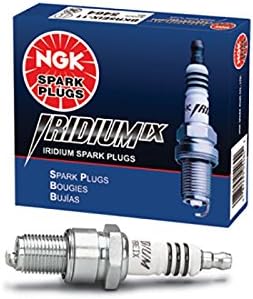
Material: iridium. Same plug as above in a four-pack.
Fits: same applications as the DCPR7EIX pair – Twin Cam, Evo Big Twin, Evo Sportster.
Rating: 5.0 / 5 from 50 ratings
Identical plug to the pair above, supplied four at a time. A Harley twin needs two, so this covers two services or one service across two bikes. At around $40 the per-plug cost is close to the two-pack, so the reason to choose it is convenience rather than saving: having the next set already on the shelf means the job happens when it should rather than when you get around to ordering. The perfect five-star rating comes from a much smaller sample than the main listing, so read it as no complaints rather than as evidence of superiority – it is the same plug from the same manufacturer. Worth noting if you run more than one Harley in the garage.
What owners say: “2008 HD SG 124ci…Fired right up!. – 2008 Harley Street Glide 124ci”
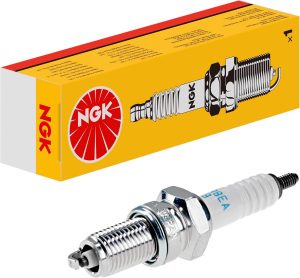
NGK DPR8EA-9 Standard Spark Plug
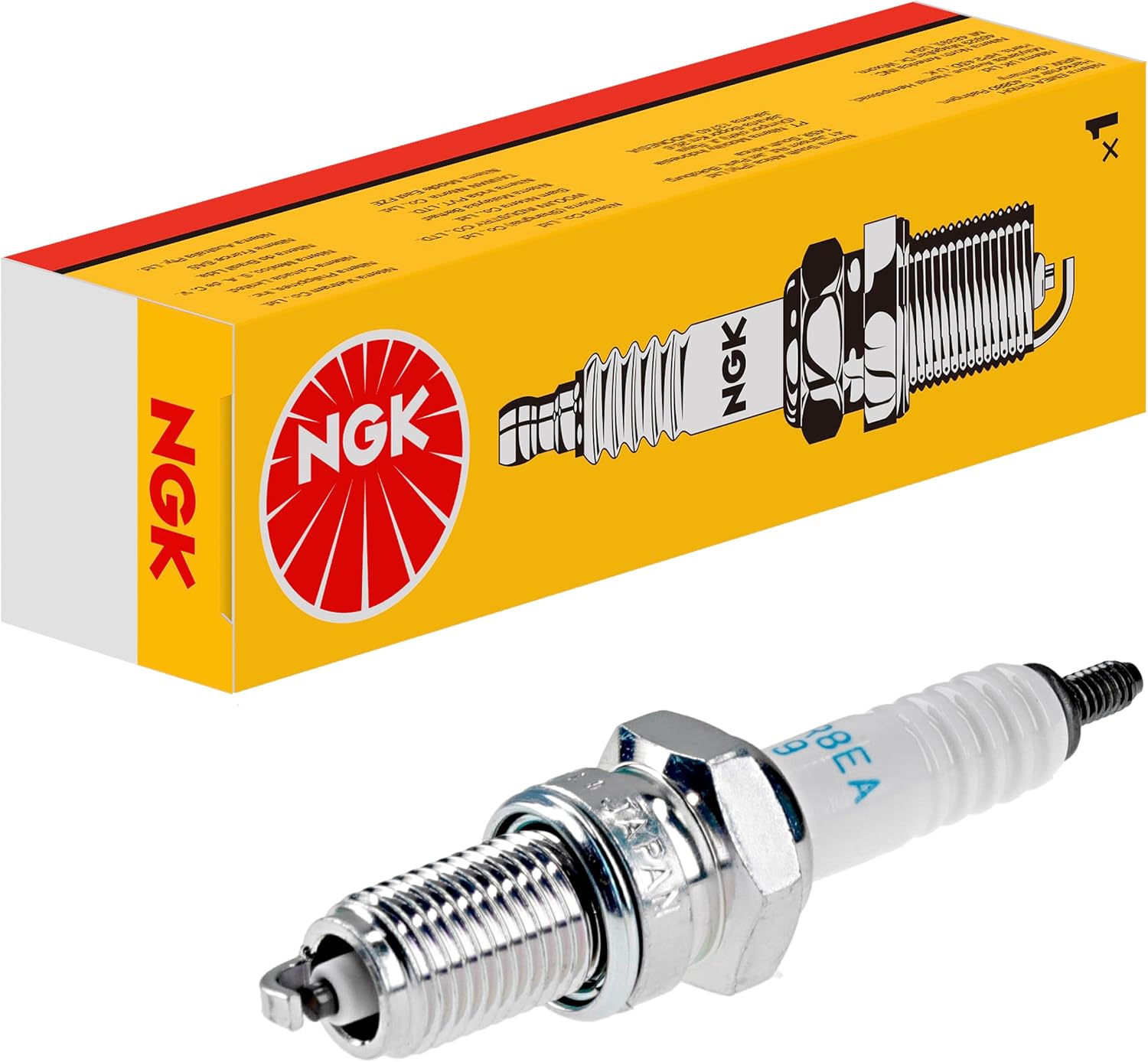
Material: copper / nickel-alloy. Heat range 8 – one step colder than a 7.
Fits: various motorcycle applications. Verify against your model – a colder heat range is not interchangeable with a 7 unless specified.
Rating: 4.6 / 5 from 4,093 ratings
A copper plug with over four thousand ratings, at under $5. Copper conducts heat and electricity better than iridium or platinum, so a new copper plug sparks superbly – the trade is that the soft nickel-alloy electrode erodes faster, giving a 10,000 to 15,000 mile interval rather than 20,000-plus. That shorter interval is exactly why some riders prefer them: pulling plugs regularly is the cheapest engine diagnostic there is, and reading the insulator colour tells you whether the bike is running rich, lean or burning oil. Pay attention to the heat range here. The 8 in DPR8EA-9 makes this a colder plug than a 7, and heat range is not a preference – fitting a colder plug than specified leads to carbon fouling and misfires. Confirm the correct range for your engine before ordering.
What owners say: “Update- July 2015, its been a few years since I have replaced these plugs. Motorcycle still running strong. Great plugs. – Chris Harrell”
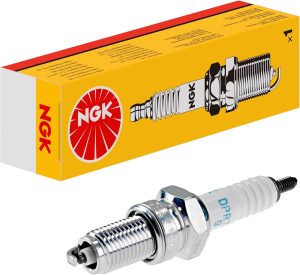
NGK 5129 DPR7EA-9 Standard Spark Plug
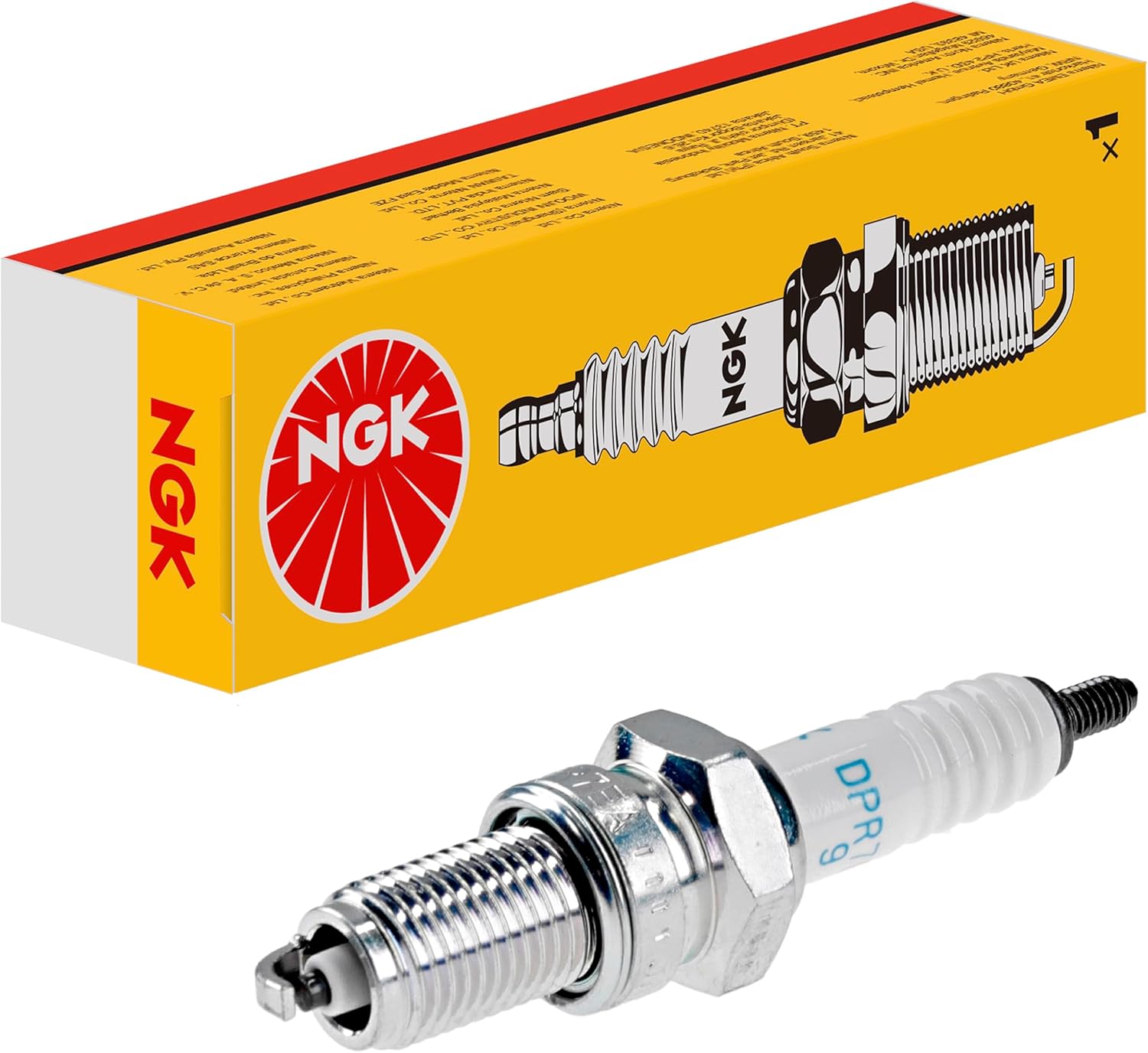
Material: copper / nickel-alloy. Heat range 7.
Fits: numerous motorcycle applications; replaces a long list of OEM part numbers. Check against your engine’s specification.
Rating: 4.8 / 5 from 2,376 ratings
The heat range 7 version of the copper plug above, at around $4.24 and with the highest rating of the standard plugs here across 2,376 reviews. The 7 heat range aligns with what most Harley Big Twin and Evo applications call for, making this the more commonly correct choice of the two copper options – though as always, confirm against your own engine rather than assuming. Everything that applies to copper applies here: superb conductivity when new, a shorter interval than iridium, and the diagnostic advantage of a plug you change often enough to learn from. The listing replaces a long list of OEM numbers across multiple manufacturers, which is normal for a standard plug of this size and reach.
What owners say: “I say no to iridium plugs and yes to $3 NGK DPR7EA-9 Standard Spark Plug any day of the week. – mog703”
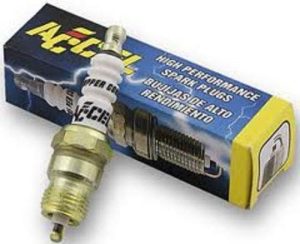
Accel 2418 Spark Plugs, Pair, 6R12 for Harley
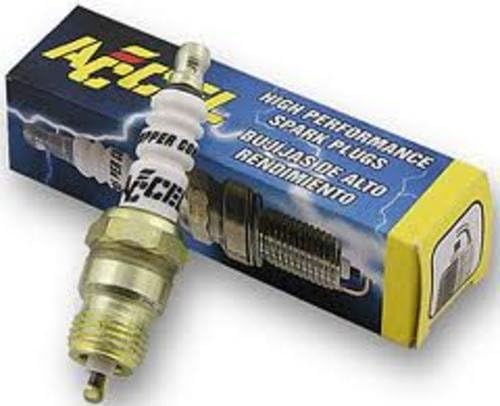
Material: performance plug, sold as a pair. Directly specified as a 6R12 replacement.
Fits: Harley applications calling for 6R12 – Twin Cam, Evo Big Twin, Evo Sportster.
Rating: 4.1 / 5 from 102 ratings
The alternative to NGK for riders who prefer an American performance brand, and one of the few listings in this category that names the Harley part number directly rather than making you cross-reference. Accel has a long history in ignition components and the 2418 is their 6R12 equivalent, sold as a pair at around $24. The 4.1 rating is the lowest of the plugs here, on a much smaller review base than the NGK listings, so the evidence is thinner in both directions – fewer confirmations and fewer complaints. For most riders the DCPR7EIX is the better-evidenced choice at a similar price. Accel makes sense if you are already running their ignition components and want to keep the system on one brand.
What owners say: “These plugs worked great in my Twin Cam Dyna instant upgrade in performance. – Harley Twin Cam Dyna”
When to Replace Harley Spark Plugs
Intervals
- Copper: 10,000 to 15,000 miles
- Iridium: 20,000 to 30,000 miles
- Either: whenever you are chasing a running fault, because a plug is the cheapest thing to eliminate
Symptoms of worn or fouled plugs
- Hard starting, particularly when cold
- Misfire or stumble under load or at steady throttle
- Rough idle that was not there before
- Worse fuel economy
- Hesitation when you open the throttle
Reading a plug – what the colour tells you
This is the diagnostic value of spark plugs and it is why some riders stay on copper. Pull a plug and look at the insulator around the centre electrode:
- Light tan or grey: correct. The engine is running as it should.
- Black and dry, sooty: running rich, or the plug is too cold for the application. Common on bikes with an air cleaner fitted and no tune.
- Black and oily, wet: oil is entering the combustion chamber. Valve guides or rings – a plug will not fix this.
- White or blistered, with erosion: running lean or the plug is too hot. Stop and investigate before you damage a piston.
- Melted or broken electrode: detonation. Something is seriously wrong with fuelling, timing or heat range.
Replace plugs in pairs. Fitting one new plug alongside one worn one produces an uneven engine and tells you nothing useful when you next read them.
How to Change Harley Spark Plugs
Twenty minutes and the simplest job on this website.
- Let the engine cool completely. Removing plugs from a hot aluminium head risks damaging the threads, and on an air-cooled V-twin the head stays hot for a long time.
- Clean around the plug base before removing it. Grit that falls into the cylinder does not come back out.
- Pull the plug wire by the boot, not the cable. Twist gently to break the seal rather than yanking.
- Remove with a proper plug socket – the rubber insert grips the insulator and stops the plug dropping.
- Check the gap on the new plug with a wire gauge. Do not lever against the centre electrode on an iridium plug.
- Anti-seize is optional and easily overdone. Modern plugs have plated threads. If you use it, a trace on the threads only, never on the electrode.
- Start the plug by hand and turn several full rotations before reaching for a tool. If it does not thread freely by hand, stop – you are cross-threading an aluminium head, which is a very expensive mistake.
- Torque to specification. Roughly 12 to 18 ft-lb on most Harley applications; check your manual. Overtightening strips threads, undertightening lets combustion gases past.
- Refit the wires firmly until they click onto the plug.
The mistake that costs money
Cross-threading. Aluminium heads are soft and a plug started at an angle cuts its own path. Always start by hand, and if there is any resistance in the first few turns, back it out and start again.
Spark Plugs by Harley Engine
Evolution Big Twin and Twin Cam 88, 96, 103, 110
The 6R12, cross-referencing to NGK DCPR7E in standard form or DCPR7EIX in iridium. This covers the largest population of Harleys on the road and it is why the DCPR7EIX listing has nearly five thousand reviews.
Evolution Sportster XL883 and XL1200
Shares the 6R12 specification with the Big Twins, so the same DCPR7EIX applies. One of the few parts that crosses between the platforms.
Milwaukee-Eight
Different plug from the Twin Cam family, and specifications vary by model year. Do not carry the 6R12 cross-reference across – check the plug in the bike or the manual.
Revolution and Revolution Max – V-Rod, Pan America, Sportster S
Liquid-cooled engines with their own specifications entirely. Nothing in the Big Twin cross-reference applies.
Shovelhead, Panhead and older
Older engines use different thread reaches and heat ranges, and several use non-resistor plugs. NGK’s BPR series covers many of these applications. Verify against a proper application chart rather than assuming.
Milwaukee-Eight Spark Plugs
This is the question that comes up most often in M8 owner groups, and it deserves a proper answer rather than “check your manual”.
The M8 uses a completely different plug
Milwaukee-Eight engines take a compact 10mm-thread plug from NGK’s CR series – CR9E in standard form and CR9EIX in iridium. That is a different series entirely from the DCPR plugs used across the Twin Cam and Evolution range.
This matters more than it sounds. The DCPR7EIX is the single most-bought Harley plug on the market and the answer for most of the fleet – but it is the wrong plug for an M8, and the thread and reach are not interchangeable. Do not carry the 6R12 cross-reference across to a Milwaukee-Eight.
On the gap
Published figures for M8 disagree. Some sources specify 0.031 to 0.035 inches, others quote the 0.038 to 0.043 range used across the Twin Cam family. That discrepancy is real and it appears in reputable places.
The safe approach: use the figure in your own owner’s manual for your model year, and measure the gap on new plugs before fitting rather than assuming they arrive correct. This is good practice regardless – one owner reports exactly that about a set of iridium plugs, which arrived not pre-gapped.
Aftermarket or Harley branded?
M8 owners ask this constantly, and the answer is the same as for any other Harley engine: a correctly specified NGK is the equivalent part at a lower price. The critical word is correctly specified – for an M8 that means the CR series, not the DCPR series that works on everything else.
Harley Branded and Screamin’ Eagle Plugs
Harley sells plugs under its own part numbers and under the Screamin’ Eagle performance label, and riders reasonably ask whether they are worth the premium.
What they are
Harley does not manufacture spark plugs. Like most OEM consumables, they are made to specification by an established plug manufacturer and sold under the bar and shield. The specification is correct for your engine, which is the point – you cannot buy the wrong one at the parts counter.
What you pay for
Certainty of fitment, and the absence of any argument if the bike is under warranty. Against that, they cost meaningfully more than the equivalent NGK and Harley publishes no performance data to justify the difference.
What owners report
The most useful data point in this guide comes from a 2014 Tri Glide owner who had run Harley-branded plugs and switched to NGK iridium: he describes a persistent light pinging noise with the Harley plugs that disappeared afterwards. One report is not a study, but it is the opposite of what the price difference implies.
The practical position
Under warranty, or if you value the parts counter looking up your VIN and handing you the right box, buy Harley’s. Otherwise the correctly cross-referenced NGK is the same job for a third of the money, and it is what most owners fit.
A warning on counterfeits
NGK is among the most counterfeited automotive brands in existence, and one buyer in this guide’s reviews flags exactly that – a great many listings advertise NGK plugs that are not. Buy from the manufacturer’s own storefront or an established seller, be suspicious of prices well below the norm, and check the packaging and laser etching on arrival. A counterfeit plug with the wrong heat range causes precisely the damage the heat range section above describes.
Harley Spark Plugs - FAQs
What spark plugs does a Harley Davidson use?
What is the NGK equivalent of a Harley 6R12 spark plug?
Are iridium spark plugs worth it on a Harley?
How often should I change Harley spark plugs?
What is the correct spark plug gap for a Harley?
What does heat range mean on a spark plug?
What does a black spark plug mean on a Harley?
Should I use anti-seize on Harley spark plugs?
Can I change spark plugs myself?
Conclusion
For a Twin Cam, an Evo Big Twin or an Evo Sportster, the answer is straightforward: NGK DCPR7EIX iridium, which cross-references directly to Harley’s 6R12. It is what most owners fit, it doubles the service interval over copper, and it costs about $10 a plug.
Choose copper instead if you want to read plugs frequently while diagnosing a running problem, or if the engine is heavily modified.
Whatever you buy: get the heat range right, check the gap before fitting, and start the plug by hand. Those three things matter more than which brand is on the box.
#1 Pick: Best Spark Plugs for Harley
NGK Iridium IX DCPR7EIX Spark Plugs
The DCPR7EIX is the direct iridium cross-reference for Harley’s 6R12 – which covers the whole Twin Cam family, Evolution Big Twins and Evo Sportsters. One part number for most of the fleet, and with nearly 5,000 ratings it is among the most-purchased motorcycle parts on the market.
Riding a Milwaukee-Eight? Different plug entirely – check your manual rather than assuming the 6R12 cross-reference applies. The full cross-reference table is directly below.