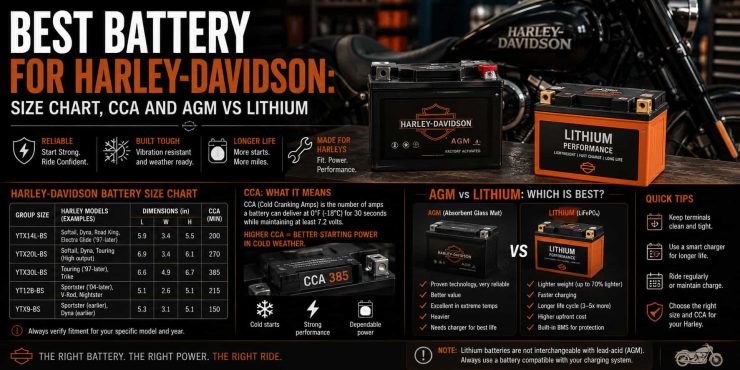
Nine times out of ten, the question is not which brand is best. It is which battery physically fits, and how much cold cranking amperage it needs to turn over a big V-twin on a cold morning.
Get those two right and almost any reputable AGM will serve you for years. Get them wrong and you have either a battery that will not fit the tray or one that spins the starter slowly and dies in its second winter.
The short version: Touring models take a 30-size battery, Softails and Dynas take a 20-size, and Sportsters take a 14L. The full chart with Harley part numbers and cross-references is immediately below.
This guide covers the size chart, how much CCA you actually need, the real difference between AGM and lithium, which battery suits which model, how long one should last, how to replace it, and how to keep it alive through a winter – which is what kills more Harley batteries than anything else.
One tip before you buy anything: the fastest way to be certain of your size is to pull the seat or the side cover and read the label on the battery already in the bike.
#1 Pick: Best Battery for Harley-Davidson
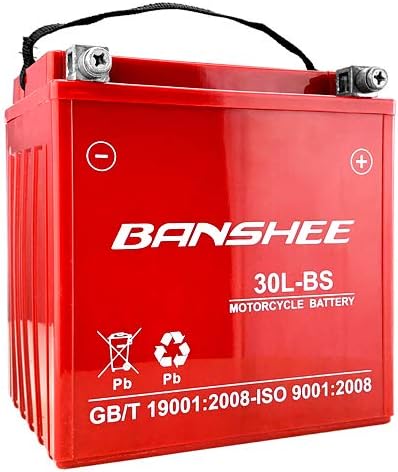
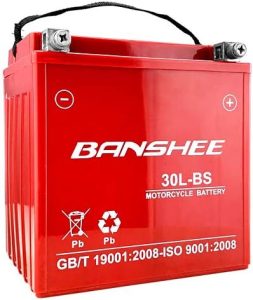
Banshee YTX30L-BS AGM Battery for Harley Touring
For a Touring model this is the safest buy: 500 CCA against the 400 a Big Twin needs, flush terminals matching the factory battery, and the only listing here that publishes a full model-and-year fitment table covering 1997 through 2023.
Riding a Softail or Dyna? You need a 20-size – see the Yuasa further down. Sportster? A 14L. The size chart directly below maps every Harley part number to its aftermarket equivalent, and it is the first thing to check before buying anything.
The top best product [hide]
Harley Battery Size Chart by Model
Harley uses its own part numbers, and the aftermarket uses the JIS/BCI standard. These are the same batteries with different labels, which is why cross-referencing causes so much confusion. This chart maps them.
| Harley part number | Yuasa / JIS size | East Penn Deka | Typical application |
|---|---|---|---|
| 66010-97 / 66000340A | YIX30L / YTX30L-BS | ETX30L | Touring 1997 and later |
| 65989-97 | YTX20HL-BS | ETX20L | Softail and Dyna |
| 65958-04 / 66000345A | YTX14L-BS | ETX14L | Sportster, Street and XR, 2004 and later |
| 65948-00 | YTX14 | ETX14 | V-Rod / Revolution |
| 65989-90 | YB16L-B | ETX16L | Older Softail |
| 65991-82 | YB16-B | ETX16 | Older Sportster |
| 66010-82 | Y50-N18L-A-LM | ETX18L | Older Touring |
Reading the chart
East Penn manufactures Harley’s original equipment batteries, so a Deka ETX number is the closest thing to OEM you can buy without the bar and shield on the case. Yuasa is the dominant powersports battery maker for everyone else, and its JIS numbers – the YTX codes – are what most aftermarket listings quote.
Why the same model can take different batteries
Fitment changes within a model family, sometimes mid-generation. A 2017 Touring and a 2018 Softail are different platforms. Some 2018-2019 Softails with the 1870cc engine accept a GYZ20HL, a YTX20HL-BS or a YTX20L-BS depending on trim.
Treat this chart as a shopping guide, then confirm against the label on your existing battery or your owner’s manual before ordering. On a part where the wrong choice means a return shipment of something classed as hazardous material, thirty seconds of checking is worth it.
How Much CCA Does a Harley Need?
Cold cranking amps measure how much current a battery can deliver for 30 seconds at 0°F while holding usable voltage. It is the number that decides whether your bike starts on a cold morning, and it is the specification people most often get wrong by buying on price.
Rough targets by engine
- Touring, Milwaukee-Eight and Twin Cam Big Twins: 400 CCA minimum, 500-600 preferred. These are large-displacement engines with high compression, and they are the most demanding starters Harley makes.
- Softail and Dyna: 270-310 CCA is standard fitment. More does no harm.
- Sportster: 200-245 CCA. The Evo XL is a smaller, easier engine to turn over.
Why more is usually better – within reason
A battery with headroom is not working as hard on every start, and a battery that is not working hard lasts longer. There is no risk of “too much” CCA harming the bike: the starter draws what it needs and no more. What matters is that the case fits the tray and the terminals are on the correct sides.
What actually kills cranking power
Cold is the obvious one – a battery at freezing delivers a fraction of its rated output. But two other things matter more than riders expect. High compression engines, particularly those with performance cams or a big-bore kit, demand noticeably more current than stock. And a battery that has spent months sitting partially discharged loses capacity permanently, so a three-year-old battery rated at 500 CCA may deliver far less.
If your bike cranks slowly but still starts, that is the warning. It will not improve on its own.
AGM vs Lithium vs Conventional
Three technologies, and the choice matters more on a motorcycle than it does on a car.
AGM (Absorbed Glass Mat)
The default and what your Harley almost certainly came with. The electrolyte is held in glass mat separators rather than sloshing around as free liquid, which means the battery is sealed, can be mounted at an angle, resists vibration and never needs topping up. Most arrive factory activated and ready to install.
Expect 3 to 5 years of service, good cold weather performance and prices from around $50 to $180. For most riders this is simply the right answer, and there is no meaningful argument against it.
Lithium (LiFePO4)
The upgrade with genuine advantages and genuine caveats. A lithium battery of equivalent cranking power weighs roughly a third to a quarter of an AGM – dropping 10 to 15 pounds off a bagger is noticeable. Self-discharge is far lower, so a bike that sits does not flatten the battery as quickly. Many include a built-in battery management system, and some offer a jump-start reserve that holds back a portion of capacity for one emergency start.
The caveats are real:
- Cold performance is worse, not better. Below about 40°F a lithium battery needs a warm-up: cycle the ignition or turn the lights on for thirty seconds before cranking. This surprises people every first cold morning.
- Charging is different. A conventional lead-acid trickle charger can damage lithium. You need a charger with a lithium mode.
- The bike’s charging system matters. Older shunt-type voltage regulators can push voltage high enough that the battery’s protection circuit intervenes – one owner documented the BMS cutting out and voltage spiking to 18 volts. Lithium wants a stable regulator holding under 15 volts.
- Price. Two to three times an AGM.
Conventional flooded lead-acid
Largely obsolete on modern Harleys, still found on older bikes. Cheapest to buy, requires you to check and top up electrolyte, vents gas and can leak if tipped. There is no reason to choose one for a bike that came with AGM.
A note on dry-charged batteries
Some AGM batteries, including certain Yuasa models, ship dry with a separate acid pack. You fill it, let it stand, charge it and seal it before installation. It is not difficult, but it is an hour of work you may not be expecting, and once filled the battery is classed as hazardous material and generally cannot be returned. Check whether a listing says “factory activated” before you buy.
Best AGM Batteries for Harley Touring
The 30-size, for Street Glide, Road Glide, Road King and Electra Glide. Aim for 400 CCA minimum.
Banshee YTX30L-BS AGM Battery for Harley Touring
Fits: Touring FL, FLH, FLT, FLHR and CVO FLH series, 1997-2023. This is the most complete year-by-year fitment list of any battery in this guide.
Specs: 12V, 30Ah, 500 CCA, 22 lbs. Flush terminals matching the Harley original.
Rating: 4.4 / 5 from 403 ratings
The one to buy if you want certainty. Where most listings say “fits select Harley models” and leave you guessing, Banshee publishes the full model-and-year table, and it covers 1997 through 2023 across the Touring range. At 500 CCA it has real headroom over the 400 that a Big Twin needs, and the terminals are flush like the factory battery rather than universal posts that foul the cover. Owners describe it arriving fully charged and dropping straight into the tray without shims – a Road King owner reported it started the bike immediately out of the box. The manufacturer backs it with a four-year warranty, which is longer than most in this category. Be aware of the spread in the reviews: most owners report years of trouble-free service, but there is a minority reporting early failure within weeks. That pattern is universal across motorcycle batteries and usually traces back to a charging system fault rather than the battery, but it is worth knowing before you buy.
What owners say: “Excellent battery. Came fully charged, the bike – Harley Road King – started right up.”
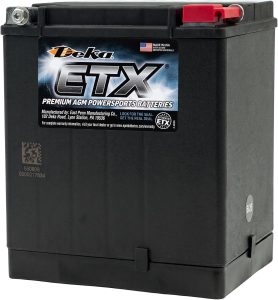
Deka AGM ETX30L PowerSport Battery
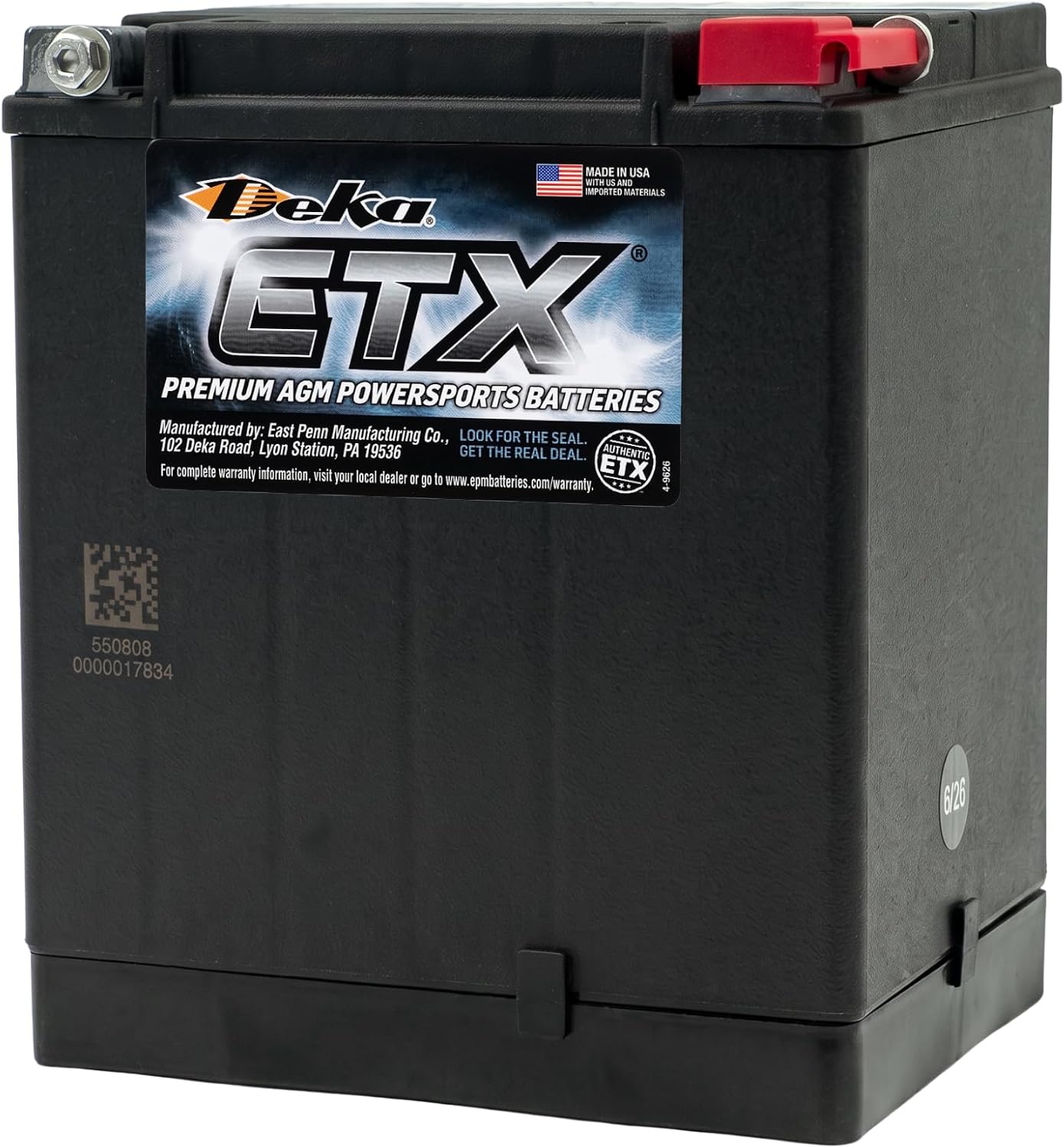
Fits: 30-size applications, listed as fitting select Harley-Davidson models. The listing does not publish a year-by-year table – cross-reference against Harley part 66010-97 or 66000340A.
Specs: 12V, 400 CCA at 0°F, sealed AGM, ships filled and charged.
Rating: 4.6 / 5 from 419 ratings
East Penn manufactures Harley’s original equipment batteries, and Deka is their own brand – which makes an ETX30L about as close to what came out of the factory as you can buy without paying for the bar and shield. The chemistry, the case and the build are the same production line. It arrives filled and charged, so it goes in the bike straight from the box. 400 CCA meets the Touring requirement with a little in reserve. Owners report exact fitment on Touring models, with one measuring more cranking amperage than the rating after an overnight charge. The one weakness of the listing is fitment information: it says “select Harley Davidson motorcycles” and leaves you to work out whether that includes yours. Use the size chart above – if your bike takes a 66010-97, this is the equivalent.
What owners say: “Application was a 2017 Harley FLHTCUTG. Fit perfect. More cranking amps than advertised when I tested it after an overnight charge.”
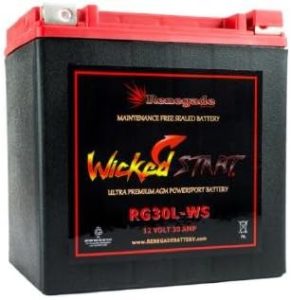
Wicked Start RG30L-WS Battery, 600+ CCA
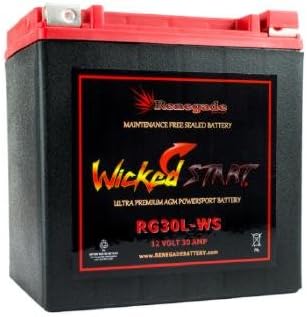
Fits: marketed for the 2013 Street Glide and replaces Harley OEM 66010-97A / 66010-97C. Applies broadly to 30-size Touring applications – confirm against your part number.
Specs: 12V, 600+ CCA, 21.9 lbs, impact-resistant case. Ships fully charged with a test report.
Rating: 4.8 / 5 from 53 ratings
The highest cold cranking rating in this guide and the highest customer rating, though on a much smaller sample than the others. 600-plus CCA is well beyond what a Touring model needs, and that headroom is the point: a battery that is not straining on every start runs cooler and lasts longer, and on a cold morning or a high-compression engine the difference is obvious. It ships fully charged and tested, with an analysis report in the box – an unusual touch that suggests they check units before shipping rather than after complaints. The case is built for vibration resistance. Owners on Street Glides report it cranking noticeably faster than the OEM battery. One long-term review documents four years of service since 2021 and still going, with the owner crediting a battery tender for the longevity – which is the honest story for any battery.
What owners say: “Perfect fit for 2013 Street Glide. Cranks a lot faster than OEM.”
Best Batteries for Softail and Dyna
The 20-size, typically 270 to 310 CCA.
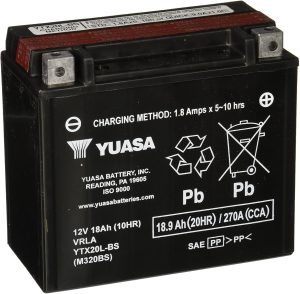
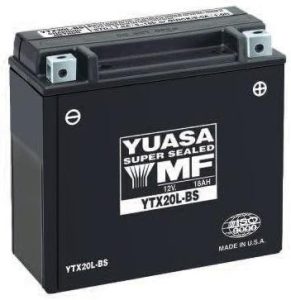
Yuasa YUAM320BS YTX20L-BS AGM Battery
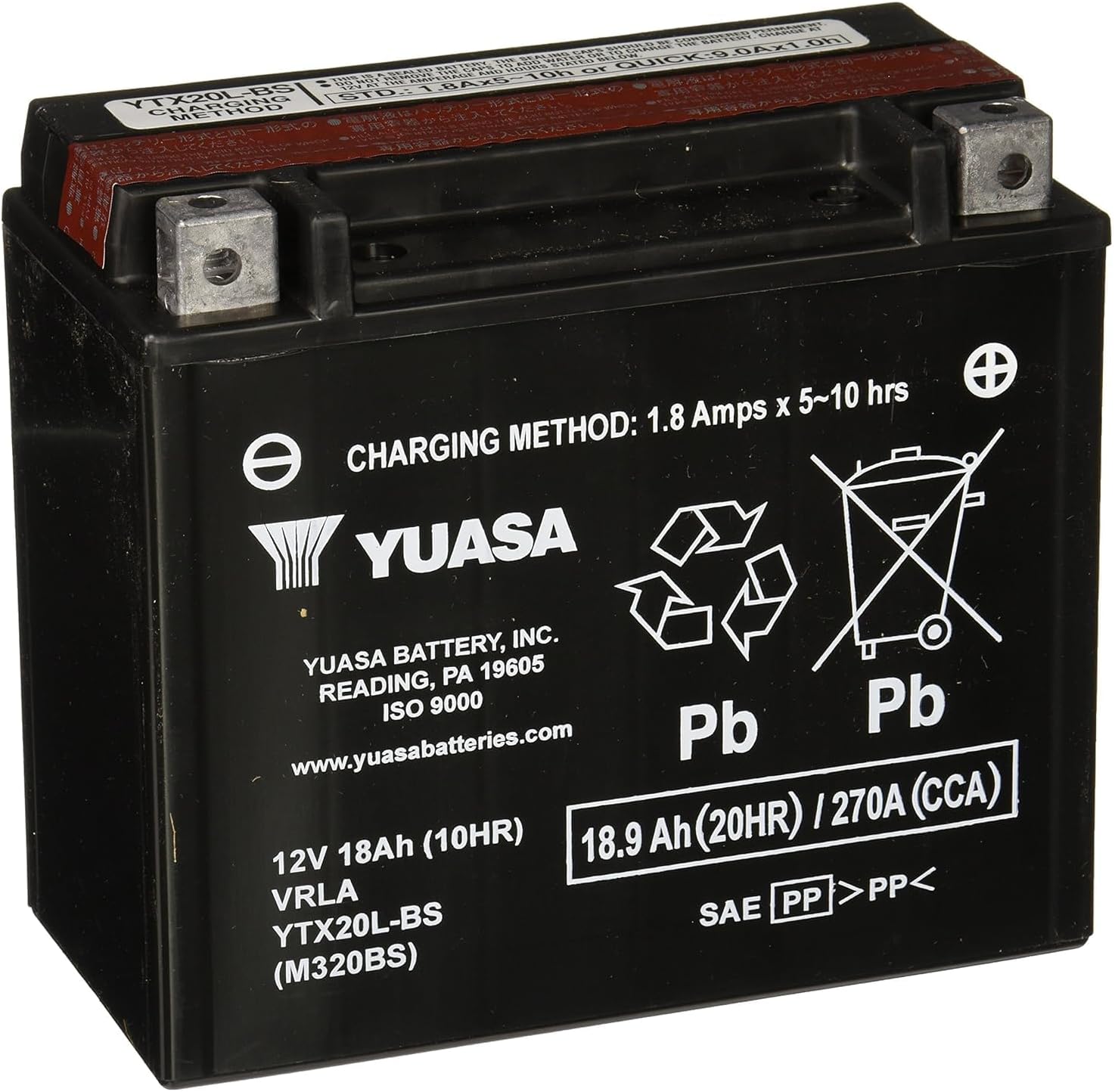
Fits: extensive published OEM list including CVO FLST Softail 2007-2015 and CVO FXD Dyna 2007-2015, plus a wide range of Softail and Dyna applications.
Specs: 12V, 18Ah at 10HR, 270 CCA at 0°F, 13.9 lbs filled. Dry-charged – acid pack supplied separately.
Rating: 4.3 / 5 from 2,988 ratings
Yuasa is the dominant powersports battery manufacturer and the YTX20L-BS is the standard 20-size fitment for Softails and Dynas. With nearly 3,000 ratings it is the most-reviewed battery here, and the listing publishes a proper OEM application list rather than a vague fitment claim. 270 CCA is the correct specification for these engines. The important thing to know before you order: this is a dry-charged battery. The acid comes in a separate bottle, you fill it yourself, let it stand, charge it and seal it before installation. It is genuinely straightforward and owners describe it as easy, but it is an hour of preparation you may not be expecting, and once filled the battery is classed as hazardous material and cannot be returned. If you want to fit a battery straight from the box, choose a factory-activated option instead.
What owners say: “You have to install the acid in it but it’s super easy. Then wait a couple of hours before charging.”
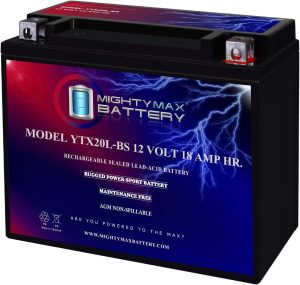
Mighty Max YTX20L-BS Battery
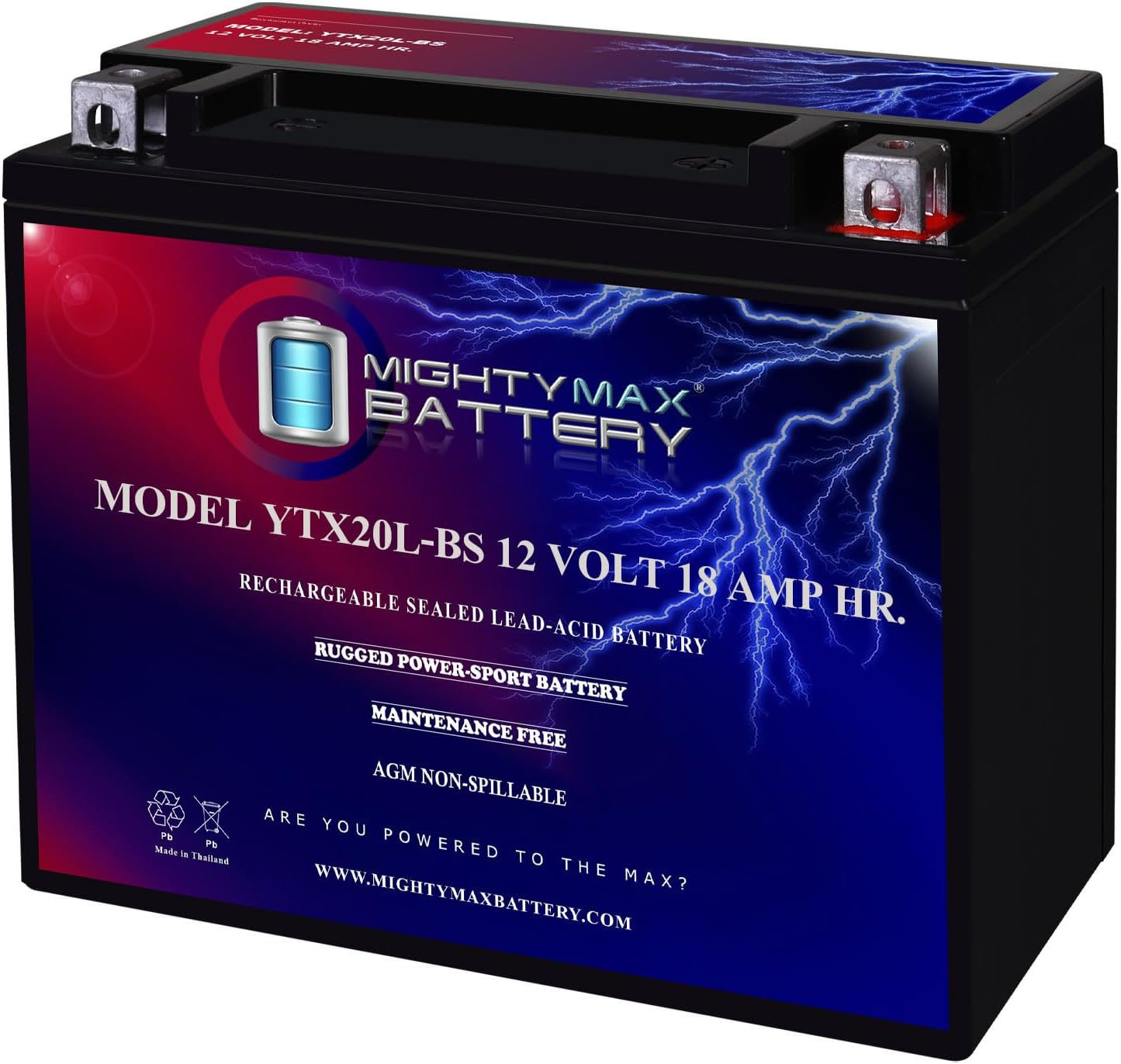
Fits: the listing names one application only – Harley 1200 XL and XLH Sportster 1997-2003. It is a standard YTX20L-BS, so it suits 20-size applications generally, but the manufacturer publishes no wider list.
Specs: 12V, 18Ah, 270 CCA, 14 lbs. Factory activated – ships charged and ready.
Rating: 4.6 / 5 from 39 ratings
The budget option in the 20-size, at roughly half the price of the Yuasa and factory activated so it goes straight in with no acid pack and no waiting. 270 CCA matches the standard specification. It carries the highest rating in this section, though on only 39 reviews, and repeat buyers describe it as consistent quality across several purchases. Two honest caveats. The warranty is one year, the shortest of any battery here, which tells you something about how the manufacturer prices risk. And at least one owner reports the case not being an exact fit – close enough to work with a little persuasion, but not the drop-in precision of an OEM-equivalent. For a bike that is not your only transport, or where you would rather replace cheaply every few years than pay once, it is a reasonable trade.
What owners say: “Third Mighty Max battery I’ve bought, they are a good quality battery. This one went into a Harley Davidson. Works great!”
Best Batteries for Sportster
The 14L size, around 200 to 245 CCA. The easiest battery on any Harley to change – it sits behind the left side cover.
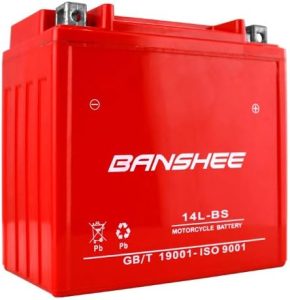
Banshee YTX14L-BS Battery for Harley Sportster
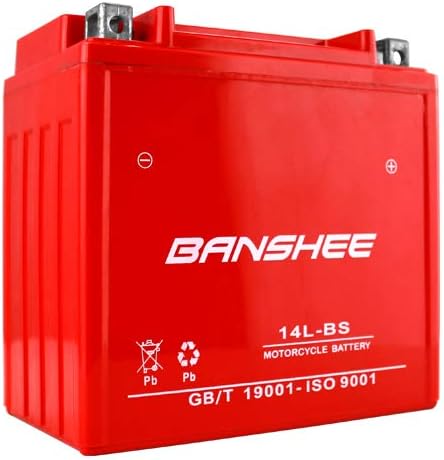
Fits: Harley XL and XLH Sportster 1200cc 2004-2019. Other Sportster variants – 883, Iron, 48, 72, XR and Street – are listed without year ranges.
Specs: 12V, 14Ah, 245 CCA. Four year manufacturer warranty.
Rating: 4.3 / 5 from 130 ratings
The strongest all-round choice for a Sportster: 245 CCA is above the standard 200 for the platform, the price sits in the middle of the field, and the four-year warranty is double what most competitors offer – which is the single most-mentioned reason owners choose it. A 2008 Sportster 1200 owner describes it turning the engine over strongly with the size being exactly right. One specific thing to know, and it is the kind of detail that ruins an afternoon if you discover it with the side cover off: the terminals are universal posts rather than the flush terminals Harley uses. Several owners recommend terminal spacers to get everything seated correctly. There is also a contradiction on the page itself – Amazon’s own review summary states it is not compatible with Sportster 1200 models while the product title says exactly the opposite. Check your terminal layout before ordering.
What owners say: “This is a great battery and it turns over my 2008 HD Sportster 1200 strongly. The size is just right.”
Yuasa YUAM3RH4L YTX14L-BS Battery
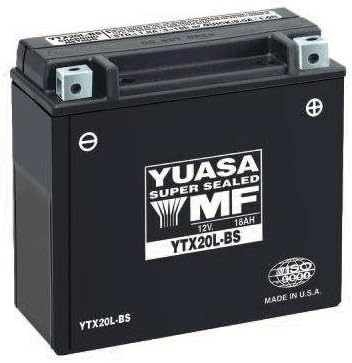
Fits: the listing does not name Harley anywhere – not in the title, the bullets or the description. It is the correct YTX14L-BS size for Sportster, Street and XR from 2004, and owners confirm use on Sportsters from 2005 to 2021, but you are matching on size rather than a published table.
Specs: 12V, 12Ah at 10HR, 200 CCA at 0°F, 10.1 lbs filled. Dry-charged with acid pack.
Rating: 4.3 / 5 from 344 ratings
The Yuasa name carries weight in this category and the 14L is the standard Sportster size, but this particular listing demands some care. There is no Harley fitment information on the page at all – you are buying on the size code and cross-referencing yourself against Harley part 65958-04 or 66000345A. Owners confirm it works on Sportsters across a wide year range. Like the 20-size Yuasa, it ships dry with a separate acid pack that you fill, charge and seal before installation, and once filled it becomes hazardous material and non-returnable. Service life reports are genuinely polarised – Amazon’s own summary notes owners reporting five or six years alongside owners reporting months. That spread across a large sample usually indicates the difference between bikes that live on a maintainer and bikes that do not.
What owners say: “I bought this battery as a replacement for my 2009 Harley Sportster Custom.”
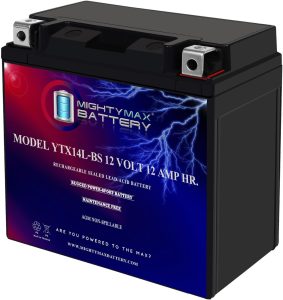
Mighty Max YTX14L-BS Battery
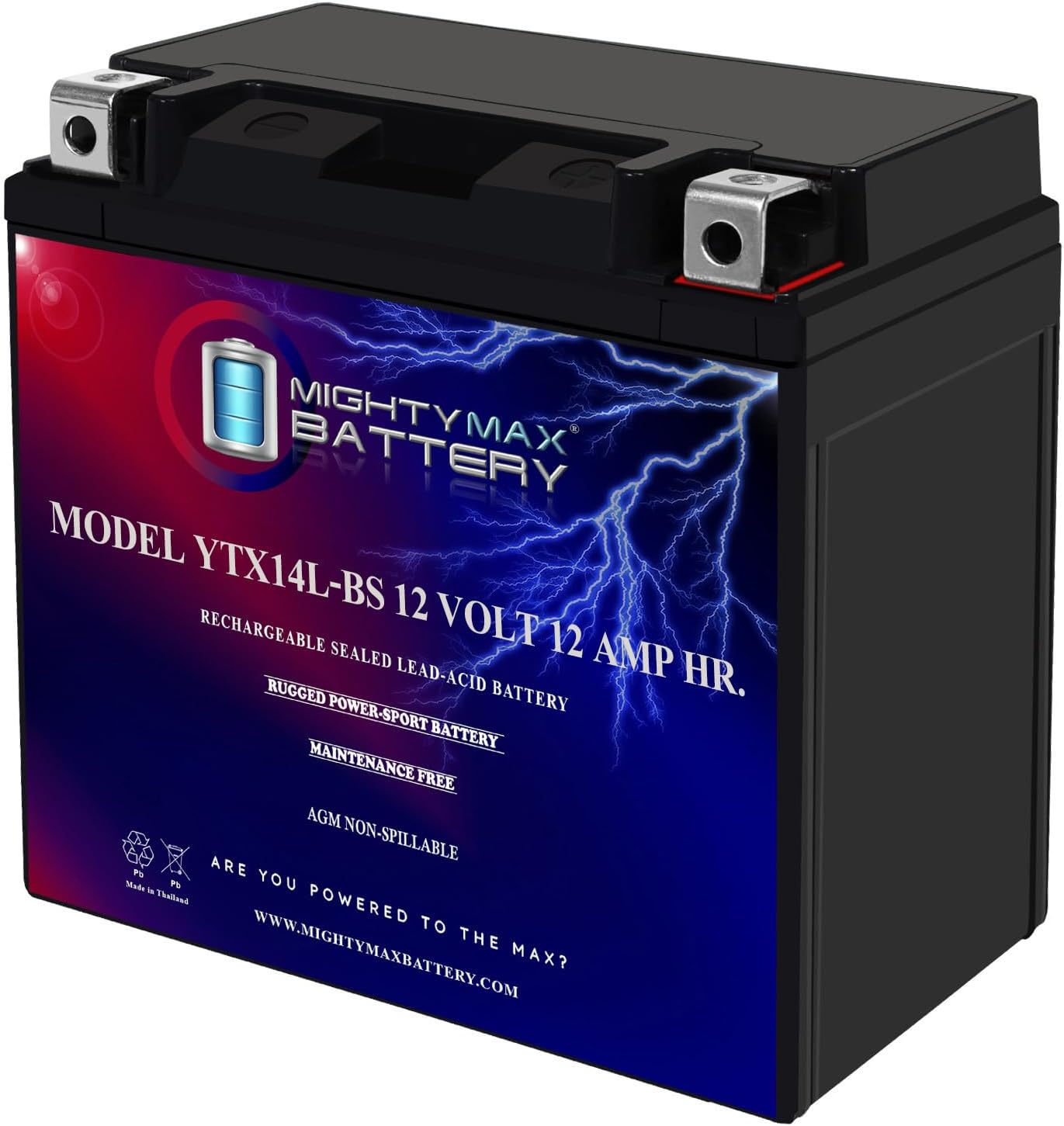
Fits: the title names one application – Harley 883cc XL, XLH Sportster 2005. It is a standard YTX14L-BS, and owners report fitting it to Sportsters from 2005 through 2020, but no wider list is published.
Specs: 12V, 12Ah, 200 CCA, 10 lbs. Factory activated. One year warranty.
Rating: 4.2 / 5 from 195 ratings
The lowest price in the guide and factory activated, so it fits straight out of the box with no acid pack. 200 CCA is the standard specification for a Sportster and owners report it dropping in with no modification. If you want a battery in the bike this weekend for the least money, this is it. The trade-off is service life, and the reviews are clear about it. The one-year warranty is the shortest here, and Amazon’s own summary flags battery life as the recurring complaint, with owners reporting failures within months alongside others reporting normal service. At $44 the maths still works for some riders – three cheap batteries over six years costs about the same as one premium one – but if the bike is your daily transport and being stranded matters, spend the extra on something with a four-year warranty behind it.
What owners say: “Works great for my bike, 2005 Harley Davidson 1200C. Very easy to install.”
Best Lithium Batteries for Harley
Lighter by a large margin and slower to self-discharge, but they need a lithium-capable charger and a warm-up before cranking in cold weather.
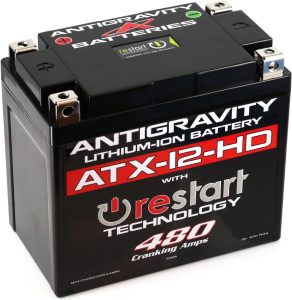
Antigravity ATX12-HD Lithium Battery
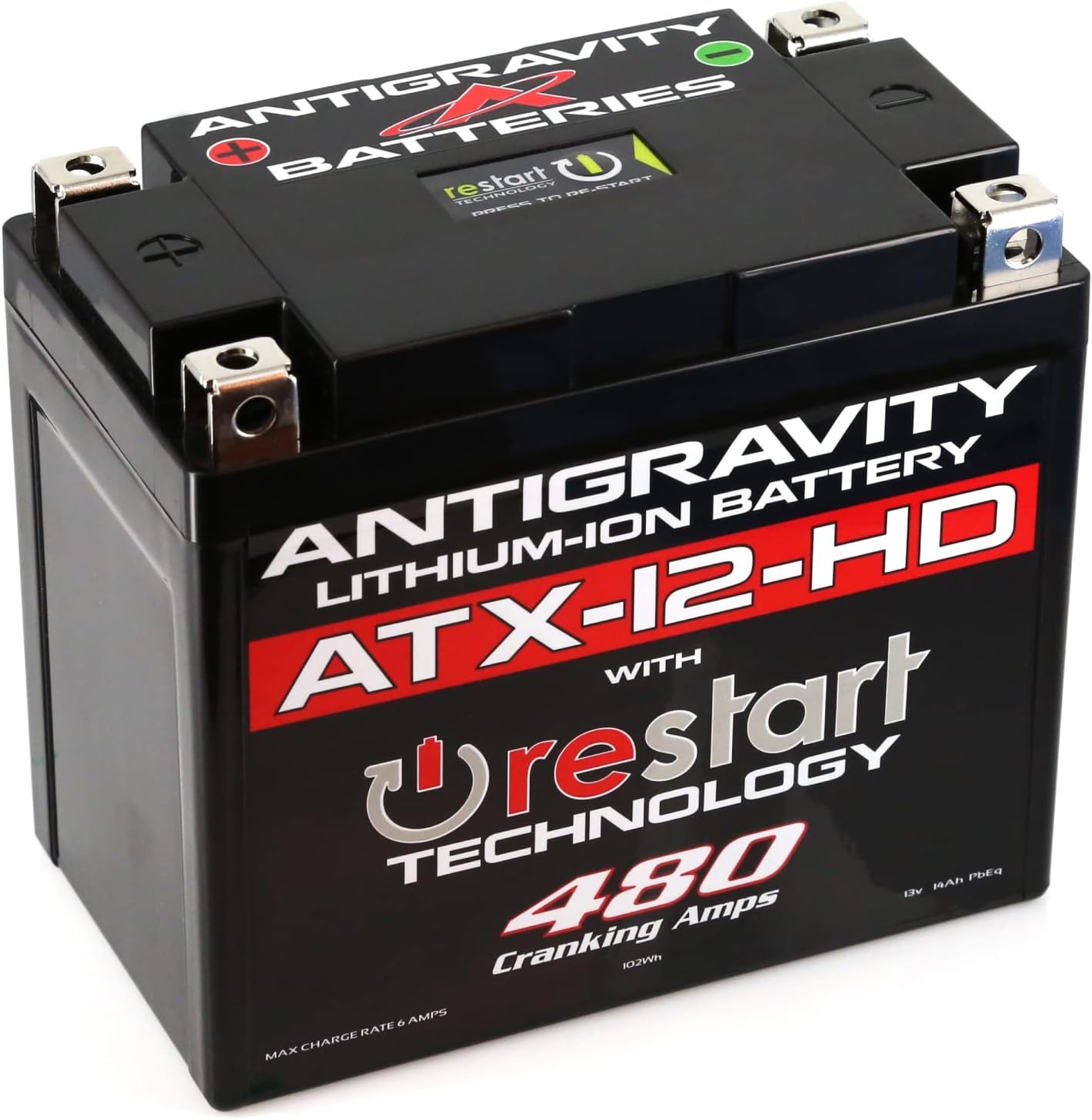
Fits: listed by brand rather than model – Harley-Davidson, Indian, Victory, Triumph and others. Replaces YTX12, YTX14 and YTX16 applications. No year-by-year table.
Specs: 12.8V, 16Ah lead-equivalent (8Ah actual), 480 cranking amps, 3 lbs.
Rating: 4.4 / 5 from 376 ratings
The heavy-duty version of Antigravity’s ATX12, and the lithium option with the strongest track record here. 480 cranking amps from a battery weighing three pounds – against roughly fourteen for the AGM it replaces – which is the entire argument for lithium in one sentence. On a bagger that is meaningful weight removed from high on the bike. The best documented owner report is three years on a Pan America with no maintainer and no trouble, after the same rider had gone through two Harley batteries and multiple shop visits. There is a counter-example of sudden failure in the reviews, which is worth weighing. Two practical notes for Harley owners. The terminals sit recessed roughly a quarter inch compared with the OEM battery where they are flush, so you may need spacers. And lithium needs a charger with a lithium mode – a conventional maintainer can damage it.
What owners say: “I bought this battery originally in October 2022 for HD Pan America, after two new HD batteries and multiple shop visits.”
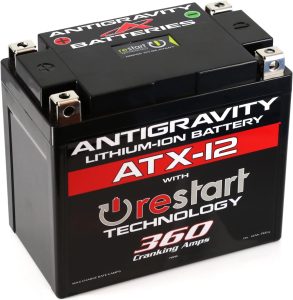
Antigravity ATX12 Lithium with Jump Starting
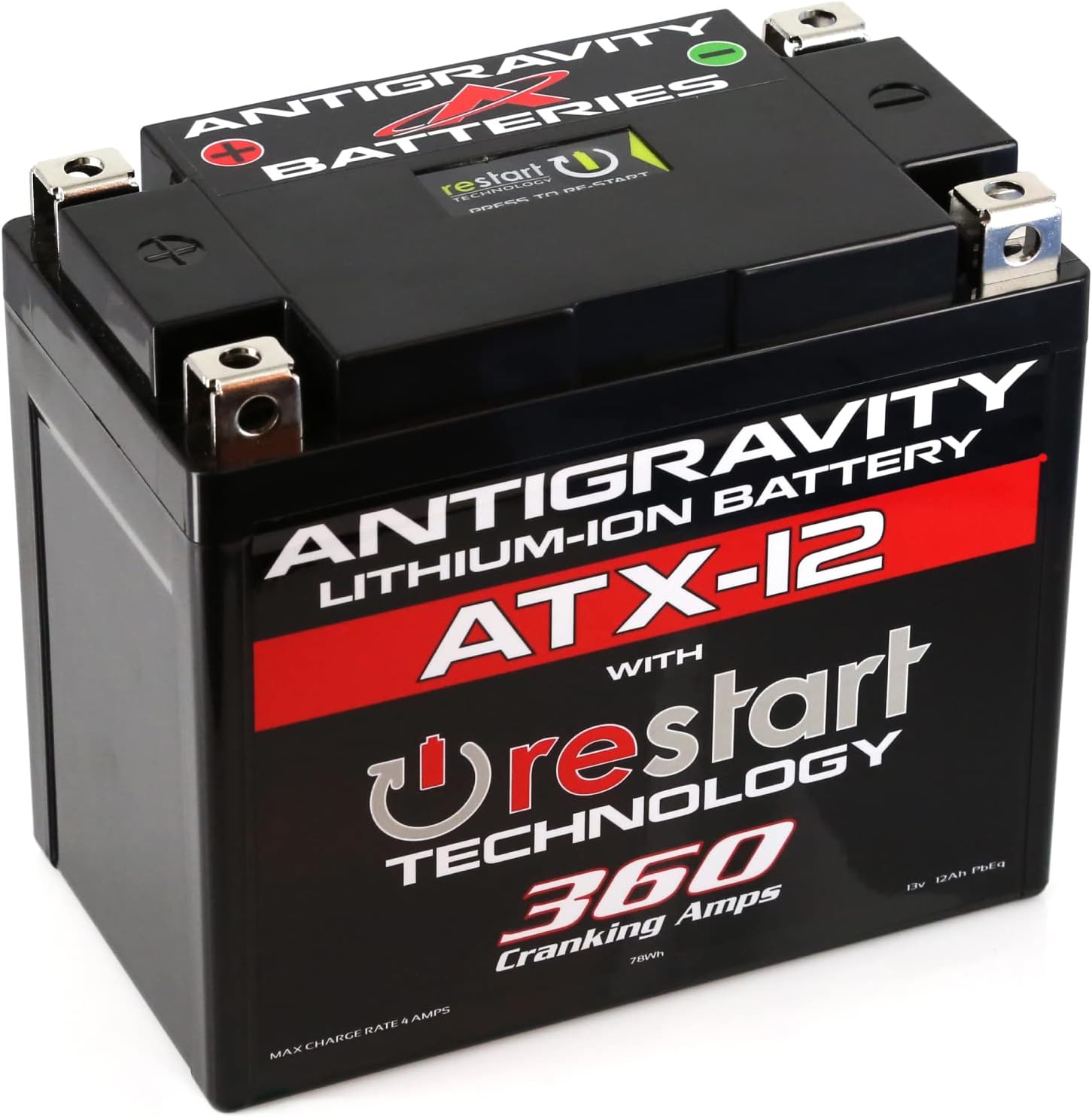
Fits: listed by brand, replaces YTX12 and YTX14 applications. Physically matches OEM YTX12 dimensions, so it seats without shims.
Specs: 12.8V, 12Ah lead-equivalent (6.1Ah actual), 360 cranking amps, 2.65 lbs. Four-terminal design.
Rating: 4.6 / 5 from 112 ratings
The clever one. Alongside the usual lithium advantages – 2.65 pounds against fourteen, minimal self-discharge – this holds back a reserve of capacity that you can release to jump start yourself if you leave the ignition on and flatten the battery. On a bike parked somewhere without a friendly car nearby, that feature earns its keep once and pays for itself. The case matches OEM YTX12 dimensions so it drops in without shims, and the four-terminal layout lets you connect in either polarity, which solves the cable-reach problem that catches people out. An Iron 883 owner upgrading from a 225 CCA battery describes the improvement in cranking directly. As with all lithium: a lithium-capable charger is required, cold performance needs a warm-up, and the cold-weather caveat is real – one owner running it in around 5°F noted the difference.
What owners say: “My 2021 Iron 883 started giving me battery issues and it was time to change it. Originally my battery had 225 CCA.”
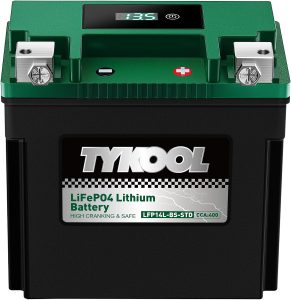
TYKOOL LFP14L-BS Lithium Battery for Sportster
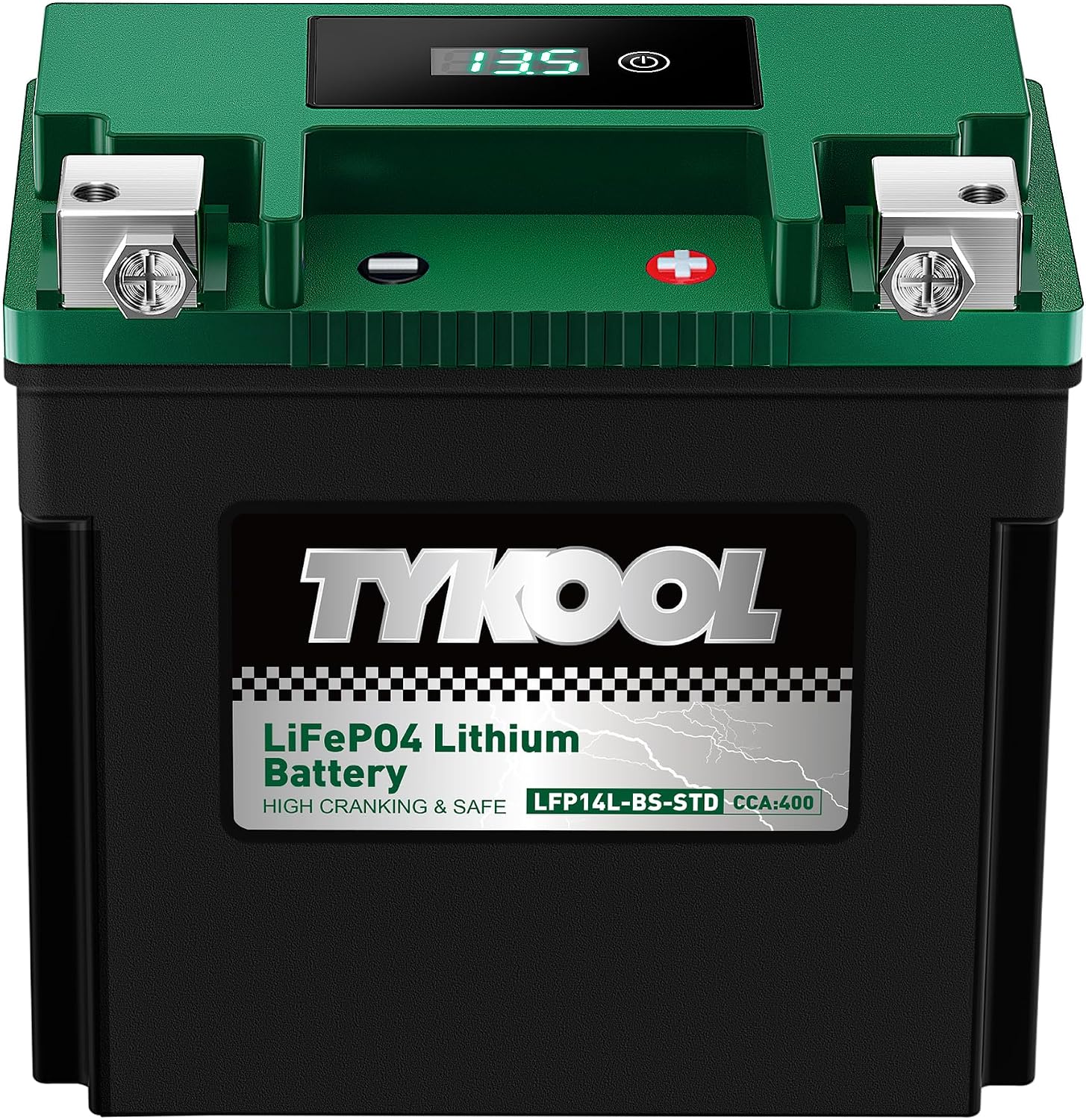
Fits: published Harley list – Street 500 and 750 2014-2021, XL and XLH Sportster 883 and 1200 2004-2020, SL/XLH/XR1200X 2004-2023. The most detailed Harley fitment of any lithium here.
Specs: 12.8V, 8Ah, 400 CCA, 3.3 lbs. LiFePO4 with built-in BMS.
Rating: 4.1 / 5 from 797 ratings
Lithium at roughly a third the price of the Antigravity units, with 400 CCA – double the standard Sportster requirement – and a proper published Harley fitment list, which is more than either premium option provides. At 3.3 pounds it is around 70 percent lighter than the AGM it replaces, and it is physically smaller than the stock battery, so owners typically pack the gap in the tray. The honest picture on reliability: 4.1 stars with 17 percent one-star reviews is a polarised distribution rather than a mediocre average. One owner documented the specific failure mode worth understanding – on a bike with an older shunt-type voltage regulator, the battery’s protection circuit cut the charging current and system voltage spiked to 18 volts, putting the electronics into safe mode. Lithium wants a stable regulator holding under 15 volts. On a modern bike with a healthy charging system this is a lot of battery for the money; on an older one, check your regulator first.
What owners say: “A warning: this battery has a battery control module which stops the battery from charging once voltage rises.”
Winter Storage: What Kills Most Harley Batteries
More Harley batteries die in a garage over winter than on the road. The mechanism is simple and entirely preventable.
A battery self-discharges even when disconnected. Leave it connected to a modern bike and the parasitic draw from the ECU, alarm and clock accelerates that considerably. Over three or four months the battery drops to a state of charge where sulphate crystals form on the plates, and every hour it spends there costs capacity permanently. Come spring, the bike cranks slowly and the battery never fully recovers.
The fix costs about forty dollars
A battery tender – properly a maintainer, not a charger – monitors voltage and delivers a small current only when needed. Leave it connected all winter and the battery comes out of storage in the same condition it went in. This is the single highest-return purchase in this entire guide, and it costs less than a fifth of what it protects.
Do not confuse a maintainer with a conventional charger. A charger pushes current until you unplug it and will boil a battery dry if left connected. A maintainer regulates itself and is designed to stay attached for months.
If you are running lithium
Use a maintainer with a dedicated lithium mode. A lead-acid maintainer’s desulphation pulse can damage a lithium pack. Lithium’s very low self-discharge means it tolerates storage better in the first place, but “better” is not “indefinitely”.
Practical winter checklist
- Fit a pigtail lead with a quick-connect so you are not clipping to terminals every time
- Charge fully before storage, not after
- Keep the battery somewhere that does not freeze if you can – a discharged battery can freeze and crack the case
- Clean the terminals before storage; corrosion grows over winter
Best Battery Tenders and Chargers
The cheapest insurance in this guide. A maintainer regulates itself and is designed to stay connected for months – unlike a charger, which will cook a battery if you forget it.
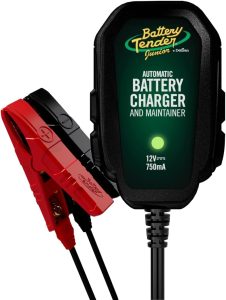
Battery Tender Junior 12V 750mA Charger and Maintainer
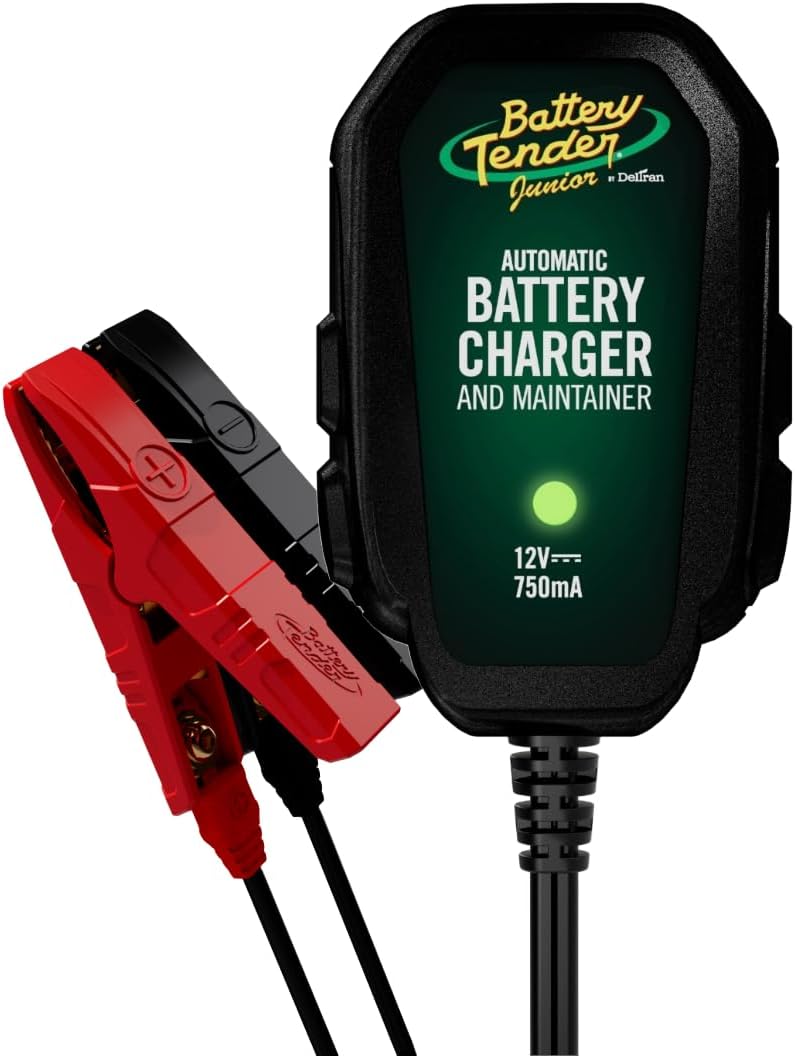
Fits: the manufacturer’s own FAQ on the listing states it works with all Harley-Davidson 12V models, including Pan America.
Specs: 12V, 750mA, 1 lb. Ring terminal harness plus alligator clamps included.
Rating: 4.8 / 5 from 49,924 ratings
Nearly fifty thousand ratings at 4.8 stars, and it is the single highest-return purchase anywhere in this guide. A maintainer is not a charger: it monitors voltage and delivers a trickle only when the battery needs it, so it can stay connected for months without cooking anything. That is precisely what a Harley parked from November to March needs, and it is why more batteries die in garages than on roads. The ring terminal harness bolts under your battery terminal and stays on the bike permanently, so winterising becomes a matter of plugging in a connector. Owners routinely report batteries lasting eight years under one of these. At around forty dollars protecting a battery that costs three to four times that, the arithmetic is not close. The only recurring gripe is that newer units ship with alligator clamps that some long-time users prefer not to use – the ring harness is the better option and it is included.
What owners say: “I have used Battery Tender chargers for many years, mostly on motorcycle batteries, with good results: quick starts, long life.”
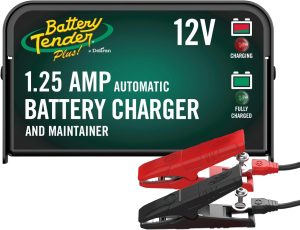
Battery Tender Plus 12V 1.25A Charger and Maintainer
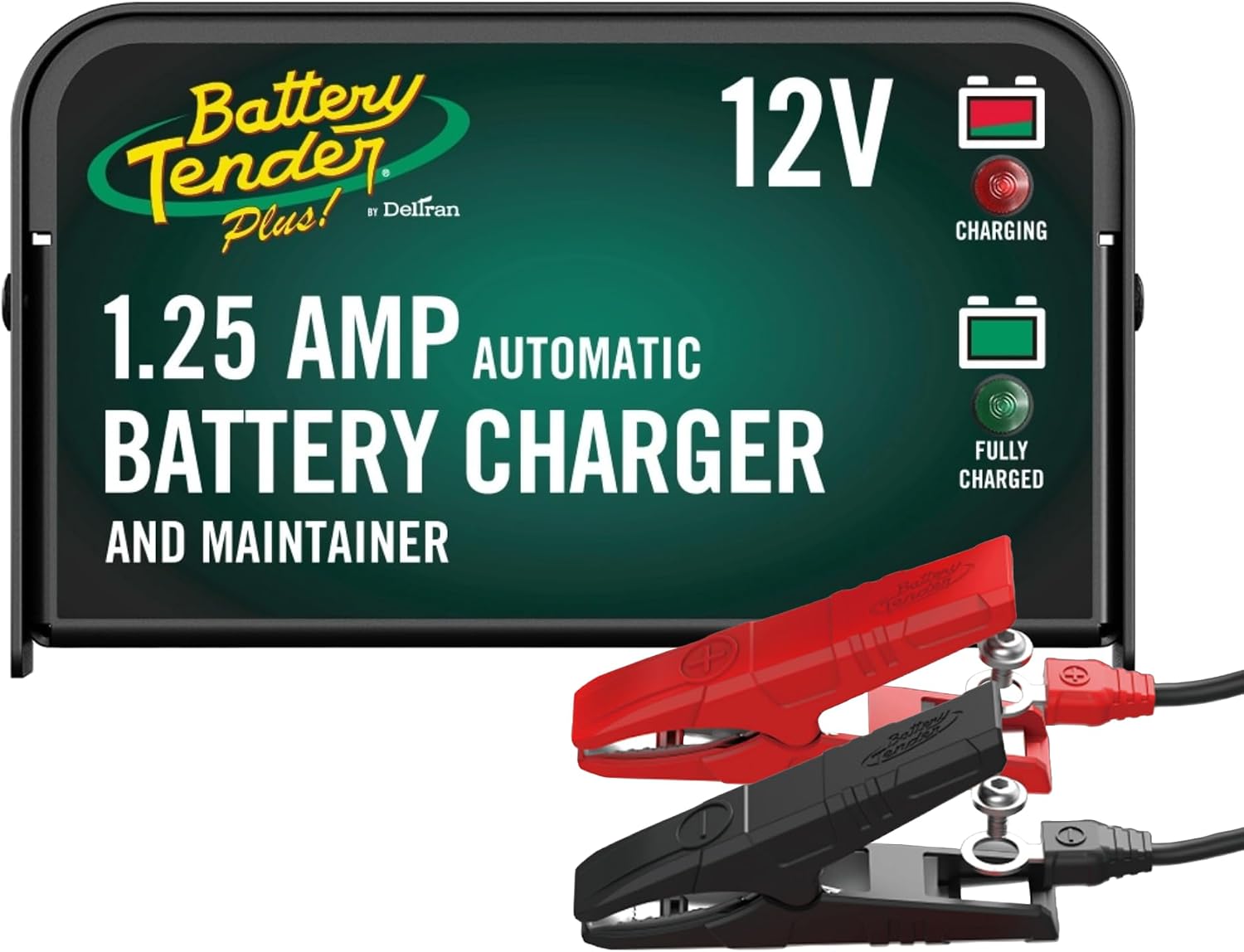
Fits: any 12V lead-acid or AGM battery. The listing does not name specific Harley models but owners use it on Harleys routinely.
Specs: 12V, 1.25A, 1.5 lbs, metal housing.
Rating: 4.7 / 5 from 21,628 ratings
The bigger brother: 1.25 amps instead of 750 milliamps, in a metal case rather than plastic. The extra current means it recovers a flat battery meaningfully faster, and the housing takes garage abuse better. If you are maintaining a 30-size Touring battery rather than a Sportster’s 14L, the extra capacity is worth having. What stands out in the reviews is longevity of the charger itself. Owners report fifteen years of service from the unit, and one describes seventeen years of near-daily use across two battery replacements. That is unusual for any piece of electronics and it says something about the build. Like the Junior it uses a permanent ring harness with a quick connector. One note from reviews: the charging indicator staying red for hours is normal on a deeply discharged battery, not a fault – it is working through the bulk phase.
What owners say: “Purchased this battery charger for my H/D and worked perfect.”
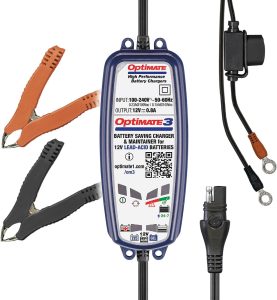
OptiMate 3 0.8A Smart Battery Saving Charger
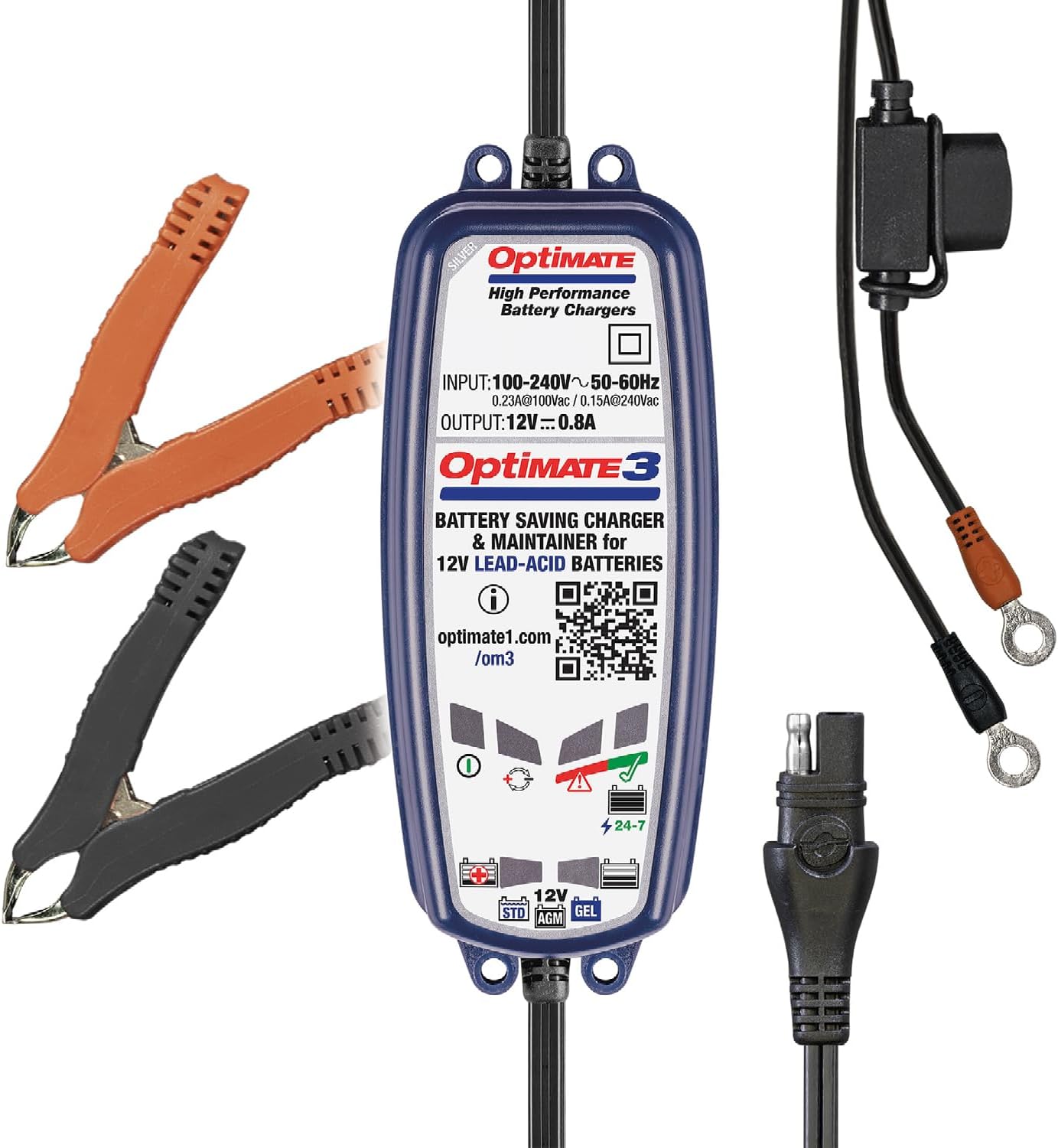
Fits: 12V lead-acid and AGM. Uses a standard SAE connector, which mates directly with the factory charging lead Harley fits to many models.
Specs: 12V, 0.8A, 16 oz. Standard SAE connector.
Rating: 4.8 / 5 from 640 ratings
The connector is the reason to choose this one. OptiMate uses a standard SAE plug, which mates straight into the factory charging lead Harley supplies on many bikes – no extra harness, no ring terminals under the battery post. If your bike already has that pigtail hanging behind the side cover, this plugs in and you are finished. Beyond convenience, OptiMate’s charging profile includes a recovery mode that attempts to bring back deeply discharged and sulphated batteries rather than simply refusing to charge them, which occasionally rescues a battery that a simpler maintainer would give up on. A Nightster owner who does not ride much in cold weather describes exactly the intended use case. The interface is the weak point: status is communicated only through a row of LEDs, and working out what the sequence means requires the manual.
What owners say: “I ride a 2023 Harley-Davidson Nightster Special and generally don’t ride as much in the winter when it’s really cold.”
Battery by Harley Model
Touring: Street Glide, Road Glide, Road King, Electra Glide
The 30-size battery, Harley part 66010-97 or the current 66000340A, cross-referencing to a YTX30L-BS or Deka ETX30L. These are the heaviest bikes with the most electrical load – audio, heated grips, lighting – and the most demanding starters. Aim for 400 CCA at minimum and prefer 500 or more. The battery sits under the seat.
Softail and Dyna
The 20-size, Harley 65989-97, cross-referencing to YTX20HL-BS or Deka ETX20L. Typical rating 270-310 CCA. On most Softails the battery is under the seat; on Dynas it sits behind a side cover. Note that 2018-and-later Softails changed platform, and some trims accept more than one size – check before ordering.
Sportster
The 14L size, Harley 65958-04 or 66000345A, cross-referencing to YTX14L-BS or Deka ETX14L. Around 200-245 CCA, which is plenty for the Evo XL. The battery lives behind the left side cover, and it is the easiest battery to change on any Harley. Pre-2004 Sportsters use a different size – the older 65991-82 / YB16-B.
Street 500 and 750
Shares the 14L size with the Sportster under Harley part 66000345A.
V-Rod and Revolution
Harley 65948-00, cross-referencing to a YTX14 – note this is a different battery from the Sportster’s 14L despite the similar name. The terminal layout differs, which is exactly the kind of detail that turns a quick job into a return.
Revolution Max: Pan America and Sportster S
Covered by the current 66000345A part number alongside the Sportster and Street families. As with anything on the newest platform, confirm against your manual.
How Long Should a Harley Battery Last?
Three to five years is the honest expectation for an AGM in normal use. Lithium can go longer – manufacturers claim five to ten – if it is charged correctly and not left flat.
But the variance in this category is enormous, and it is worth being straight about that. Read reviews on any motorcycle battery and you will find owners reporting five and six years alongside owners reporting three months. Both are real. The difference is rarely the brand.
What actually determines lifespan
- Whether it ever sits discharged. This is the big one. A lead-acid or AGM battery left partially discharged sulphates, and sulphation is permanent capacity loss. A bike parked for three winter months without a maintainer will lose meaningful life every single year.
- Heat. Battery chemistry degrades faster hot than cold. A battery tucked next to a V-twin in summer traffic lives a harder life than the same battery in a car.
- Vibration. AGM handles it well, which is why it replaced flooded batteries. But a loose hold-down strap will destroy any battery, and it is worth checking.
- Short rides. Starting the engine takes a large withdrawal. A ten-minute ride does not put it back. A bike used only for short trips is running a slow deficit.
- Charging system faults. A failing regulator or stator either undercharges the battery, which sulphates it, or overcharges it, which cooks it. If you kill two batteries in quick succession, stop buying batteries and test the charging system.
Testing before you replace
A resting fully charged 12-volt AGM should read about 12.7-12.8 volts. Below 12.4 it is partially discharged; below 12.0 it is deeply discharged and probably damaged. With the engine running you should see roughly 13.5-14.5 volts at the terminals – if you do not, the problem is the charging system, not the battery.
Symptoms of a Dying Harley Battery
Batteries rarely fail without warning. The signs are consistent, and catching them means choosing when to replace rather than being stranded.
- Slow cranking. The starter turns the engine over more lazily than it used to, especially on the first start of the day. This is the classic early sign and the one riders most often ignore.
- Rapid clicking with no crank. The solenoid is engaging but there is not enough current to turn the motor. Usually a flat or failing battery, occasionally a bad connection.
- Dim lights at idle that brighten when you rev. The battery is not holding charge and the system is running on the alternator.
- It starts fine after a ride but not after sitting overnight. The battery no longer holds its charge – a textbook sign of a battery near the end.
- Corrosion or a swollen case. White or blue-green crust on the terminals reduces current flow. A case that has visibly swelled is finished and should be replaced immediately.
- Needing a jump more than once. One jump can be bad luck. Two is a diagnosis.
Before you blame the battery
Check the terminals are clean and tight, and check the charging system output with the engine running. A loose ground or a failing regulator produces every symptom above while the battery itself is fine – and a new battery will die the same way within months if the underlying fault is still there.
How to Replace a Harley Battery
Twenty minutes on most models, and the only step that matters for safety is the order of the terminals.
Where the battery is
- Touring: under the seat. Remove the seat, and the battery is directly beneath.
- Softail: under the seat on most models.
- Dyna: behind a side cover.
- Sportster: behind the left side cover – the easiest of the lot.
The procedure
- Ignition off, key out.
- Disconnect the negative terminal first. Always. If your wrench touches the frame while you are working on the positive terminal and the negative is still connected, you complete a circuit through the tool. The negative is usually black and marked with a minus.
- Then disconnect the positive.
- Release the hold-down strap and lift the battery out. A 30-size AGM is heavier than it looks – around 20 pounds.
- Clean the tray and the cable ends. Corrosion on a terminal reduces cranking current as effectively as a weak battery.
- Fit the new battery, connect the positive first, then the negative. Reverse of removal.
- Tighten the terminals firmly but do not overdo it – the posts are soft lead and the threads strip easily.
- Refit the hold-down strap. A battery moving in the tray will destroy itself.
Things that catch people out
Terminal position. Batteries of the same size come in both polarities. If the positive ends up on the wrong side, the cables may not reach. Check which side the positive is on before ordering.
Terminal style. Harley uses flush terminals on some models. Aftermarket batteries sometimes ship with universal posts that sit proud, and owners of certain models report needing spacers to get the cover back on.
Dry-charged batteries. If it came with a separate acid pack, it needs filling and charging before it goes in the bike – do not fit it straight from the box.
Radio and settings. Disconnecting power resets clock and preset stations on bikes with audio.
Harley Battery - FAQs
What size battery does my Harley take?
How many CCA does a Harley need?
What is the best type of battery for a Harley?
Are lithium batteries worth it on a Harley?
How long should a Harley battery last?
Why does my Harley battery keep dying?
Can I use a car battery charger on a motorcycle battery?
Do I need to charge a new motorcycle battery before installing it?
Which terminal do I disconnect first?
Conclusion
Match the size to your model – 30-size for Touring, 20-size for Softail and Dyna, 14L for Sportster – and give yourself CCA headroom rather than buying the cheapest listing that fits. A quality AGM at the right specification will serve three to five years without any thought.
Lithium is a genuine upgrade in weight and self-discharge, provided you accept the cold-weather routine and buy a charger that supports it.
And whatever you fit, put a maintainer on it over winter. Nothing else in this guide protects your investment as cheaply or as reliably.
#1 Pick: Best Battery for Harley-Davidson
Banshee YTX30L-BS AGM Battery for Harley Touring
For a Touring model this is the safest buy: 500 CCA against the 400 a Big Twin needs, flush terminals matching the factory battery, and the only listing here that publishes a full model-and-year fitment table covering 1997 through 2023.
Riding a Softail or Dyna? You need a 20-size – see the Yuasa further down. Sportster? A 14L. The size chart directly below maps every Harley part number to its aftermarket equivalent, and it is the first thing to check before buying anything.