Ask ten Harley owners what they wash the bike with and you will get ten answers, and at least
three of them will be “Dawn and a hose.” That answer is the reason this article exists. Dish soap
does clean a motorcycle. It also strips every bit of wax and sealant off the paint, contains no
corrosion inhibitors at all, and leaves bare aluminium and chrome with nothing between them and the
next rain. It is not that it fails. It is that it undoes the protection you paid for, every single
wash, and the damage shows up two seasons later as dull chrome and white powder on the engine cases.
The second reason is finish. A 2019 Street Bob in Vivid Black and a 2019 Street Bob in Denim
Black look similar in a photograph and need completely different chemicals. Put a gloss soap on a
Denim tank and you will slowly polish it into a patchy semi-shine that cannot be undone without
repainting. Put a metal polish on chrome-plated trim and you will eventually cut through the plating.
Neither product is defective. They were simply used on the wrong surface, and nobody told the owner.
So this guide is organised the way the job actually works, not the way a shop shelf is organised.
First the two questions everybody asks – dish soap and pressure washers – answered properly, with the
reasoning. Then how to identify what your bike is actually finished in, because that single decision
determines everything you buy. Then the order of operations, which is where most water damage comes
from. Then 17 products that we checked page by page, split into what each one is for: wash soap,
waterless cleaner, chrome polish, wheel cleaner, matte-specific care, microfibre, and drivetrain.
One thing to say plainly up front: there is no single best cleaner for a Harley-Davidson. There is
a best soap, a best between-rides spray, and a best wheel cleaner, and they are made by different
companies. Anyone selling you one bottle that does all of it is selling you a compromise on at least
two of those jobs.
#1 Pick: Best Cleaner for Harley-Davidson
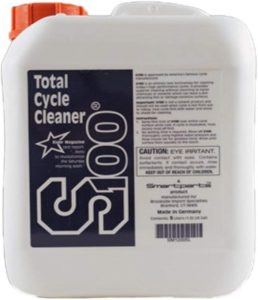
S100 Total Cycle Cleaner, 1.32 Gallon
Spray on, wait, rinse off – the whole bike in about five minutes, no scrubbing. It is the one general cleaner here with corrosion inhibitors, which is the specific thing dish soap does not have and a Harley genuinely needs.
The top best product [hide]
Can I use Dawn to wash my Harley?
You can. It will get the bike clean. The question is what else it does while it is cleaning, and
the honest answer is: it removes your protection and gives nothing back.
Dish soap is engineered to strip fat and oil from ceramic and stainless steel in hot water. Wax,
paint sealant and ceramic coating are, chemically speaking, exactly the kind of thing it is designed
to remove. Every wash with Dawn takes a layer off. After three or four washes there is no
protection left on the tank at all, and the clear coat is bare to UV and to bug acid.
Look at how the motorcycle-specific soaps describe themselves and the point makes itself. Chemical
Guys Mr. Pink leads with pH-balanced, will not strip wax, sealant or ceramic coating. Wizards
Bike Wash advertises pH-controlled, no caustic soda, no acids, no bleach. Muc-Off is
acid-free, non-caustic, safe on seals and bearings. Those are not marketing flourishes. They
are the specific list of things a dish detergent does not promise.
The part that matters most on a Harley is the one nobody mentions: corrosion
inhibitors. S100 Total Cycle Cleaner contains them. Dish soap does not, because a dinner
plate does not corrode. A Harley has polished aluminium, chrome-plated steel, exposed fasteners,
spoke nipples and a hundred seams where water sits. Rinse those with a detergent that leaves nothing
behind and you have simply washed a bike and then left it wet and unprotected.
To be fair to the sceptics, this doubt is genuinely widespread. One reviewer of the Muc-Off
concentrate wrote, in a four-star review, “Seems like good stuff, not so sure grease cutting dish
soap wouldn’t work as well.” He is right about the grease. He is wrong about the consequences.
A bottle of proper bike wash costs $14 to $35 and lasts a season. A respray of a tank does not.
The one place dish soap is correct
Stripping. If you are about to apply a new sealant, ceramic coating or fresh wax, you want
everything old off the paint first. That is the one wash where dish soap is the right tool, and even
then a dedicated stripping shampoo does it more evenly. Once a year, before you seal the bike, fine.
Every Sunday, no.
Pressure washers: why bike brands sell dwell time instead
Nothing in this guide is banned from a pressure washer outright, and Mr. Pink is openly sold as a
foam cannon soap. But read what the motorcycle brands actually promise and you will notice they all
sell the same alternative to pressure: time.
S100 says it creeps into every nook and cranny without scrubbing. Muc-Off says its
expanding foam gets into the tight areas, sponges and brushes not needed. Wizards says it
lifts road grime without abrasive scrubbing that risks fine scratches in your clear coat.
Three different companies, one shared claim: spray it, walk away for a few minutes, rinse. The
chemistry does the work that force would otherwise do.
That is deliberate, because a motorcycle is a bad candidate for high pressure. A car has sealed
panels and everything important is behind them. A Harley has, all of it exposed and at hose height:
wheel bearings, steering head bearings, fork seals, the swingarm pivot, the primary and stator
covers, the intake, and on a touring bike a stack of connectors under the fairing. Water forced past
a seal does not announce itself. It sits inside a bearing and rusts it over the winter, and the
first you know is a notchy steering head next spring.
Even among car people the message lands. The most-quoted line in the Mr. Pink reviews is from an
owner who runs a foam gun off a garden hose: “Power wash is NOT required.” Whole vehicle,
25 minutes, hose pressure only.
If you do use one anyway
- Wide fan tip only – 40 degrees, never a zero or pencil jet.
- Stand back. Two feet minimum, further on seals and stickers.
- Never aim at the wheel hubs, fork seals, steering head, exhaust outlet, air cleaner, switchgear,
instrument cluster, or the edge of any decal. - Use it for the pre-rinse and the final rinse only, not to blast dirt off. The soap removes the
dirt. - Belt-drive Harleys: keep the jet off the belt and the pulley seals entirely.
Identify your finish before you buy anything
This is the step that decides which half of this article applies to you. Harley uses several
finishes that need different chemicals, and two of them punish the wrong product permanently.
| Finish | Where you find it | What it needs | What ruins it |
|---|---|---|---|
| Gloss paint / clear coat | Vivid Black, all metallic and two-tone colours | Any pH-balanced wash, then wax or sealant | Dish soap, washing in the sun, dirty towels |
| Denim / matte / satin | Denim Black, Industrial Grey, matte factory options and wraps | Matte-specific soap and matte sealant only | Any wax, any polish, any gloss detailer, and hard rubbing |
| Chrome plating | Most Harley chrome: pipes, covers, mirrors, trim | Wash, dry, light metal polish sparingly | Aggressive polish, repeated cutting, acid wheel cleaner |
| Polished bare aluminium | Some engine covers, forks, custom parts | Wash, dry immediately, polish, then seal | Being left wet – it oxidises white in days |
| Wrinkle / satin black powder coat | Engine cases and cylinders on blacked-out models | Degrease, rinse, then a black dressing | Solvent cleaners, polish, anything that adds gloss |
| Anodised aluminium | Aftermarket levers, pegs, coloured trim | Plain wash only | Metal polish – it strips the anodising off permanently |
How to tell matte from gloss if you are not sure
Stand so a light source reflects off the tank. Gloss gives you a sharp mirror image of the bulb
with a defined edge. Matte gives you a soft glow with no edge, and the reflection does not move
crisply as you move your head. If the tank has ever been described in the brochure as Denim, it is
matte. If you are still unsure, treat it as matte – a matte product on gloss paint costs you nothing
but a bit of shine, while a gloss product on matte paint is a permanent change.
Matte and Denim finishes: the rules are different
Matte paint is not shiny because its surface is deliberately microscopically rough. That texture
scatters light. Anything that fills the texture – wax, sealant, silicone, polish, a gloss quick
detailer – makes the surface smoother and therefore shinier, and it does not come back out. You end
up with a tank that is matte in some places and half-glossy in others.
Just as important, and much less known: matte is damaged by friction, not just by
chemicals. The Meguiar’s matte listing states it plainly – matte surfaces are prone to
swirls, light scratches, or even bring up a gloss if too much friction is applied. You can
burnish a matte panel to a shine with nothing but a towel and enthusiasm.
Which is why the correct matte soap is a deliberately weak one. An owner of the Chemical Guys
Meticulous Matte soap describes the trade-off exactly: “Since it is a soft soap and hard
scrubbing is not good for the finish, I usually need multiple passes to remove some harder
stains.” That is the method. Several gentle passes, never one hard one.
Amazon’s own review digest for that soap specifically mentions Harley-Davidson flat black
paint, and buyers say it makes matte look new without leaving a sheen. Another put
the whole search in one line: “My motorcycle has a matte finish, so I spent a long time looking
for something that doesn’t make it shiny.”
Honest warning about matte detailers
Matte quick detailers streak. This is not a defect in one brand – it is the category. The Chemical
Guys matte detailer has “streak-free” mentioned 153 times on its listing and a matching pile of
streaking complaints, and one Iron 883 owner reported “a ton of little waxy streaks all over the
tank and down the rear fender… even when used in the garage.” The fixes: use very little
product, work one panel at a time, flip to a dry side of the towel for the final wipe, never in
direct sun, and never on a warm panel.
Never put these on a matte Harley
- Any wax or paste sealant, including “matte-safe” ones that list carnauba.
- Metal polish of any kind – Flitz, Simichrome, chrome cleaners.
- Gloss quick detailers: Mist-N-Shine, Bike Spirits, BugSlide.
- Gloss wash soaps, Mr. Pink included – Chemical Guys sells a separate matte soap precisely
because the pink one is built to add gloss. - Machine polishers, cutting compound, clay bar.
Chrome: plated, not solid, and that changes everything
Almost all Harley chrome is chrome plating – a thin decorative layer of chromium
deposited over nickel over steel or aluminium. It is not solid chrome. It is measured in microns, and
once it is gone it cannot be polished back; the part has to be re-plated.
Now read the Flitz listing, which is the most popular metal polish on the market. It states that
it is for solid chrome and warns that it is not for chrome-plated or coated
items. And a reviewer is blunter than the marketing: “This is, despite their claims, an
abrasive polish with an equivalent grit of something like 5,000.” Fine, yes. Non-abrasive, no.
None of which makes metal polish a bad product. It makes it a product with a budget. Every pass
removes a little material. Use it to remove light tarnish, water spots and surface rust once or twice
a season and the plating will outlive the bike. Use it every weekend on pipes that are already clean
and you are spending plating for no gain, and eventually you will see the nickel come through as a
yellowish haze that will not polish out.
How to look after Harley chrome properly
- Wash it, dry it, and only then decide whether it actually needs polishing.
- Polish only where there is something to remove: tarnish, water spots, light oxidation.
- Test on a hidden area first – the underside of a header, the back of a cover.
- Light pressure. Pressure is what turns a fine polish into a cutting compound.
- After polishing, seal it. A sealed chrome surface stops water spotting and needs polishing far
less often. - Never use acidic wheel cleaner on chrome wheels, and never let any wheel cleaner dry on them.
- Pitting and rust through the plating are not a polish problem. Polish will not fix it, and trying
harder just removes more of what is left.
The order of operations
Most washing damage on a motorcycle is not caused by the wrong chemical. It is caused by doing the
right things in the wrong sequence.
- Let the bike go cold. Not warm – cold. Water on hot exhaust and hot cylinders
flashes off and leaves mineral spots that then need polishing off, and cold water on a hot header can
discolour it permanently. An hour after a ride, minimum. - Out of the sun. Every product here says the same thing: do not let it dry on the
surface. Sun is what makes it dry on the surface. Shade or a garage, always. - Wheels first, with their own tools. Brake dust is iron and it is abrasive. Do
the wheels before the paint, with a separate brush, mitt and towel that never touch anything else.
Do them one at a time and rinse before the cleaner dries. - Cool rinse, top down. Gentle water, no pressure, from the tank down. Loosen the
dust before anything touches the paint. - Soap and dwell. Spray, wait the two to five minutes the label asks for, and let
the chemistry lift the grime. This is the step people skip, and then they scrub. - Contact, gently, top down. Clean mitt, light pressure, two buckets if you use a
bucket. Anything below the frame rails gets its own mitt. - Drivetrain last. Chain, sprockets, belt area, lower engine – separate products,
separate brushes, and nothing that touched them goes back on paint. - Rinse thoroughly. Under-rinsing is the single biggest cause of the residue and
streak complaints on every product in this guide. - Dry properly – see below.
- Dress and protect. Black engine dressing on a clean cool engine, sealant on
paint, chrome sealed. Never dressing on rotors or tyre treads.
Drying is the step that actually protects the bike
A car dries itself acceptably because water runs off flat panels. A motorcycle traps water in
fifty places: switch housings, instrument bezels, fastener heads, the seam where the tank meets the
console, spoke nipples, under the fender lip, behind the primary cover, inside the exhaust tip. Left
there, that water does two things. It dries into mineral spots on chrome, and it sits against
untreated metal and starts corrosion where you cannot see it.
- Move air first, towel second. A leaf blower, air compressor on low, or a
dedicated bike dryer clears the crevices in two minutes and does not touch the paint at all. It is
the single best tool in a bike-washing kit and most people do not own one. - Then a large plush towel, patted and drawn, not scrubbed. Towels used for drying
should be big and thirsty; the 16 x 16 in wiping towels most people buy hold nowhere near enough
water for a dresser. - Colour-code and never cross over. A towel that has touched wheels, chain or
exhaust carries iron particles and will put swirl marks straight into the clear coat. This is why the
24-packs exist. - Wash the towels before first use, and never with fabric softener or dryer sheets
– softener coats the fibres, kills absorbency and causes exactly the streaking people blame on the
detail spray. - Then start the engine for a couple of minutes and let residual heat push moisture
out of the exhaust and off the cases. A short ride around the block does the same job better.
Bugs, tar and brake dust – the three things soap will not touch
Every general wash in this guide is a soap. None of them is a solvent, and each of the three
contaminants below needs a different mechanism. Trying to remove them with more scrubbing is how
paint gets scratched.
Bugs. Insect remains are protein and mildly acidic, and after a hot day on the
highway they are effectively baked on. They need dwell time and moisture, not force. Even S100, which
is one of the strongest pre-soaks here, honestly gets about three quarters of heavy splatter off on
the first pass. The remaining quarter comes off with a second application or a bug-specific product.
Owners of the aerosol cleaners describe the same routine: spray, five minutes, wipe. On a windshield
this matters twice over, because a scratched screen is a permanent glare problem at night.
Tar and chain fling. A pH-balanced soap cannot dissolve petroleum. It needs a
degreaser or a tar remover, applied to a small area, given time, and rinsed off before it reaches
anything waxed or matte.
Brake dust. Embedded iron particles bond to the wheel finish; they do not sit on
top of it. That is why dedicated wheel cleaners exist and why a soapy mitt just smears them. Use a
non-acid wheel cleaner, let it dwell, agitate with a soft wheel brush, and rinse before it dries.
Belt-drive Harleys
Most modern Harleys are belt-driven, not chain-driven, and a belt is not maintained like a chain.
Chain cleaners and degreasers are the wrong product for it entirely. A belt needs a rinse, an
inspection for stones and cracks, and nothing else – no solvent, no lubricant, no dressing. Chain
products in this guide are for the chain-drive models and for cleaning greasy drivetrain metal, not
for the belt itself.
Nine mistakes that cost money
- Washing a hot bike. Spots on chrome, discoloured headers, product drying before
it works. - Washing in the sun. Every single label in this guide warns against it, and it
causes most of the streaking complaints. - Letting cleaner dry on the surface. Particularly wheel cleaner, which is the
worst offender because it goes on last and is forgotten. - One mitt for the whole bike. Brake dust from the wheels ends up in the clear
coat. - Waxing a Denim tank. Not reversible.
- Polishing chrome that does not need it. Every pass costs plating.
- Using a waterless spray on a dirty bike. The Mist-N-Shine reviews are clear
about this: it is for dust and fingerprints. On road grit you are dragging abrasive across the
paint. - Under-rinsing. Residue on the listing is almost always under-rinsing on a warm
day. - Putting the bike away wet. Water in bearings and seams is a winter-long
corrosion project you cannot see.
17 products, sorted by what they actually do
Every product below was checked on its own listing: current price, rating, review count, what the
manufacturer permits and forbids, and the complaints that repeat. They are grouped by job, because no
single bottle covers a Harley. A realistic kit is one wash soap, one between-rides spray, one wheel
cleaner, a pack of microfibre, and – if your bike is matte or heavily chromed – the specific product
for that finish.
Prices were accurate when we checked and move around; use the links for current pricing.
Wash soaps and cleaners
The base of the kit. What separates these from car soap and from dish soap: they are pH-controlled
so they do not strip wax, they contain corrosion inhibitors, and they are designed to work by dwelling
rather than by being scrubbed – which matters on a vehicle where every surface is exposed and half of
them are polished.
S100 Total Cycle Cleaner, 1.32 Gallon
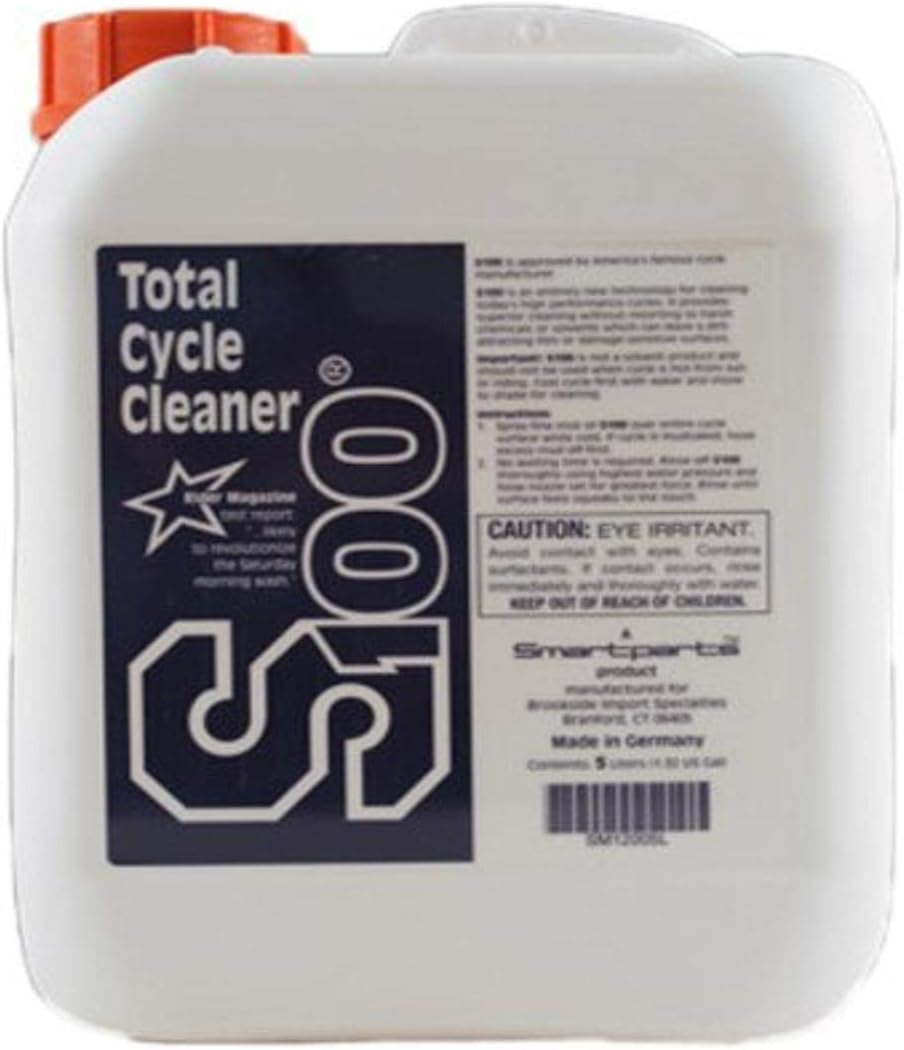
Type: spray-on / rinse-off pre-soak cleaner. 1.32 gallon (5 L). Non-acid, pH-controlled, biodegradable, with corrosion inhibitors. Around $59.88.
Safe on: paint, chrome, alloy, plastic, rubber, wheel bearings, chain O-rings, engine cases, exhaust. Not on a hot engine or in direct sun.
Rating: 4.8 / 5 from 1,893 ratings
The strongest argument on this page against dish soap, and the reason is one line in the specification: it contains corrosion inhibitors. Dish detergent does not, because a dinner plate does not corrode. A Harley has polished aluminium, plated steel, exposed fasteners and a hundred seams where water sits.
The method is different from a car wash too. You spray the whole bike, wait, and rinse – no bucket, no mitt, no scrubbing. On a full dresser that is a five-minute job instead of forty, and it is why touring owners keep buying the gallon.
It is also the only general cleaner here the manufacturer explicitly clears for wheel bearings and chain O-rings, which is a meaningful claim given how many degreasers strip seal grease.
Be honest about what it is, though: a pre-soak, not a soap. Heavy bug splatter comes off at roughly three quarters on the first pass, and the rest needs a second application or a mitt. And it is expensive per wash – that is the most consistent complaint in the reviews.
What owners say: “This stuff works great! Makes cleaning my Harley a much easier job. – Redhead, verified purchase”
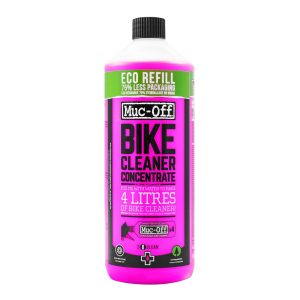
Muc-Off Bike Cleaner Concentrate, 1 Litre
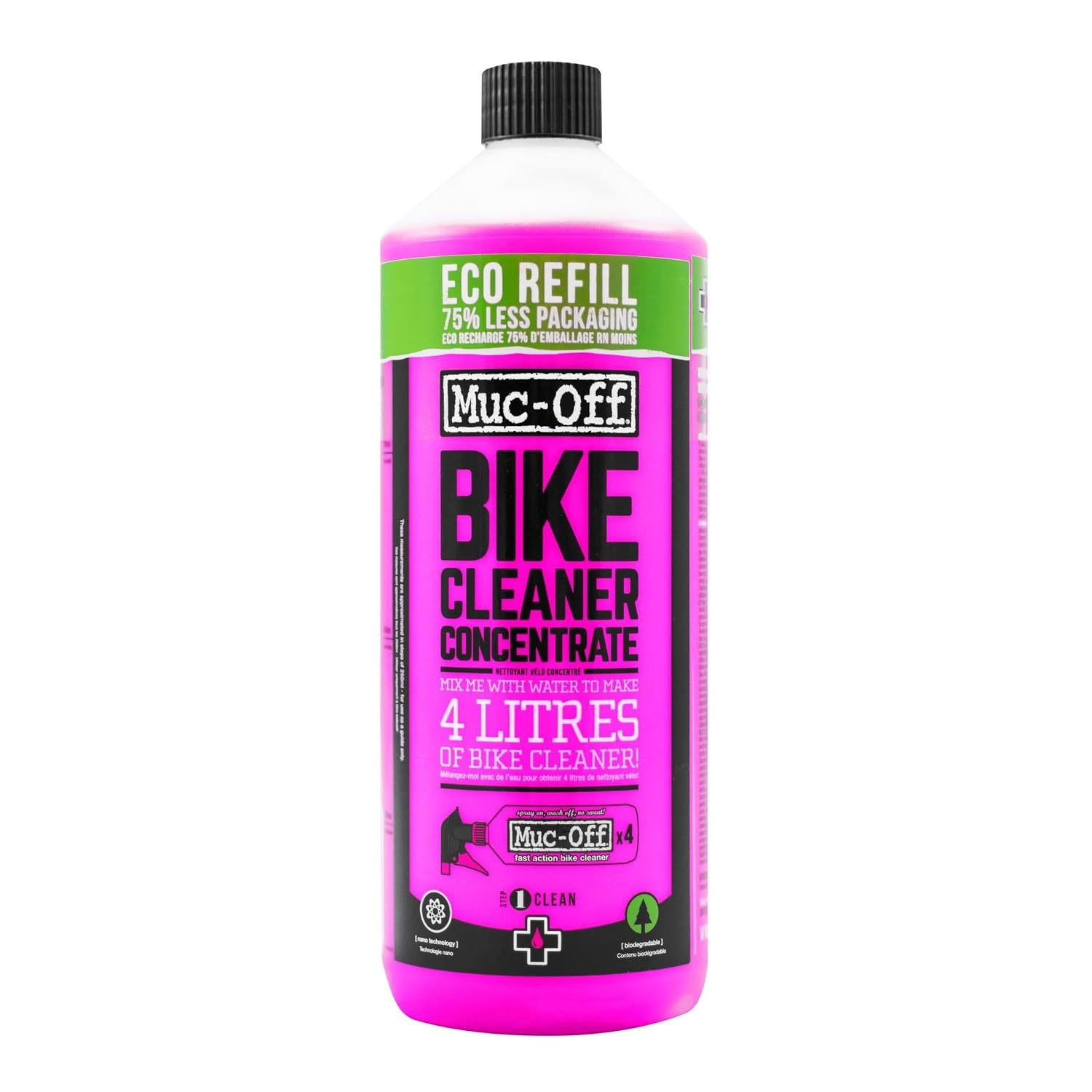
Type: concentrate, makes up to 4 litres of ready-to-use wash. Acid-free, non-caustic, biodegradable Nano Tech formula. Around $35.
Safe on: paint, chrome, anodised and painted alloy, plastics, fairings, rubber, carbon, wheels, seals and bearings. Refill only – you need the spray bottle.
Rating: 4.9 / 5 from 2,657 ratings
The highest-rated product in this entire guide, and the one whose review section contains the clearest statement of the dish soap question. A four-star reviewer wrote: “Seems like good stuff, not so sure grease cutting dish soap wouldn’t work as well.” He is right that dish soap cuts grease. He is wrong that it is equivalent – the acid-free, non-caustic formula here is specifically built to be safe on seals and bearings, which a degreasing detergent is not.
The expanding foam is the practical selling point. It clings and creeps into the places a mitt cannot reach, which on a motorcycle is most of the bike.
Two honest warnings. This SKU is a refill: several buyers were caught out expecting a spray bottle in the box. And the no-touch claim holds for road film, not for baked-on grime – that still wants a brush.
What owners say: “The expanding foam gets into the tight areas that are hard to reach. Sponges and brushes not needed. – Ron Breitwieser, verified purchase”
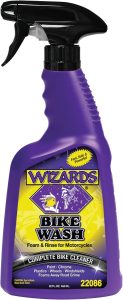
Wizards Motorcycle Bike Wash, 22 oz
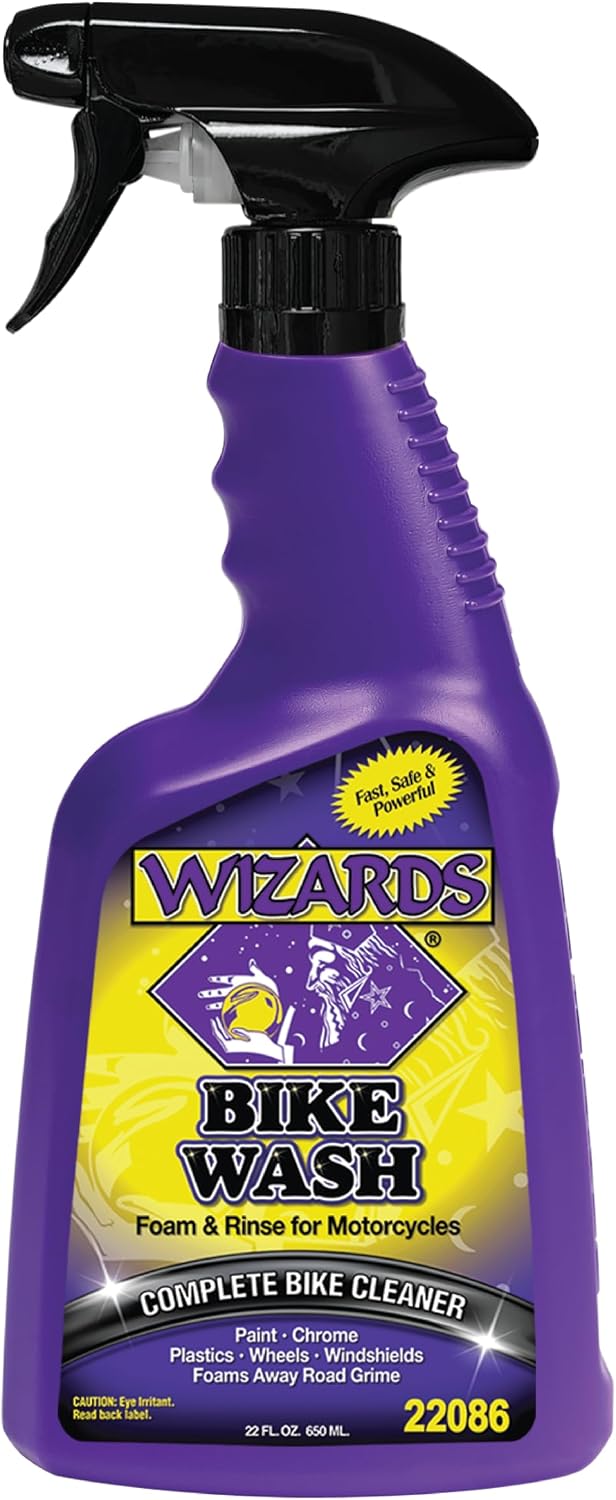
Type: ready-to-use foaming wash. 22 oz spray, also sold in gallon and 2-pack. pH-controlled: no caustic soda, no acids, no bleach. Made in USA. Around $14.29.
Safe on: paint, clear coat, chrome, plastics, fairings, engine cases, greasy mechanical areas, wheels, rubber, windshield, mirrors.
Rating: 4.7 / 5 from 365 ratings
The best entry point in this guide, and the one designed for motorcycles from the start rather than adapted from a car product. It handles engine grease and brake dust in the same pass as the polished panels, which is the practical difference between a bike wash and a car shampoo.
The claim that matters most for a Harley is the one about scrubbing: the maker says the foam lifts road grime without the abrasive scrubbing that risks fine scratches in the clear coat. That is the whole philosophy this article recommends – dwell time instead of force – and it is written on the bottle.
Also worth having: it rinses spot-free on rubber and the windshield, which the cheaper all-purpose cleaners do not.
The catch is size. Twenty-two ounces disappears fast on a full-size touring bike, and per ounce it is dearer than a concentrate you dilute yourself. If you like it, buy the gallon.
What owners say: “Easy to use and smells good to boot. Works great on chrome and mirrors as well. Worth the price. – Diesel, verified purchase”
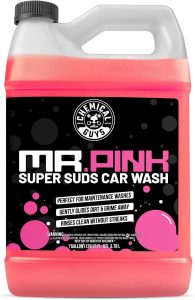
Chemical Guys Mr. Pink Car Wash Soap, 128 oz
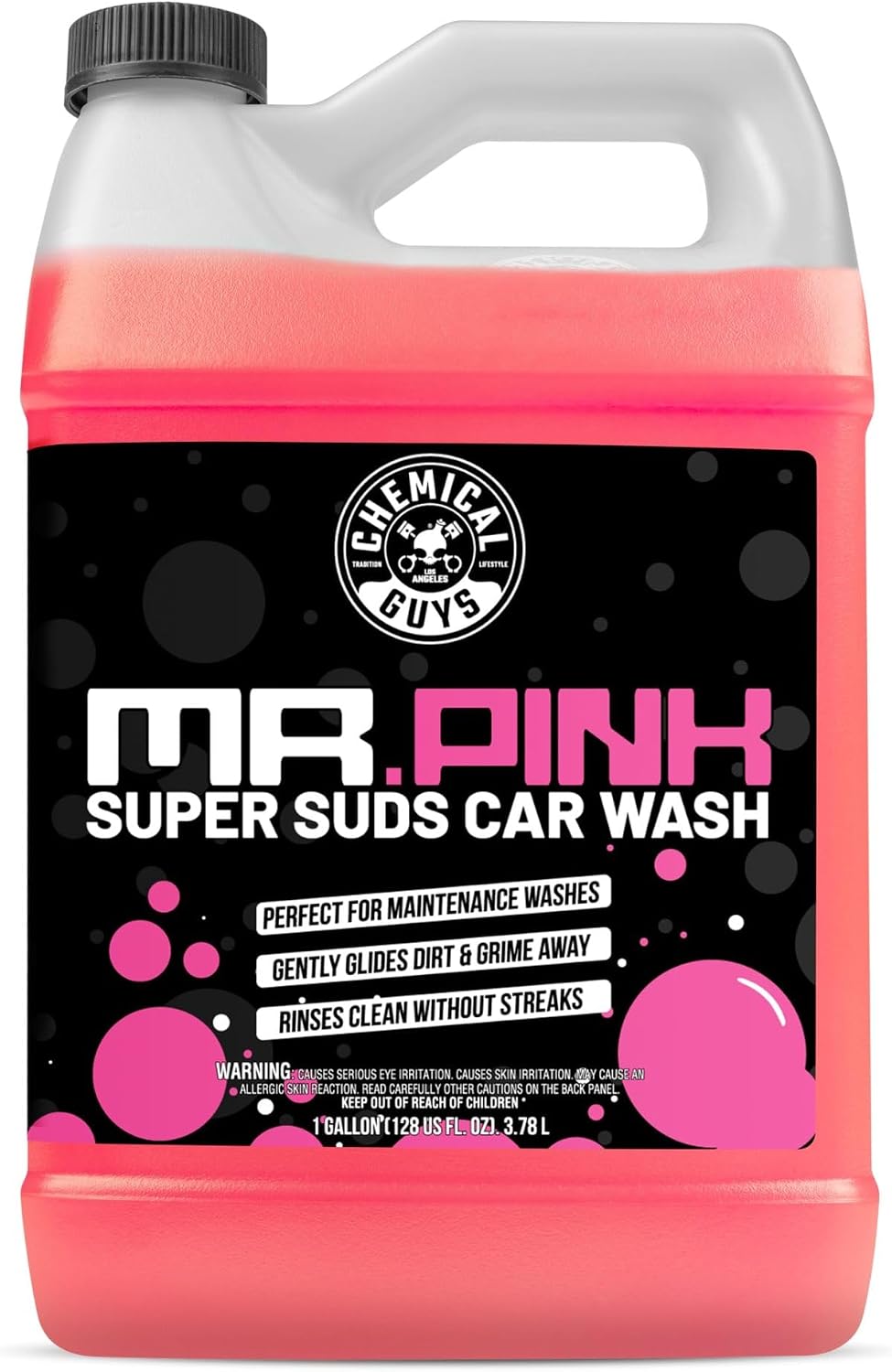
Type: pH-balanced concentrate for foam cannon, foam gun or bucket. 1 gallon, roughly 1 oz per bucket. Around $42.99.
Safe on: gloss paint, clear coat, glass, chrome, wheels, plastic trim, rubber, ceramic-coated and sealed surfaces. NOT for matte or satin paint.
Rating: 4.7 / 5 from 18,020 ratings
Eighteen thousand ratings, and the reason it is here is the sentence at the top of its listing: pH-balanced, will not strip wax, sealant or ceramic coating. That is precisely the promise dish soap cannot make, stated by the manufacturer.
The other useful thing in its reviews is a rebuttal of the pressure washer. The most-quoted owner runs a foam gun off a plain garden hose and finishes the whole vehicle in about 25 minutes, noting flatly that power washing is not required. On a motorcycle that is not just convenient, it is the safer method.
A gallon at 1 oz per bucket is a full season, so the price is misleading in the right direction.
Two limits. It is a soap, not a degreaser – chain fling, engine grease and baked bug protein need a pre-soak first. And it is built to leave gloss, which is exactly why Chemical Guys sells a separate matte soap. Keep it off a Denim tank.
What owners say: “I just wanted a pH neutral soap for use on my car. Good suds, good smell, rinses off well. – C.P.B., verified purchase”
Waterless washes and quick detailers
For the ride-home wipe-down, bugs on the windshield, and keeping a bike presentable between real
washes. The rule that governs all of them: only on a lightly soiled bike. On road
grit you are moving abrasive particles across paint with a towel. All three below add gloss, so none
of them belongs on a matte finish.
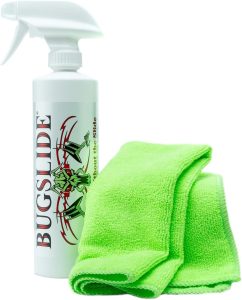
BugSlide 16 oz Shop Kit Cleaner and Polisher
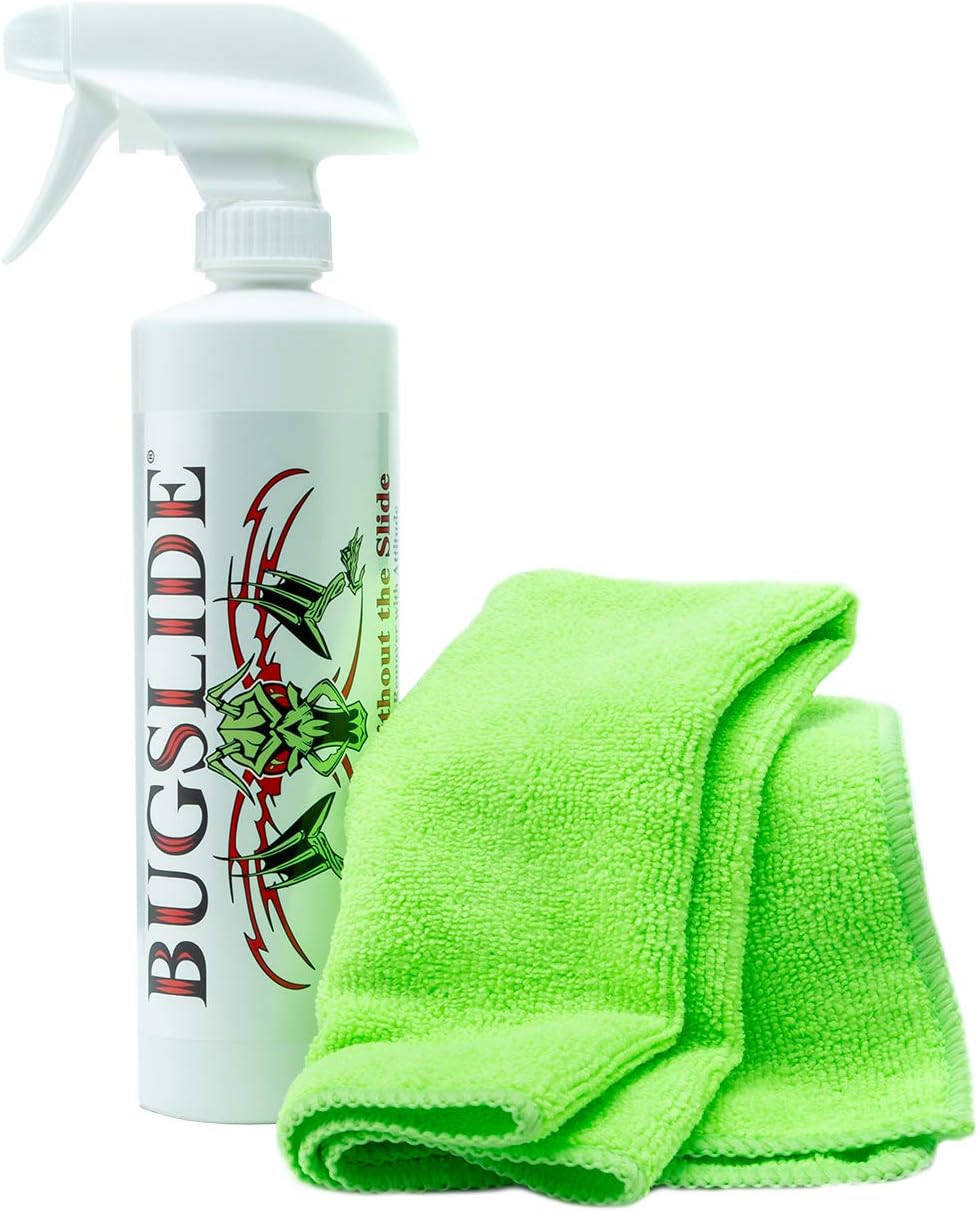
Type: waterless cleaner and bug remover, with microfibre towel. 16 oz spray. Wax-free, leaves a UV-filter release agent. Around $28.99.
Safe on: paint, chrome, glass, windshields, fibreglass, aluminium, acrylic, Lexan, plastic, vinyl, leather, mirrors. Non-porous surfaces only. NOT for matte.
Rating: 4.6 / 5 from 1,729 ratings
The bug specialist, and the one product here that earns its place on the windshield alone. Owners report roughly 95% of hardened bug remains coming off on the first pass, which is far better than any general wash manages.
The release agent it leaves behind is the clever part: it makes the next clean-up easier rather than just fixing today’s mess. On a screen that is worth real money, because a scratched windshield is a permanent night-time glare problem and every extra wipe is a risk.
It is cleared for acrylic and Lexan, which matters – a lot of all-purpose cleaners craze plastic windshields.
Now the honest part. Amazon’s own review digest notes some owners reporting streaking, and the product goes quickly because it evaporates as you work. And it is a polish: it adds gloss, so it must not go anywhere near matte paint. Nor near a mud-caked bike, where you would be dragging grit across the clear coat.
What owners say: “Left behind no spots or streaks just like a detailer spray would. Even used it on my windshield and it’s clean and streak free. – verified purchase”
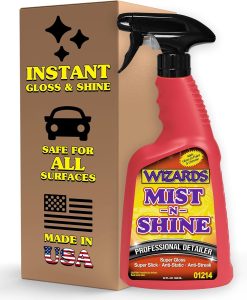
Wizards Mist-N-Shine Quick Detailer, 22 oz
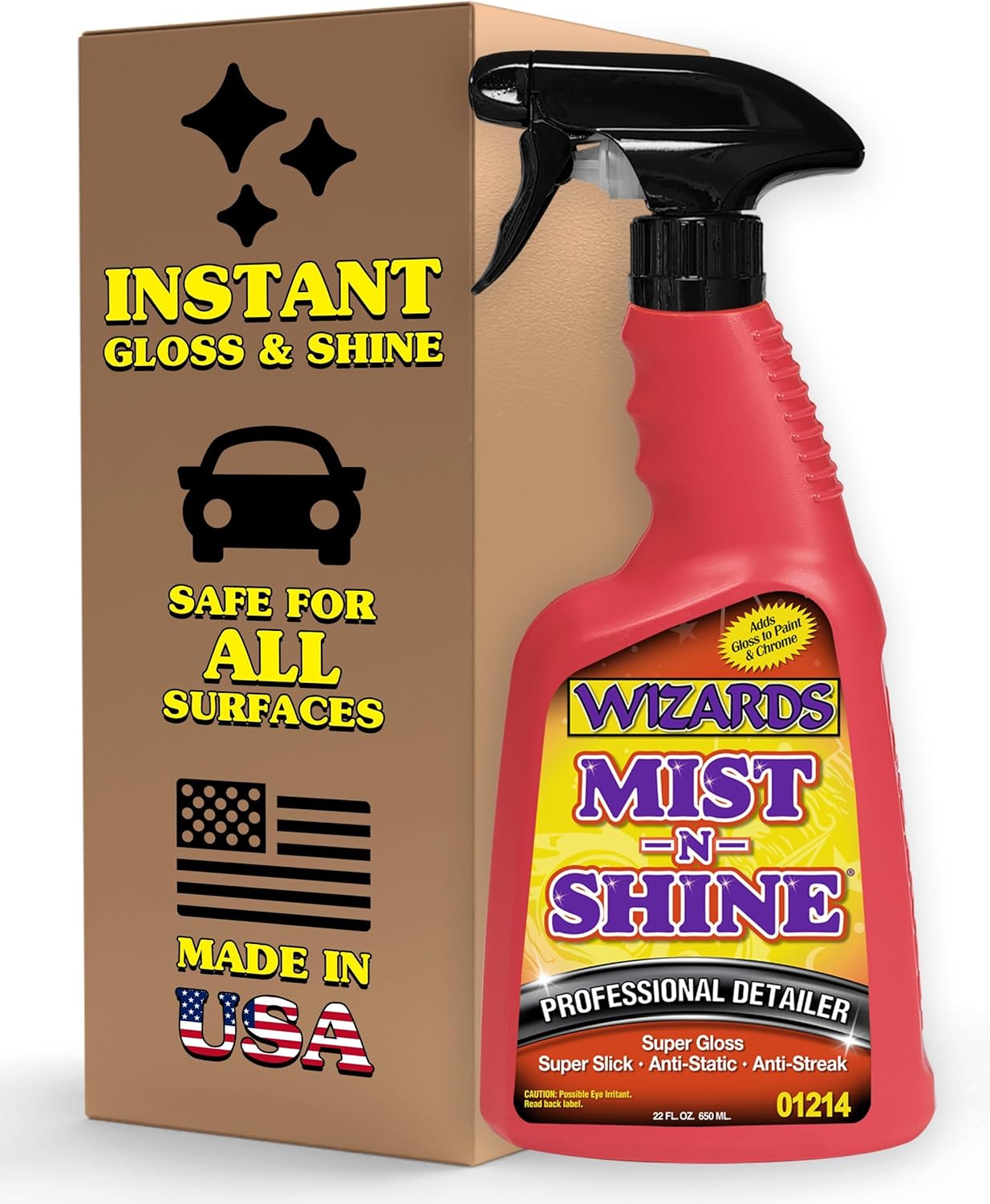
Type: waterless wash and quick detailer. 22 oz ready-to-use. Wax-free, petroleum-solvent-free, anti-static. Around $14.99.
Safe on: paint, clear coat, chrome, glass, windshield, plastic, rubber trim, polished metal, freshly buffed paint. NOT for matte, and NOT on a gritty bike.
Rating: 4.8 / 5 from 2,888 ratings
The between-rides bottle. Dust, fingerprints, light road film – spray and wipe, and the bike looks like it did in the garage.
The anti-static formula is the underrated feature: the bike attracts less dust between rides, which means fewer wipe-downs, which means fewer chances to scratch it. That is a real benefit disguised as a marketing line.
It is also wax-free and solvent-free, bonding a thin film rather than layering wax, so it does not build up hazy residue over a season the way some detailers do. Detailers use it to lock in results straight after machine buffing.
The rule to obey is in its own reviews and it applies to every product in this section: do not use it on a dirty bike. On road grit you are grinding abrasive into the clear coat with a towel. And it offers no durable protection – if you want beading, layer a sealant separately.
What owners say: “Wizards is the best for quick deep shine on my motorcycle. Brings out the metallic in the paint. – verified purchase”
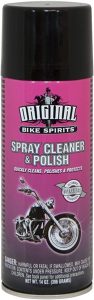
Original Bike Spirits Spray Cleaner and Polish, 14 oz
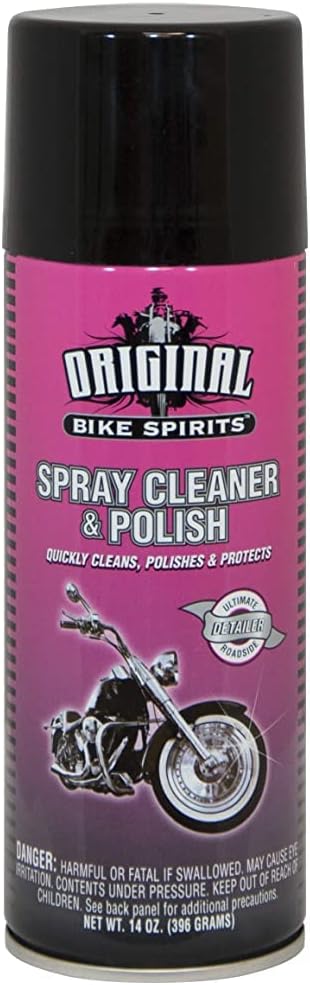
Type: waterless aerosol cleaner and polish. 14 oz can. Cleans, polishes and protects in one pass. Around $16.98.
Safe on: paint, chrome, plexiglass and windshields, plastic, fairings, wheels, light leather wipe, engine cases. NOT on brake rotors or pads. NOT for matte.
Rating: 4.8 / 5 from 2,978 ratings
The rally-and-roadside classic, and the one most Harley riders have seen in a saddlebag. An aerosol can, no water, no bucket – it exists for the parking lot after a long ride.
The best owner report here is also a small tutorial in patience, from a Road Glide rider dealing with bugs: spray on, let it sit five minutes, and they wipe off easily. Five minutes of dwell instead of five minutes of scrubbing is the whole principle of this article in one sentence, from someone who worked it out on their own fairing.
It is cleared for plexiglass, which matters because a lot of general cleaners craze plastic windshields.
Set expectations on shine, though. The same reviewer, at four stars, said the shine could have been slicker. It is a cleaner that leaves a moisture-repellent film, not a wax. The can also empties fast on a full dresser, and because it layers over whatever is already on the bike, owners are honestly unsure how it interacts with existing polish.
What owners say: “Product did well for cleaning bugs off the windshield and fairing on my Road Glide. Spray on and let sit for 5 minutes then bugs wipe off easily. – Mark C., Road Glide”
Chrome and metal polishes
Use sparingly, on a clean dry surface, only where there is tarnish to remove. Both of these cut,
whatever the label says. Neither goes anywhere near matte paint, anodised parts or painted panels.
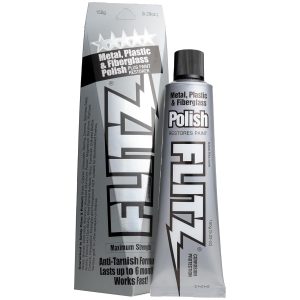
Flitz Metal Polish Paste, 5.29 oz
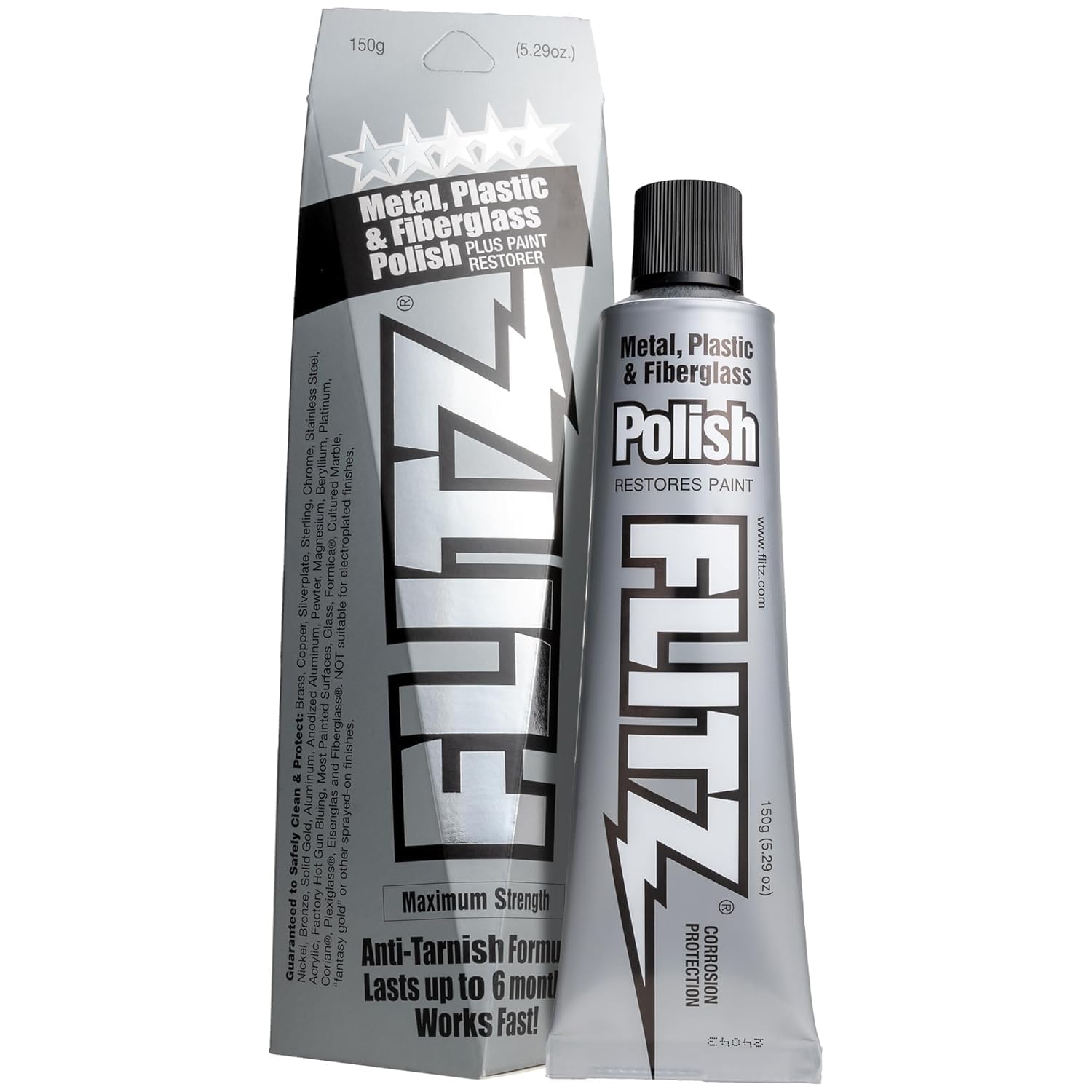
Type: metal polish paste. 5.29 oz tube. Made in USA. Removes light tarnish, water spots, oxidation and surface rust. Around $20.81.
For SOLID chrome, stainless, bare and polished aluminium, brass, copper, nickel, silver, exhaust tips. The listing states it is NOT for chrome-PLATED or coated items – most Harley chrome is plated, so test on a hidden area first.
Rating: 4.8 / 5 from 2,840 ratings
The most popular metal polish there is, and the most important thing about it is a warning printed on its own listing: not for chrome-plated or coated items. Almost all Harley chrome is plated. That does not make it unusable – a great many riders use it on Harley chrome successfully – but it means test first, use it lightly, and use it rarely.
A reviewer put the reality more plainly than the marketing does: despite the non-abrasive claim, it behaves like an abrasive polish of roughly 5,000-grit equivalent. That is very fine. It is not nothing. Every pass spends a little plating.
Used correctly it is superb: light tarnish, water spots and surface rust come off, one tube lasts years, and it will also buff scratches out of a plexiglass windshield or a headlight lens.
Used wrongly it is expensive. It cuts, so pressure changes the result, and on brushed steel a heavy hand kills the grain. And it is manual work – on a bike with a lot of chrome that is a genuine afternoon.
What owners say: “This is, despite their claims, an abrasive polish with an equivalent grit of something like 5,000. – verified purchase”
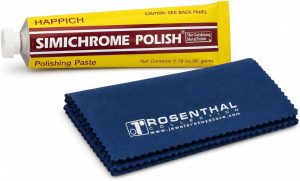
Simichrome Polish, 50 g with cloth
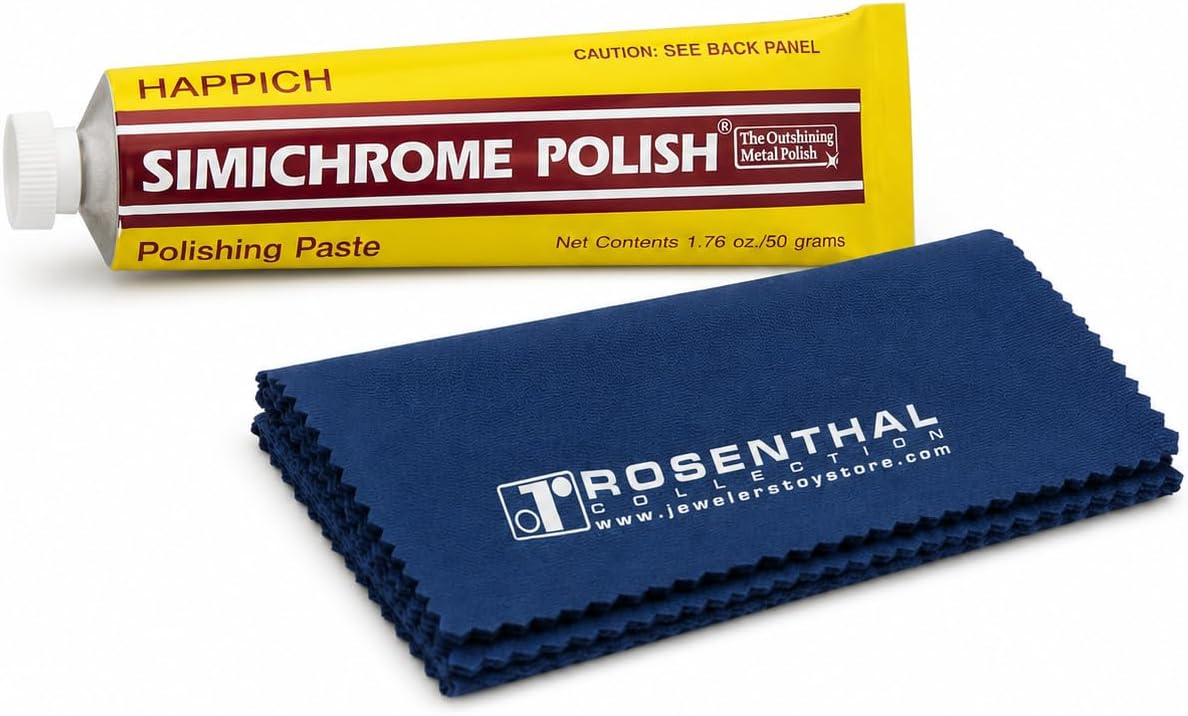
Type: metal polish compound. 50 g tube plus polishing cloth. Leaves an anti-tarnish protective layer. Around $13.35.
For chrome, aluminium, pewter, brass, nickel, stainless, vintage trim. NOT for painted panels, matte or blacked-out parts, plastic, or anodised aluminium – it strips anodising.
Rating: 4.8 / 5 from 159 ratings
The sixty-year-old show-bike standard, and a genuinely different tool from Flitz despite the similar description. The difference is the anti-tarnish layer it leaves behind, which means the shine lasts and the part needs polishing less often – and on plated chrome, polishing less often is the entire objective.
The results people report are dramatic on neglected metal. One owner brought twenty-year-old parts back to near-new in a single session.
The 50 g tube tells you how it is meant to be used: it is a spot-treatment size, not a whole-bike size. Individual parts, small areas, used sparingly – which is exactly right for plating.
The trade-offs are the same as any cutting polish plus one of its own. Heavy staining takes repeated passes and a lot of buffing. It is all hand work. Residue collects in seams and lettering if you are careless. And it will strip anodising off coloured aftermarket levers and pegs, so keep it strictly to bare and plated metal.
What owners say: “Stuff is amazing. Made 20 year old parts look almost new again. Night and day difference. – john vasquez, verified purchase”
Wheel and brake dust cleaners
Non-acid formulas only on a Harley, because acid attacks chrome plating, polished alloy and
emblems. Work one wheel at a time, never let it dry, never use it on hot wheels straight after a ride,
and rinse any overspray off paint immediately.
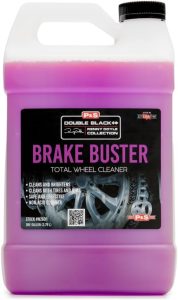
P&S Brake Buster Wheel and Tire Cleaner, 1 Gallon
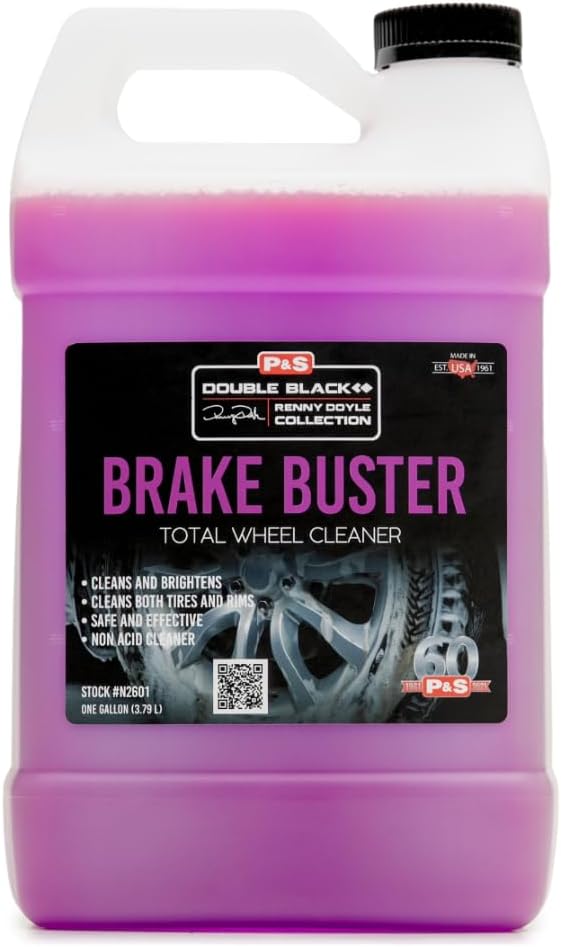
Type: non-acid wheel and tyre cleaner. 1 gallon, use neat or diluted. Contains a rust inhibitor. Around $36.99.
Safe on: chrome, aluminium and polished alloy, painted and powder-coated wheels, steel wheels, rubber tyres, rotor carriers and calipers. Never let it dry, never on hot wheels.
Rating: 4.6 / 5 from 6,330 ratings
The professional detailer’s choice, and non-acid – which on a Harley is not a preference but a requirement, because acid attacks chrome plating, polished alloy and emblems.
The rust inhibitor is a real advantage for a motorcycle. Wheel cleaner runs down into the hub area, the rotor carriers and the spoke nipples, and something that leaves corrosion protection behind in those places is worth having.
The most useful owner report is a method rather than an opinion: spray the rim, wait two or three minutes, spray it again, then agitate – and the dust melts away. Two applications with dwell time beats one application with scrubbing, on wheels as everywhere else.
Two warnings worth knowing before you buy. Amazon’s summary notes some owners saying it barely removes brake dust, and that complaint tracks almost perfectly with over-dilution – use it neat on a bike. And the rust inhibitor stains concrete driveways, which is the single most repeated grievance in the reviews.
What owners say: “I sprayed the front rims, waited no more than 2 or 3 minutes, then resprayed them. Scrubbed, and the dust started to melt away. – verified purchase”
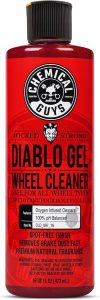
Chemical Guys Diablo Gel Foaming Wheel Cleaner, 16 oz
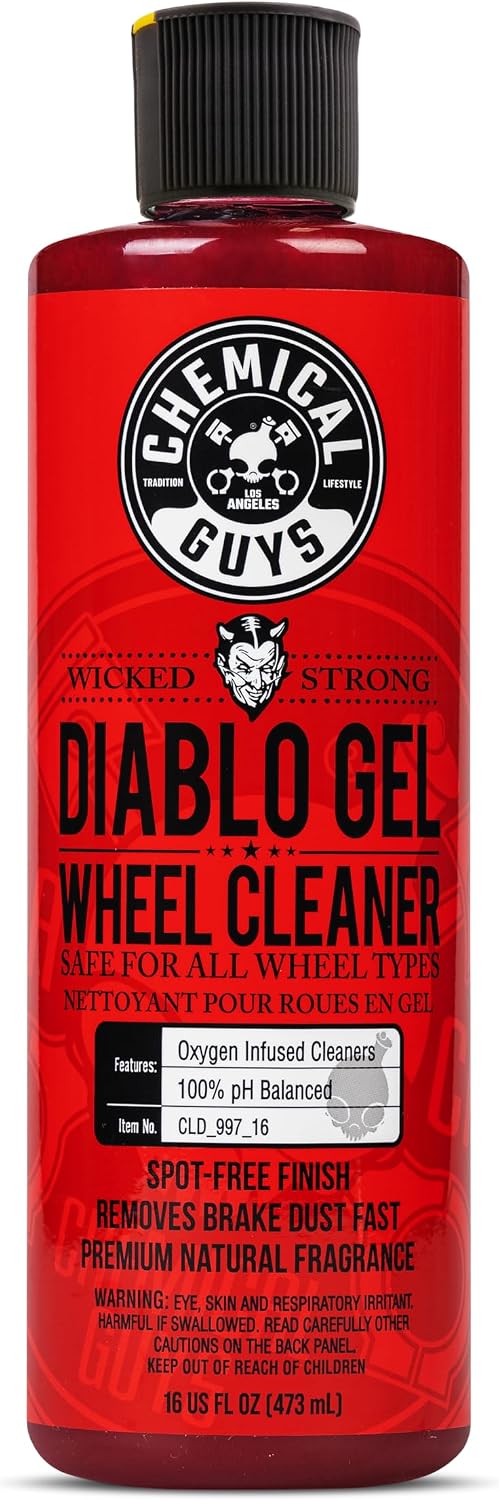
Type: pH-balanced foaming wheel gel concentrate. 16 oz, dilutable. Oxygen-infused gel that clings to vertical surfaces. Around $18.99.
Safe on: chrome, aluminium and polished wheels, powder-coated and painted wheels, custom and anodised finishes, laced spoke wheels, exterior trim. Never let it dry.
Rating: 4.6 / 5 from 6,019 ratings
The right choice for a Harley with laced spoke wheels, and the reason is the gel. It clings to vertical surfaces instead of running off, so it stays where you put it long enough to work – which on eighty spokes and nipples is the difference between cleaning them and rinsing them.
pH-balanced and acid-free is the other essential box ticked. No strong acids means no attack on emblems, delicate parts or protective coatings, and it is cleared for anodised and custom finishes that acid cleaners destroy.
Being a concentrate, you dilute it for maintenance washes and use it neat on built-up dust, so one bottle covers both jobs.
The honest limits: it is not the strongest wheel cleaner made, and sintered-pad dust baked onto a rear rim may need two passes. A lot of reviewers also think 16 oz at this price is poor value next to a gallon of a professional product – and used at full strength the bottle disappears quickly, so most owners end up diluting and accepting slower cleaning.
What owners say: “Gentle on rim surfaces and tough on daily grime and brake dust. I recommend. – Gunner, verified purchase”
Matte and satin finish care
If your Harley is Denim, flat black, satin or wrapped, this is the only pair of products on the
page you should be using on the paint. Both are deliberately gentle and deliberately gloss-free.
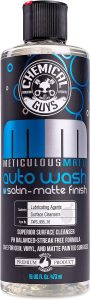
Chemical Guys Meticulous Matte Foaming Wash Soap, 16 oz
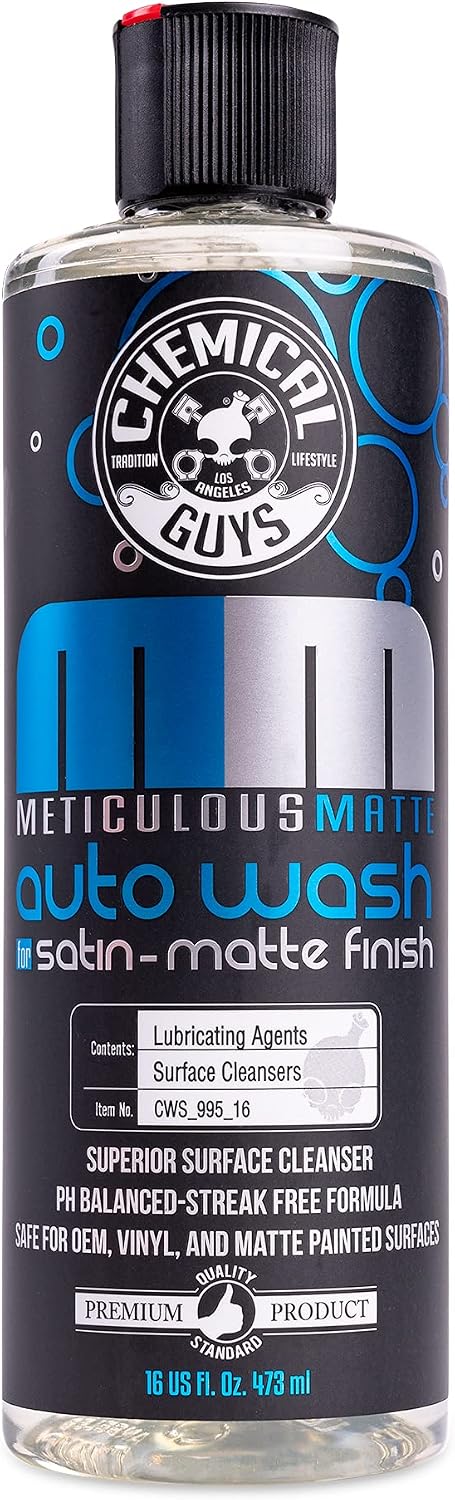
Type: matte-specific foaming wash concentrate. 16 oz, also sold by the gallon. pH-balanced, non-abrasive, adds zero gloss. Around $12.99.
For matte and satin paint, Harley Denim and flat black factory finishes, matte and satin wraps, matte-coated plastics, blacked-out engine and frame parts.
Rating: 4.7 / 5 from 1,846 ratings
If your Harley is Denim or flat black, this is the reference product for the category, and Amazon’s own review digest specifically names Harley-Davidson flat black paint among what owners use it on. Buyers say it makes matte look new without leaving a sheen, which is the only thing a matte soap has to do.
One owner summarised the entire search: “My motorcycle has a matte finish, so I spent a long time looking for something that doesn’t make it shiny.”
Understand that it is deliberately weak, and that the weakness is the feature. Another owner explains the method precisely: because it is a soft soap and hard scrubbing is bad for the finish, harder stains take multiple passes. Several gentle passes, never one hard one – matte is damaged by friction as much as by chemicals.
The practical drawbacks: it will not cut chain fling or baked bug protein, so grease needs handling separately and carefully. Sixteen ounces goes fast – about five washes with a foam attachment. And residue is the most-flagged negative on the listing, which is under-rinsing on a warm day.
What owners say: “My motorcycle has a matte finish, so I spent a long time looking for something that doesn’t make it shiny. This stuff works great. – Jay Cartwright”
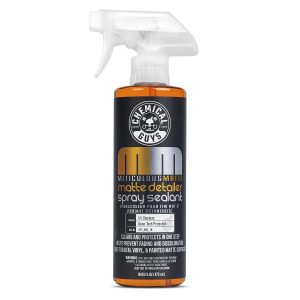
Chemical Guys Meticulous Matte Detailer and Sealant, 16 oz
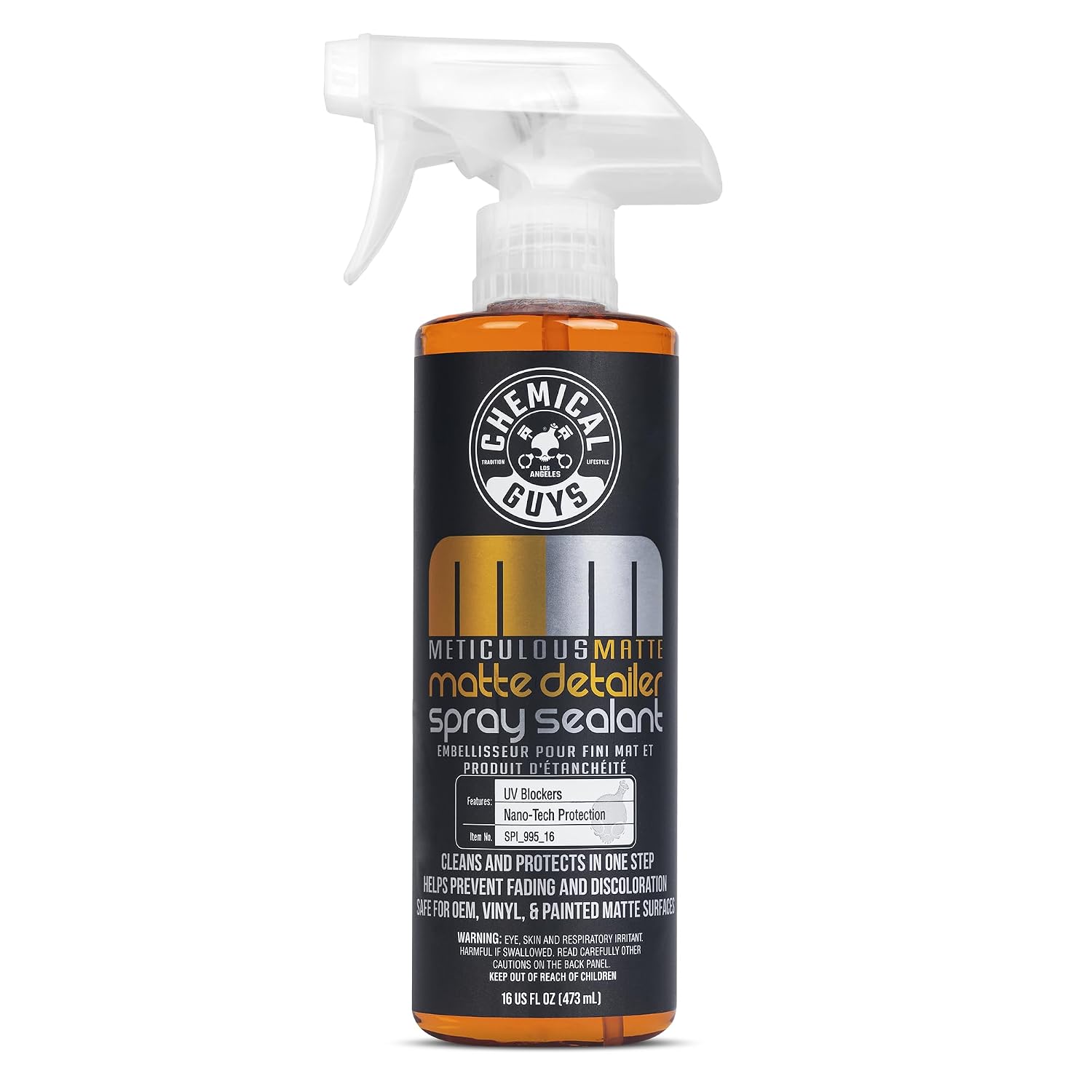
Type: matte and satin quick detailer and sealant. 16 oz ready-to-use, also 32 oz. Wax-free and silicone-free. Around $13.99.
For matte and satin paint, Harley Denim tanks and fenders, matte black fairings, vinyl wraps, matte wheels, satin trim. NEVER use in direct sunlight.
Rating: 4.6 / 5 from 5,313 ratings
The partner to the matte soap, and the product that actually protects the finish – matte paint still needs sealing, it just cannot be sealed with wax. Wax-free and silicone-free means it physically cannot fill the microscopic texture that makes matte matte.
For a Denim tank this is the only between-rides spray on this page you should be reaching for. Every other detailer here adds gloss.
Now the warning, because it is a real one and it is the whole category rather than this brand. It streaks. The listing has “streak-free” mentioned 153 times and a matching pile of streaking complaints, and one Iron 883 owner reported a ton of little waxy streaks all over the tank and down the rear fender, even working in the garage.
That is manageable if you work the way the product needs: very little product, one panel at a time, a clean edgeless towel, a final wipe with a dry side of it, never in the sun, never on a warm panel. The label itself says no direct sunlight, and ignoring that is the main cause of the complaints.
What owners say: “There are a ton of little waxy streaks all over the tank and down the rear fender… even when used in the garage. – Dalton, Harley Iron 883, 3 stars”
Microfibre towels
The cheapest part of the kit and the one that causes the most damage when it is wrong. Buy enough
to keep separate sets for paint, chrome, wheels and engine, wash them before first use, and never let
fabric softener near them.
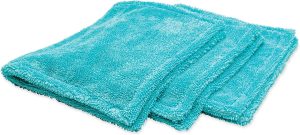
Griot's Garage PFM Edgeless Detailing Towels, 3-pack
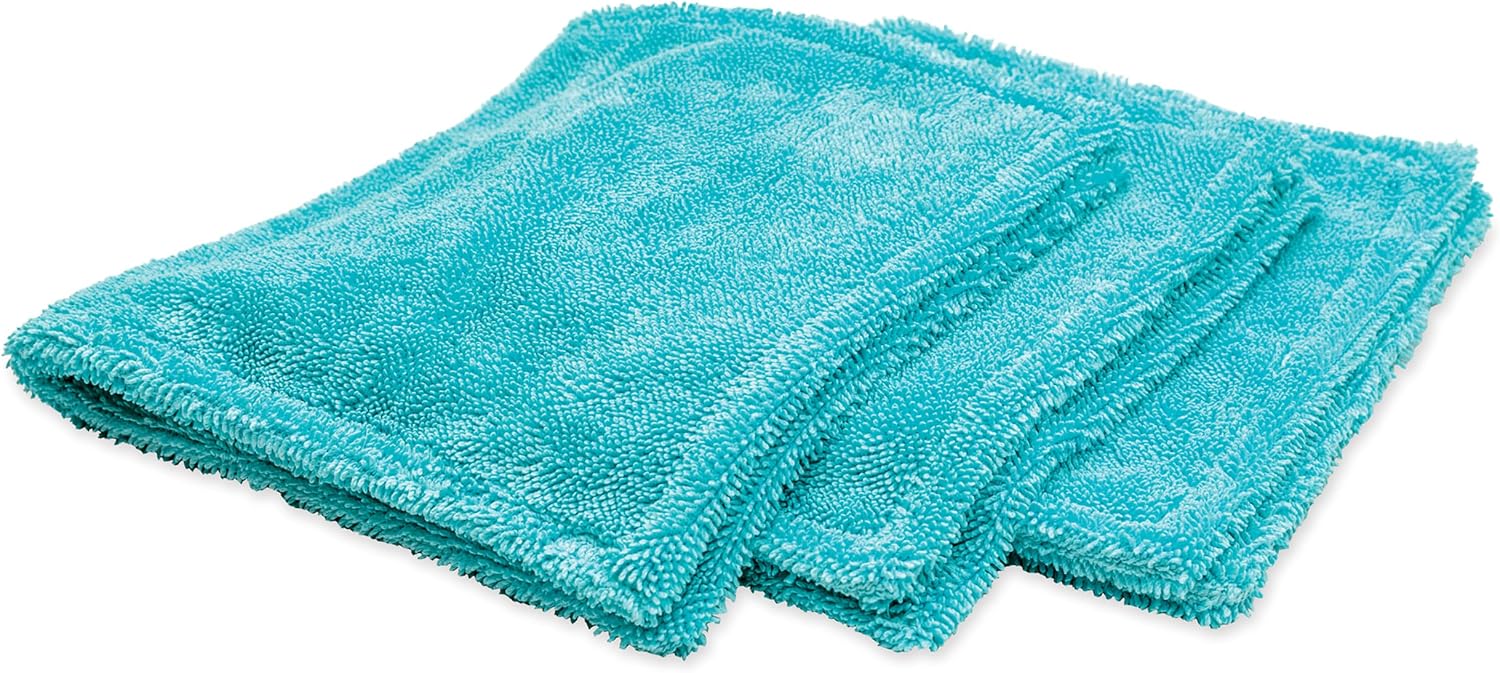
Type: edgeless double-ply detailing towels. 16 x 9 in, set of three. No stitched border, no tag. Around $19.99.
Safe on: clear coat and paint, matte and satin panels, chrome, glass, windshield, plastic trim, leather. Never reuse on paint after wheels or chain.
Rating: 4.9 / 5 from 174 ratings
Edgeless is the whole point, and on a matte or Denim Harley it stops being a nicety. A stitched border or a sewn-in tag is harder than the surface it drags across, and on matte paint – which burnishes to a shine under friction alone – that is how you get a permanently glossy streak next to a dull one.
Double-ply long-looped PFM microfibre glides rather than drags, which is what you want for quick-detailer and waterless work where there is no water film to carry grit away.
Reserve these for paint, chrome and glass, and buy the cheap bulk pack for everything else. A towel that has touched a wheel or a chain carries iron particles and will put swirl marks straight into a clear coat.
Two things to be clear about. Several buyers find 16 x 9 in small for a full bike wipe-down – it is a hand-sized towel, not a bath sheet. And they are detailing towels, not drying towels: low water capacity, so a rinsed dresser still needs a large twisted-loop towel afterwards.
What owners say: “Love these. Work great on home detailing of my vehicle. Good size. No streaking. Machine washed after use. – Iheartmanatees”
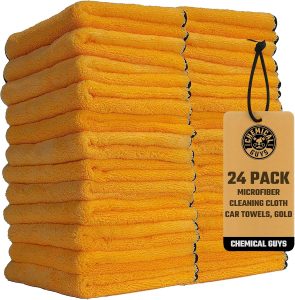
Chemical Guys Professional Microfiber Towels, 16 x 16 in, 24-pack
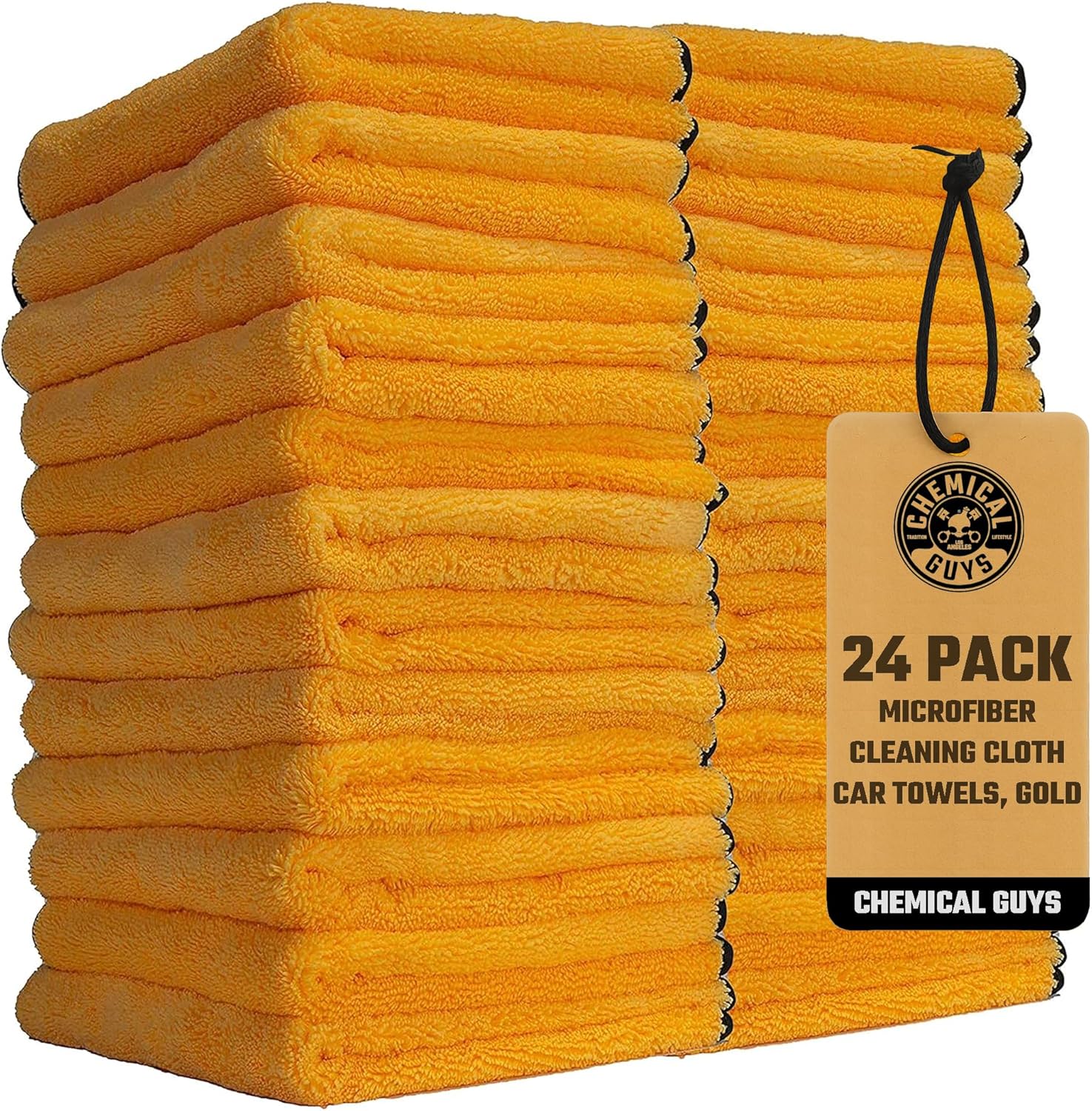
Type: high-pile microfibre towels. 16 x 16 in, 24 per pack, colour options. Around $52.99.
For clear coat, chrome, glass, plastic, interior and leather, buffing off sealant, drying panels. Colour-code them – a wheel towel must never return to paint.
Rating: 4.8 / 5 from 2,214 ratings
Twenty-four towels, and the reason to buy in that quantity is not thrift – it is that you need separate sets for paint, chrome, wheels and engine, and nobody maintains that discipline with six towels in a drawer.
Brake dust is embedded iron. A towel that has cleaned a wheel and then goes back on a tank is the most common cause of swirl marks on any vehicle, and it is entirely preventable by buying enough towels and colour-coding them. Chemical Guys sell colour options specifically so you can.
High-pile construction means fewer passes, and reviewers report them lint-free and streak-free on glass and chrome.
Three honest points. Durability is genuinely mixed – Amazon’s summary notes some buyers reporting heavy shedding on early washes. You must wash them before first use or they leave lint on chrome and glass. And 16 x 16 in is a wiping size, not a drying size: a rinsed touring bike still wants a big twisted-loop drying towel on top of these.
What owners say: “These are nice and plush, work great for use with spray on cleaner, very absorbent and does not leave streaks like my old towels. – Michael Rowe”
Drivetrain and engine
Last in the wash, separate everything, and keep both of these away from painted panels. The
degreaser is a solvent; the dressing goes on a clean, rinsed, cool engine and never on rotors or
tyres.
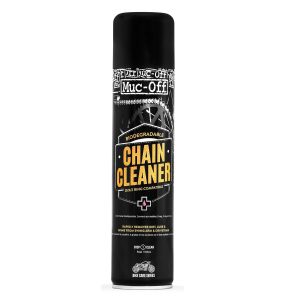
Muc-Off Motorcycle Chain Cleaner, 16.9 oz
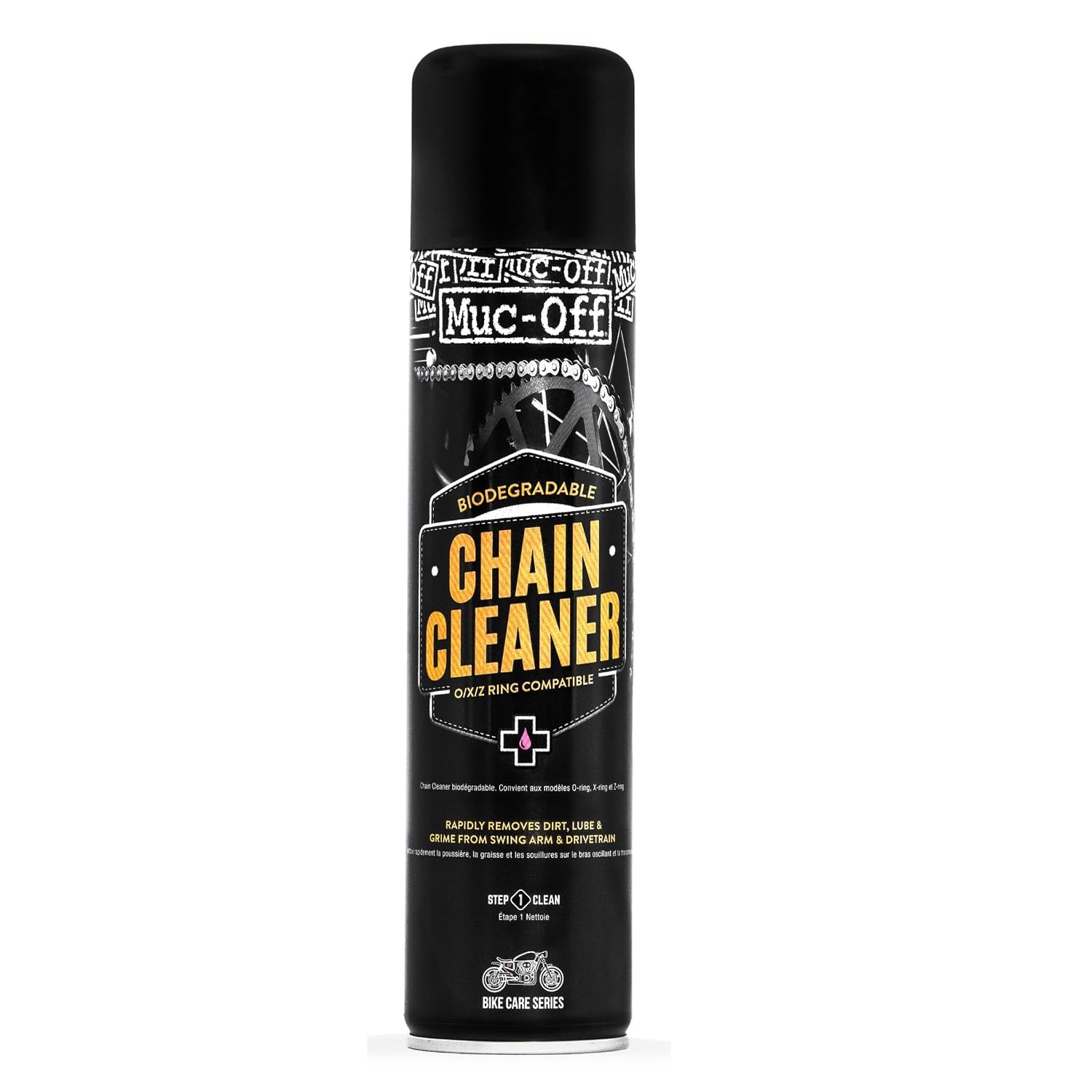
Type: solvent chain cleaner and degreaser. 500 ml spray. Biodegradable, O-ring and X-ring safe per Muc-Off. Around $17.49.
For the drive chain, sprockets, swingarm area, chain guard and greasy drivetrain metal. NOT for body panels, waxed paint, matte finishes or vinyl graphics. Belt-drive Harleys do not need it.
Rating: 4.9 / 5 from 2,529 ratings
For chain-drive bikes and for greasy drivetrain metal generally, and one of the two highest-rated products in this guide. Most of the build-up drops off before a brush touches it, which on a chain is the difference between a job and a chore.
O-ring and X-ring safety is the specification that matters. Plenty of hardware-store degreasers will clean a chain beautifully and strip the grease out from behind the seals while doing it, and the chain is finished a few thousand miles later.
Read the section above before buying, though: most modern Harleys are belt-driven. A belt is not maintained like a chain – it wants a rinse, an inspection, and nothing else. No solvent, no lubricant, no dressing. If your Harley has a belt, this bottle is for cleaning greasy engine and swingarm metal only, not for the belt.
Keep it strictly off paint. It is a solvent – it will strip wax and it has no business near matte panels or graphics. And despite the watermelon scent, reviewers warn plainly against getting it on bare hands.
What owners say: “This stuff instantly loosens up any grease to be cleaned with a brush and then a secondary spray down just melts the build up away. – Ed”
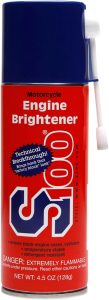
S100 Motorcycle Engine Brightener, 4.5 oz
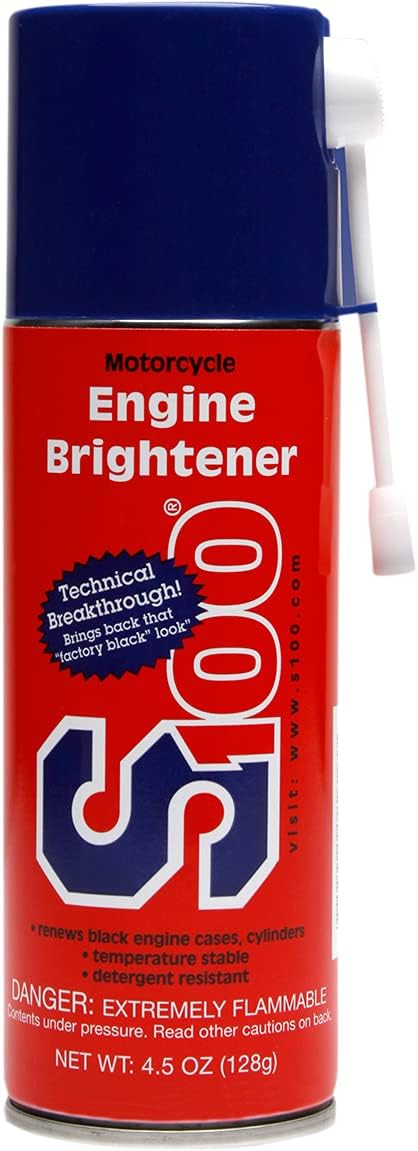
Type: black engine dressing aerosol. 4.5 oz with a metered spray tube. Temperature stable and detergent resistant. Around $18.95.
For black engine cases and cylinders, wrinkle-black powder coat, cables, rubber hoses, plastic components, blacked-out frame and brackets. NEVER on brake rotors, pads or tyres.
Rating: 4.7 / 5 from 169 ratings
The finishing touch for a blacked-out Harley, and the answer to a specific problem: wrinkle-black and satin-black engine finishes fade to grey, and there is nothing you can polish them with, because polishing them would make them shiny.
This restores the depth instead. It is safe on cables, rubber hoses and plastic – which solvent engine cleaners are not – and the metered spray tube lets you target between cooling fins rather than coating the whole engine bay.
It is also detergent resistant and temperature stable, so it survives the next wash and a hot engine rather than washing straight off.
Understand what it is not. It does not clean. If you spray it on a dirty engine you are sealing the dirt in – the engine must be degreased, rinsed and cool first. It is cosmetic only. The can is small for the money, which is the most-cited objection. And overspray onto rotors, tyres or chrome has to be wiped off immediately: a slick film on a brake rotor is a safety problem, not a cosmetic one.
What owners say: “Just done the motor on my 2018 Trike. The S100 made it look like it just rolled out the assembly line. – verified purchase”
What a sensible kit actually costs
You do not need seventeen bottles. Three realistic builds:
Basic – gloss-painted bike, around $75
- Wizards Motorcycle Bike Wash or Mr. Pink concentrate – the wash
- Original Bike Spirits or Mist-N-Shine – between-rides wipe-down
- Chemical Guys Diablo Gel – wheels
- A 24-pack of microfibre, colour-coded
Full – chromed touring bike, around $190
- S100 Total Cycle Cleaner gallon – it is the spray-and-rinse pre-soak that saves the most time on
a dresser - BugSlide – windshield and fairing bugs
- Flitz or Simichrome – chrome, used sparingly
- P&S Brake Buster gallon – wheels
- S100 Engine Brightener – blacked-out engine parts
- Griot’s edgeless towels for paint, plus a bulk pack for everything else
Matte / Denim bike, around $90
- Chemical Guys Meticulous Matte soap – the wash
- Chemical Guys Meticulous Matte detailer and sealant – protection and between-rides
- Diablo Gel for the wheels, kept off the bodywork
- Edgeless towels only – no stitched edges, no tags
- Nothing else. That is the point.
Add a leaf blower or bike dryer to any of the three and it will do more for the bike’s condition
than any additional bottle.
Winter, salt and storage
If the bike sees a salted road even once, that changes the job. Salt is hygroscopic – it holds
moisture against metal and keeps corroding long after the bike is dry. Rinse the underside, the
frame rails, the swingarm and the wheels with plain cool water as soon as you are home, before the
bike goes in the garage. Do not wait for a proper wash at the weekend.
Before storage, the sequence matters more than usual: full wash, thorough rinse, aggressive
drying with moving air, then seal the paint and the chrome. A protected surface going into a damp
garage for four months is a completely different proposition to a bare one. Chrome in particular
should never be stored unsealed – the pitting that appears in spring started as condensation in
November.
And do not cover a wet bike. A cover over trapped moisture is worse than no cover at all.
Cleaning a Harley-Davidson - FAQs
Can I use Dawn to wash my Harley?
How to properly clean a Harley-Davidson?
What are the best motorcycle cleaning products?
How to make your motorcycle shine like new?
Is it safe to pressure wash a Harley?
Can I wax a matte black Harley?
Will metal polish damage my Harley chrome?
How do I get bugs off without scratching the paint?
Do I really need a separate wheel cleaner?
Can I use car wash soap on a motorcycle?
How often should I wash my Harley?
What should I never use on a Harley?
The short version
If you take three things from this page, take these.
Stop using dish soap. Not because it fails to clean, but because it removes the
protection and leaves nothing behind on a machine full of exposed metal. A pH-balanced motorcycle
wash with corrosion inhibitors costs less than a tank of fuel and lasts a season.
Identify your finish before you buy. Gloss, matte, plated chrome and bare
aluminium want four different chemicals, and two of those mistakes are permanent. Wax on a Denim tank
and a heavy hand on plated chrome cannot be undone.
Dry it properly. Moving air before towels, always. More Harleys are damaged by
water left sitting in seams and bearings over a winter than by any cleaning product ever sold.
Everything after that is preference. Whether you like the cherry smell of the wheel gel or the
watermelon of the chain cleaner does not change the outcome – the sequence, the finish and the drying
do.
#1 Pick: Best Cleaner for Harley-Davidson
S100 Total Cycle Cleaner, 1.32 Gallon
If you change one thing after reading this page, stop using dish soap. A pH-controlled cleaner with corrosion inhibitors costs less than a tank of fuel and lasts a season, and it leaves protection behind instead of taking it off.