Harley builds its airboxes to pass noise and emissions testing, not to flow air. That single fact is why the intake is the first thing most owners change, and why a Stage 1 air cleaner is the most common modification on any Harley anywhere.
What it does is straightforward: it removes a restriction the factory put there for regulatory reasons and lets the engine breathe. What it does not do is add the horsepower most marketing implies, and it does not work properly on its own.
This guide covers what Stage 1 actually means, how much power it really adds – with the one manufacturer figure anybody publishes – whether it is worth doing, why the tune matters more than the filter, and the separate world of air cleaner covers, which is where most of the money in this category actually gets spent.
There is also a practical section nobody writes about: what happens to an exposed filter in heavy rain, and what to do about it.
#1 Pick: Best Air Cleaner for Harley
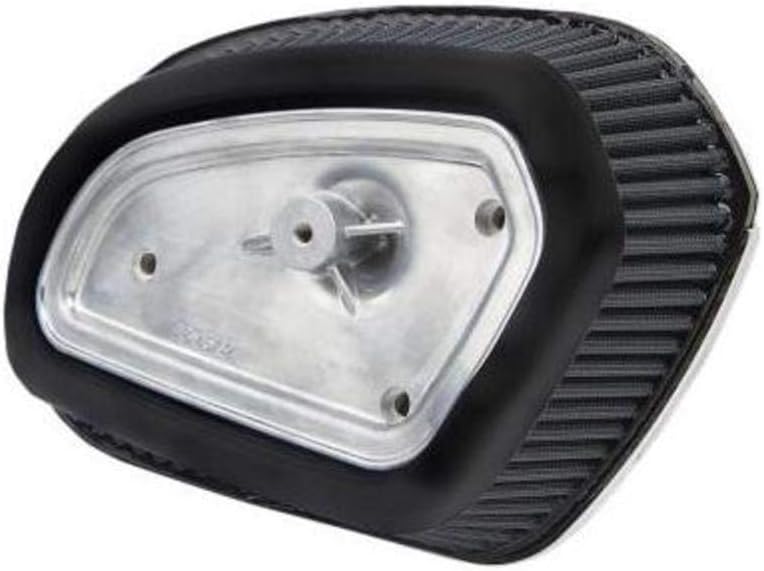
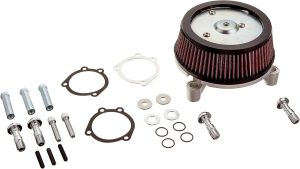
Arlen Ness Chrome Stage I Big Sucker Air Cleaner Kit
The Big Sucker is the reference product in this category – the name that comes up most in forum recommendations, and the base that the largest range of aftermarket covers is built around.
Two things before you buy anything here. Budget for a tune in the same purchase: not one product listing in this category mentions it, and without one you get a fraction of the benefit. And if you want airflow without changing how the bike looks, the K&N drop-in element further down needs no tune at all.
The top best product [hide]
What Is a Stage 1 Air Cleaner?
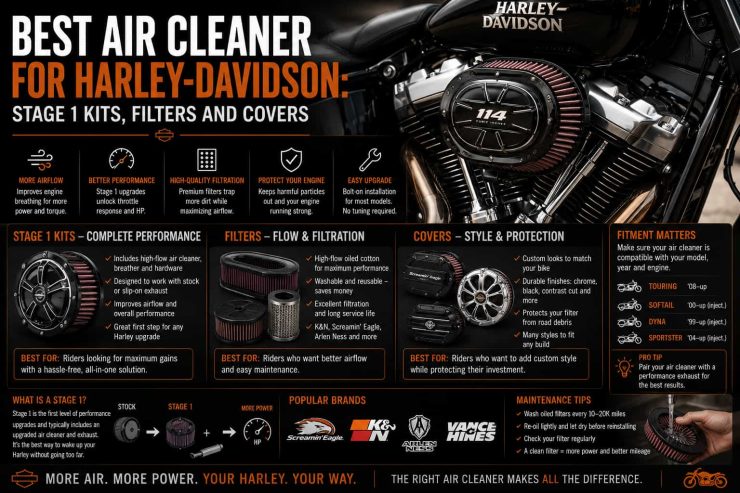
Stage 1 is Harley’s own naming, and it describes a package rather than a part. In Harley’s terms a full Stage 1 upgrade is three things together:
- A high-flow air cleaner replacing the restrictive factory airbox
- A freer-flowing exhaust, usually slip-on mufflers
- An ECM recalibration so the fuel mapping matches the new airflow
What the aftermarket sells as a “Stage 1 air cleaner” is the first item on that list. It is the intake half of the package, and buying it alone gives you a fraction of the result – which is the source of most disappointment in this category.
Why the factory airbox is restrictive
Two reasons, and neither is about performance. Intake noise counts towards the bike’s drive-by noise measurement, so the airbox is designed to muffle it. And the fuel mapping is set lean to pass emissions, which means the engine cannot use much more air than it is getting anyway. Harley is not building a bad part – it is building a part that satisfies regulations.
What changes when you fit one
The engine breathes more easily, particularly higher in the rev range where the restriction bites hardest. Throttle response sharpens. Intake noise increases noticeably – some riders love the induction growl under acceleration, others find it intrusive on a long ride, and it is worth knowing which you are before you spend money.
Stage 2 and beyond
Stage 2 adds camshafts. Stage 3 adds bigger displacement – cylinders, pistons, heads. Each stage is a substantially larger job and expense than the one before. Stage 1 is the only one most riders ever do, and it is the only one that makes sense as a bolt-on afternoon.
How Much Horsepower Does Stage 1 Actually Add?
This is the question everyone asks and almost nobody answers with a number, so here is what the evidence actually supports.
The one published figure
K&N publishes a dyno claim for their 63-1125 intake system: an estimated gain of 7.78 horsepower at 4,953 RPM. That is the only specific numeric claim across every product examined for this guide – every other manufacturer uses qualitative language like “improved throttle response” and “increased airflow”.
Note what that figure represents: a peak gain at one specific engine speed, on a specific engine, presumably with supporting modifications. It is not eight horsepower across the rev range.
What to realistically expect
- Air cleaner alone, no tune: very little. Perhaps 2-4 horsepower, and the bike may actually run worse in some conditions because the mixture is now leaner than the ECM expects. Throttle response usually improves regardless, which is why people feel a bigger change than the dyno shows.
- Air cleaner plus tune: 5-8 horsepower on a Twin Cam or Milwaukee-Eight is a realistic range. The tune is doing much of that work.
- Full Stage 1 – intake, exhaust and tune together: 8-12 horsepower on a modern Big Twin, and a genuinely different-feeling engine. This is the package Harley designed the name around.
Why the feel exceeds the numbers
Riders consistently report a larger improvement than the dyno figures justify, and they are not imagining it. Throttle response, the sound of the intake under load and how quickly the engine picks up from low revs all change noticeably. Peak horsepower is simply not what you experience on the road.
If your goal is a bike that feels livelier and sounds better, Stage 1 delivers. If your goal is a specific horsepower number, set expectations accordingly and budget for the tune.
Is a Stage 1 Air Cleaner Worth It?
Yes, with one condition: budget for the tune at the same time.
The case for
- It is the cheapest meaningful engine modification on a Harley. A kit runs $100 to $300, an afternoon to fit, and it is fully reversible.
- Throttle response improves immediately in a way you feel every time you ride.
- Heat management gets better. A leaner-running engine that can breathe generates less heat at your right leg, which matters more than horsepower on a hot day in traffic.
- The look. On most Harleys the air cleaner is the most visible mechanical component on the bike, and this is a large part of why the category exists.
The case against, honestly
- Without a tune, the gain is marginal and you may make the lean-running problem worse. Budget another $300-500 for a tuner or a dyno session.
- Intake noise is not for everyone. It is a growl under acceleration that some riders find tiring on a 400-mile day.
- Exposed filters and rain do not mix well. See the section below.
- Warranty. Non-Harley intake modifications can complicate a warranty conversation on a bike still in coverage.
The verdict
For a bike out of warranty, ridden for enjoyment, Stage 1 is the best value modification available. For a new bike still under warranty, Harley’s own Screamin’ Eagle kit installed by a dealer avoids the argument entirely, at a higher price.
Do You Need a Tune After Fitting an Air Cleaner?
On a fuel-injected Harley, yes – and here is something worth knowing before you shop: not one of the fifteen product listings examined for this guide mentions it. Manufacturers sell the air cleaner and leave the tune out of the conversation.
What happens without one
The ECM delivers fuel based on a map calibrated for the factory airbox. Increase airflow without changing the map and the mixture goes leaner than it already was. Consequences: more heat, popping on deceleration, occasional surging at steady throttle, and on a bike ridden hard, accelerated wear.
None of this destroys an engine overnight. It does mean you paid for a modification and got a portion of the benefit alongside a set of new symptoms.
Your options
- Fuelpak FP3, Dynojet Power Vision, Screamin’ Eagle Pro Street Tuner. $300-500, plug in and load a map.
- Dyno tuning. $400-700 depending on the shop, and the best result because the map is built for your specific engine rather than downloaded.
- Nothing. Plenty of riders do this and their bikes run. Accept that you are leaving most of the gain on the table.
Carbureted bikes
No ECM to remap. You rejet instead – a different job, usually smaller, and something the air cleaner manufacturer may provide guidance on.
Our guide to Harley tuners and fuel management systems covers the options in detail.
Filter Types: What You Are Actually Buying
Oiled cotton gauze
The dominant technology in performance intakes – K&N, Arlen Ness and most premium kits use it. Layers of cotton mesh between wire screens, treated with a tacky oil that catches particles. It flows substantially better than paper and it is washable, so one filter lasts the life of the bike. K&N backs theirs with a claim of 100,000 miles between services.
The catch is maintenance. The filter needs cleaning and re-oiling periodically, and over-oiling is a genuine mistake: excess oil reduces flow and can migrate downstream. Use the manufacturer’s kit and follow the quantity guidance rather than soaking it.
Dry synthetic
Some manufacturers use a dry synthetic media that requires no oil. Slightly less flow than a well-maintained oiled filter, but no oiling step and no risk of over-oiling. A reasonable choice if you would rather not think about it.
Paper
What the factory fits. Cheap, effective at filtering, restrictive by comparison, and disposable. There is nothing wrong with a paper element on a stock bike – it is simply not what a performance intake uses.
Exposed versus enclosed
This matters more than the media. An enclosed design keeps the element behind a cover and shields it from road spray. An exposed design – a visible cone or an open filter – flows more and looks like a modification, which is often the point. It also gets wet, gets dirty faster and needs more attention. The section on rain below is not a footnote.
Best Stage 1 Air Cleaner Kits for Harley
Five options from the category benchmark to the budget choice. Read the fitment line on each – several major products in this category publish none at all.
Arlen Ness Chrome Stage I Big Sucker Air Cleaner Kit
Fits: not specified on the Amazon listing – the attributes say only ‘Vehicle Specific Fit’ with the part number. Cross-check the part against Arlen Ness’s own fitment guide for your model and year.
Tuner: not stated by the manufacturer. Assume a tune is needed on any EFI bike.
Rating: 4.8 / 5 from 51 ratings
The Big Sucker is the reference product in this category – the name that appears most often in forum recommendations and the base that the largest ecosystem of aftermarket covers is built around. This is the chrome Stage I version with a standard filter, and it carries the highest rating of any air cleaner in this guide. The design uses a substantially larger filter element than the factory airbox with a backing plate that removes the restriction, and the kit includes all mounting hardware. A 2021 Street Glide owner describes it as easy to install and an excellent filter. The consistent complaint is not the product but the paperwork: owners repeatedly call the Arlen Ness instructions poor, and on a job involving crankcase breather routing that matters more than it would elsewhere. Watch a video before you start. The listing also publishes no fitment information at all, which is the norm for this brand and the reason to verify the part number before ordering.
What owners say: “Easy to install and awesome filter. – Jeff Uda, 2021 Street Glide Standard”
Arlen Ness 18-803 Big Sucker Performance Air Filter Kit
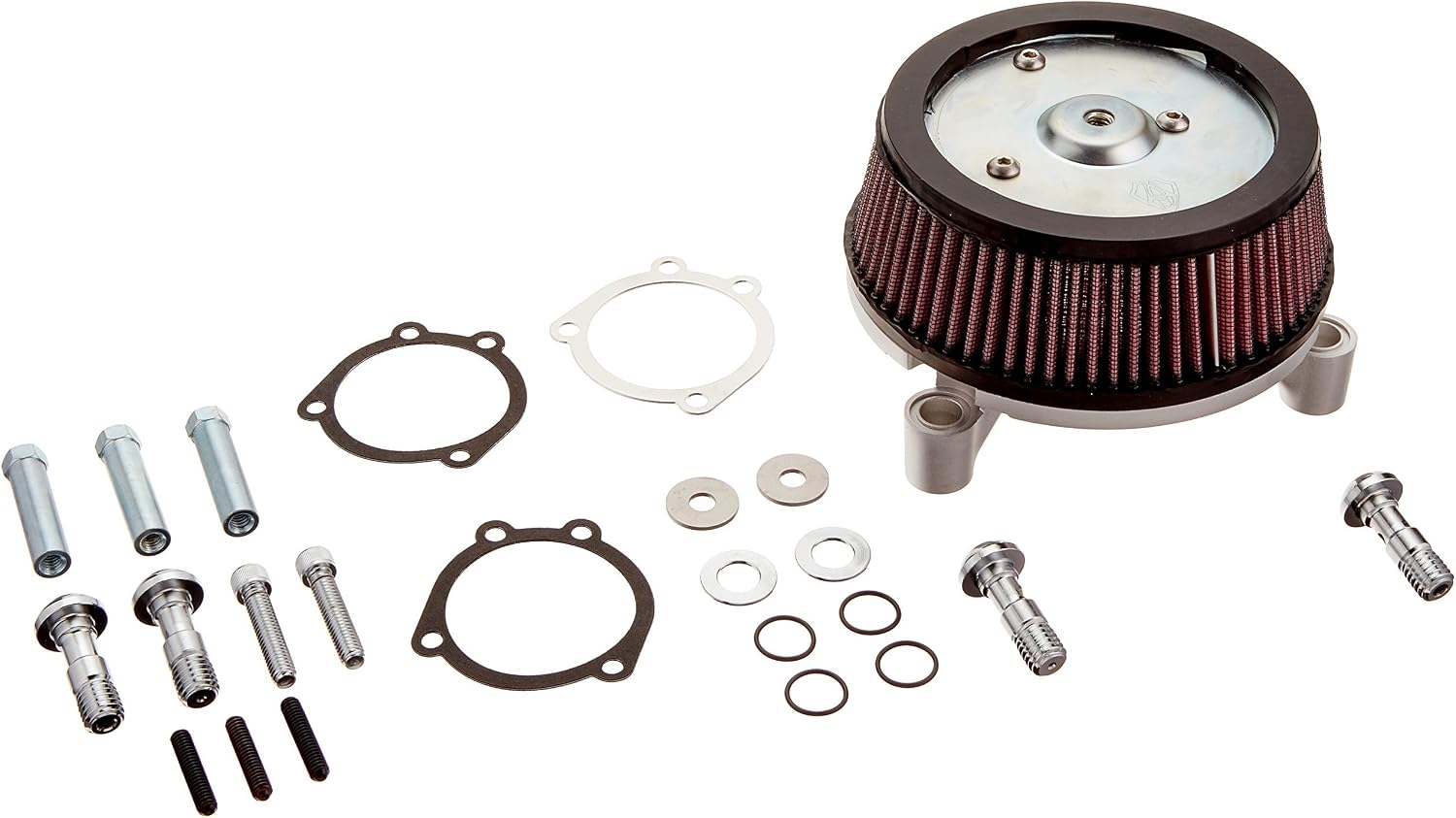
Fits: not specified on the listing beyond the part number 18-803. At least one owner reports the stated application being wrong – verify against Arlen Ness’s fitment guide rather than the Amazon page.
Tuner: yes. Owner reports confirm the bike wants remapping after fitting.
Rating: 4.6 / 5 from 120 ratings
The longest-established Big Sucker listing with 120 ratings behind it, and the version owners most often cite. The design uses a closed-loop breather arrangement, which is Arlen Ness’s approach to routing crankcase gases without dumping oil mist into the intake tract – a genuine engineering point rather than marketing. Installation is quick: one owner reports 20 to 25 minutes on a mid-90s Sportster with everything needed in the box. This is also the product where the tune requirement is clearest from owner experience, which is worth taking seriously given that no manufacturer in this category mentions it. Two caveats. Stock is thin at time of writing, and the fitment problem is real enough that a buyer specifically reported the listed application being incorrect for his bike. Check the part number, not the page.
What owners say: “Easy to install and perfect fit for my Harley-Davidson Sportster. – Charles W. Perkins”
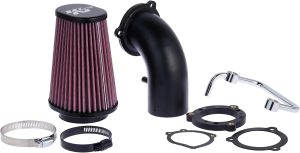
K&N 63-1125 Air Intake System for Sportster
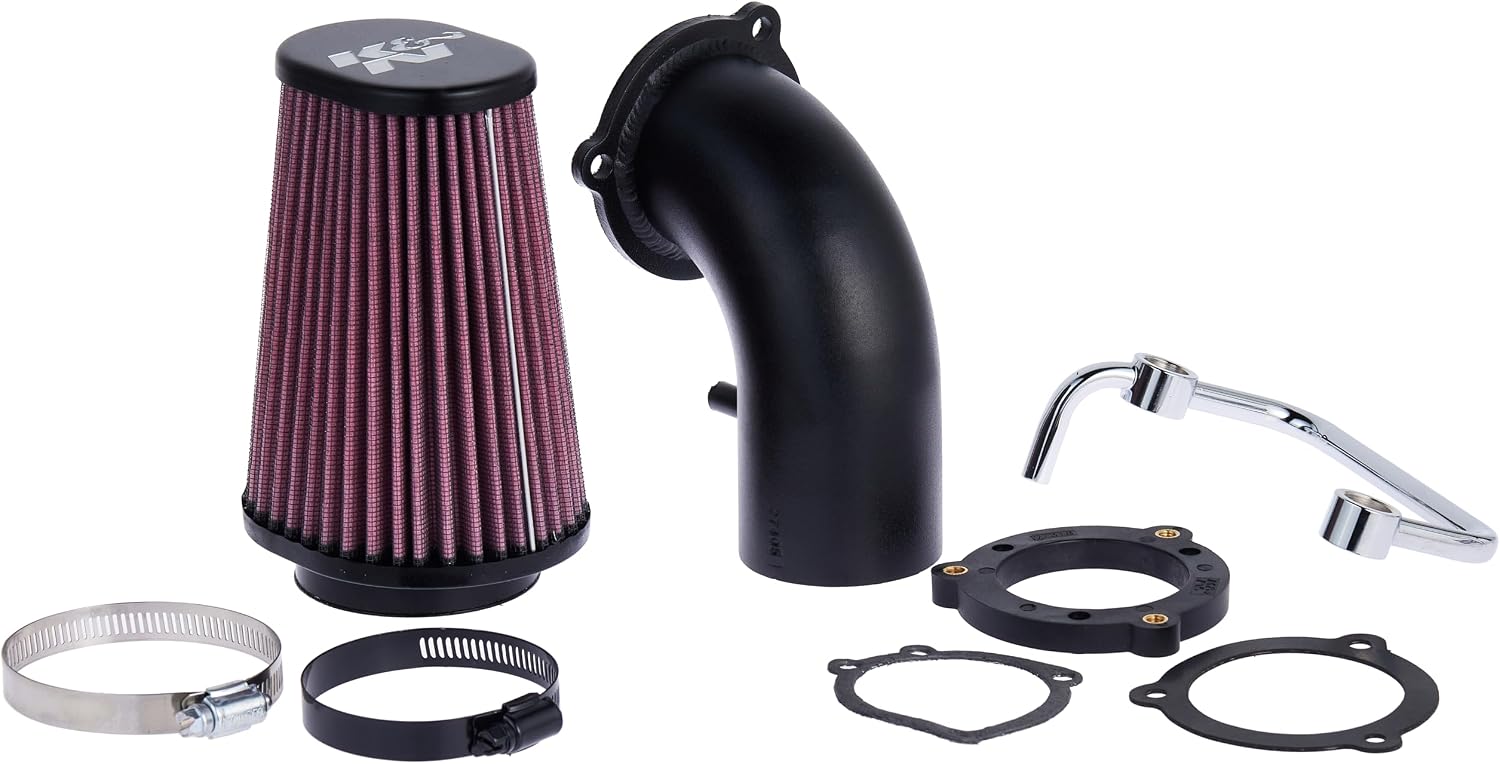
Fits: clearly stated in the title – Harley-Davidson Sportster XL883 and XL1200, 2004 to 2019. One of the few listings in this category with unambiguous fitment.
Tuner: not stated by K&N, but expect to remap an EFI Sportster to realise the gain.
Rating: 4.5 / 5 from 131 ratings
K&N is the only manufacturer in this entire category that publishes a specific performance figure, and it is worth quoting precisely: an estimated gain of 7.78 horsepower at 4,953 RPM for this intake system. Every other product here uses phrases like “increased airflow” and leaves you to guess. That transparency is the reason to consider it even at the highest price in the group. The kit is a complete intake system rather than a filter swap, with the washable lifetime element K&N is known for and a stated install time of 90 minutes or less. Fitment is published properly – Sportster XL883 and XL1200 from 2004 to 2019 – which after several listings in this guide that name no models at all is a genuine advantage. One owner notes the filter not seeming fully seated on arrival, so check the seal before closing everything up.
What owners say: “It came with everything needed to install. – KMM, 2010 Iron 883”
Monster Sucker Cone Air Cleaner Kit for Sportster
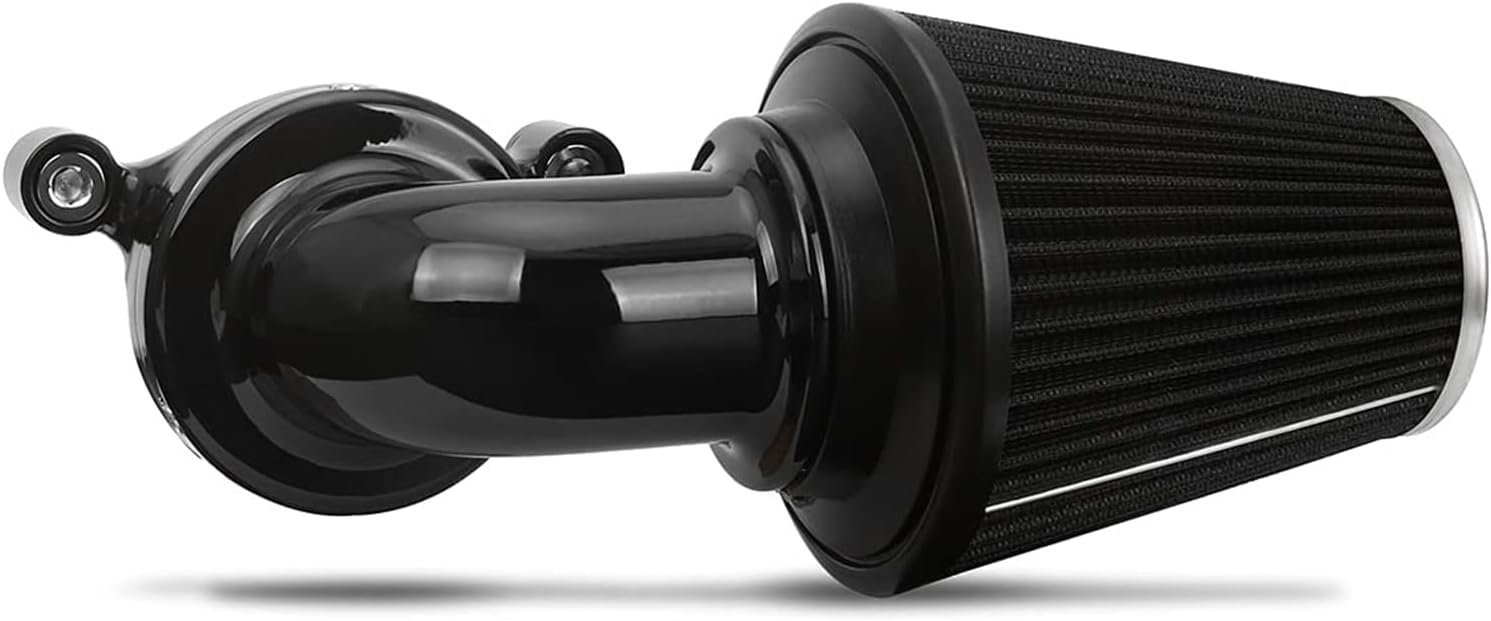
Fits: fully published table – Sportster 883 and 1200 from 1991 onwards, with detailed model and year coverage. The clearest fitment data of any kit in this guide.
Tuner: not stated. Expect to remap on EFI models.
Rating: 4.6 / 5 from 68 ratings
A cone-style exposed filter for Sportsters at a mid-range price, and the standout feature is something that should not be remarkable but is: the listing publishes a proper model and year table. After Arlen Ness listings that name nothing at all, being able to confirm your bike before ordering is worth something. Owners report a complete kit with gaskets and fresh bolts included and a straightforward install – a 2011 Nightster owner describes exactly that. The exposed cone gives the induction growl people buy this category for, and it flows well by design. Two honest points. It is a smaller brand without the track record of Arlen Ness or K&N, and the negative reviews centre on build quality, with one owner describing it as rattling. And as an exposed cone it is squarely in the category that needs a rain sock – see the section on wet weather above.
What owners say: “Great product! Comes with gaskets and new bolts. – Andy K., 2011 Nightster”
Air Filter Cleaner Kit for Softail, Touring and Road King
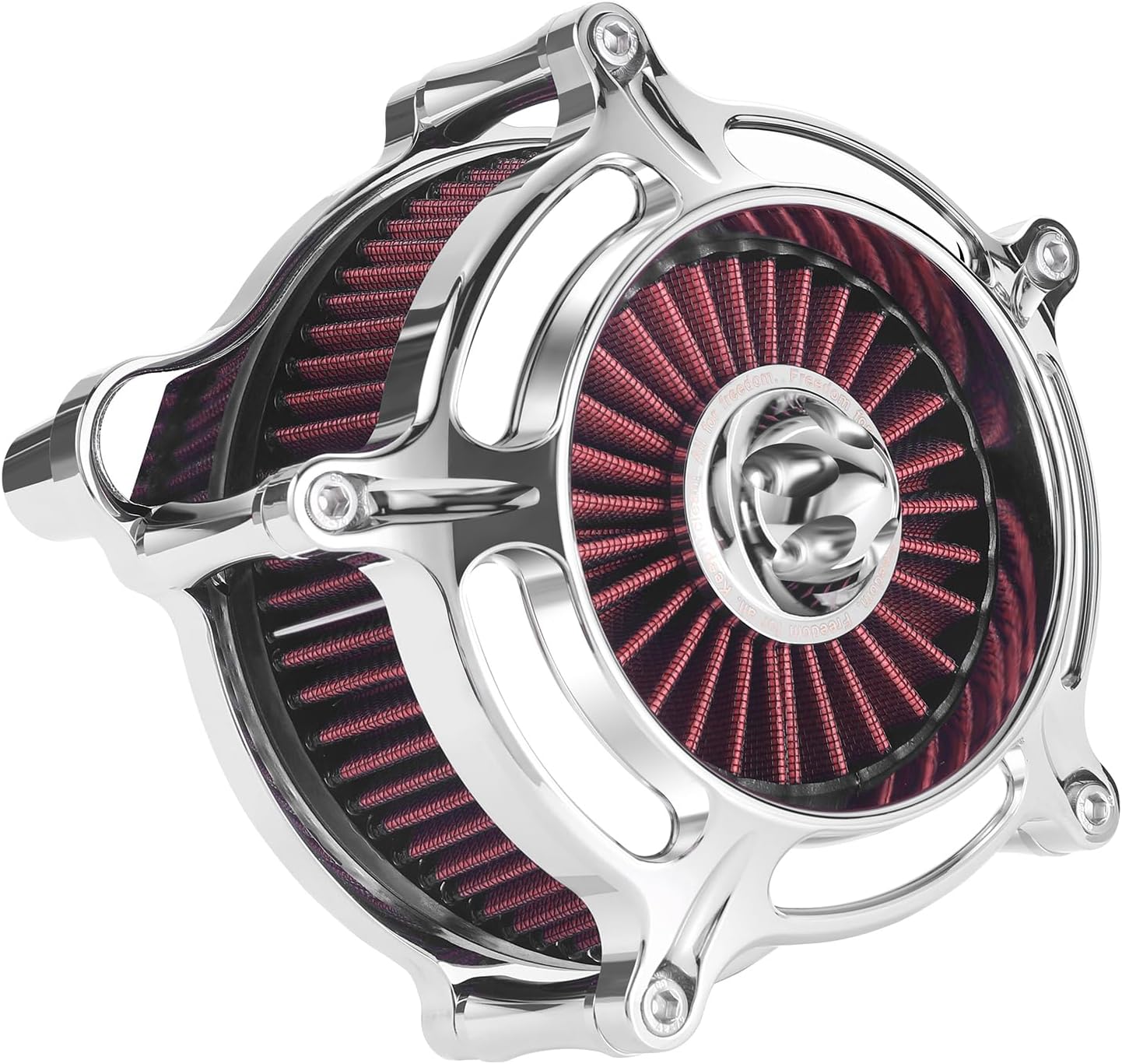
Fits: four size variations covering Sportster XL, Softail, Touring and M8 – you must select the correct variant. Note an internal contradiction: the size selector says M8 Touring 2017-2022 while the bullet says 2017-2023.
Tuner: not stated. Expect to remap on EFI models.
Rating: 4.5 / 5 from 173 ratings
The value option, at roughly half the price of a Big Sucker and with the largest review base of any kit here. The backing plate design improves flow into the throttle body while concealing the crankcase breather routing, which is the same basic approach the premium brands use. It covers a broad range of platforms through four size variations – Sportster, Softail, Touring and Milwaukee-Eight – and a 2023 Trike owner describes an easy install that fit correctly. Buying it correctly is entirely about picking the right variant, and this is where the negative reviews come from: the one-star complaints are overwhelmingly from buyers who selected the wrong size for their bike. Read the variation table carefully, note the contradiction between the selector and the bullet on M8 Touring years, and confirm against your model before ordering. Get that right and it is a lot of hardware for $100.
What owners say: “Amazing! Easy install on my 2023 HD Trike. – David P.”
Best Drop-In Replacement Filter
For riders who want better airflow without changing the visible hardware, opening the breather routing, or needing a tune.
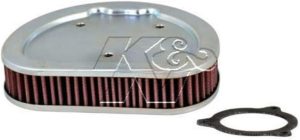
K&N Engine Air Filter for Harley Touring
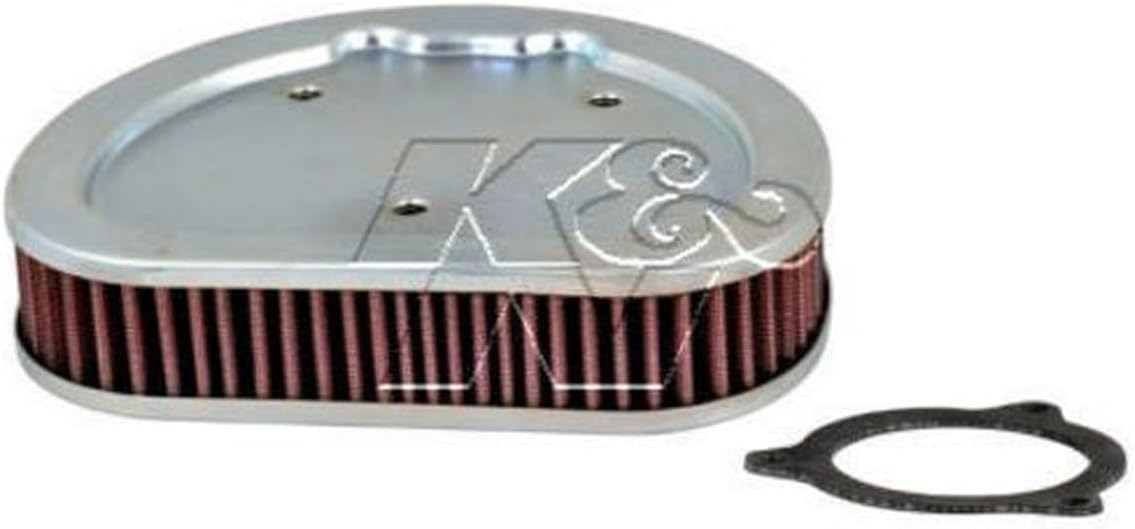
Fits: full published model and year list including 2010-2014 FLTRX Road Glide Custom and related Touring models. Complete fitment data on the listing.
Tuner: not required. This is a filter element swap, not an intake redesign.
Rating: 4.6 / 5 from 517 ratings
The most-reviewed product in this guide with 517 ratings, and the right answer for a rider who wants better airflow without changing how the bike looks or opening the breather routing. It is a direct replacement element that drops into the existing housing – K&N describes it as one of the easiest and most cost-effective upgrades available, and it arrives pre-oiled and ready to fit. Because it does not change the intake geometry, no tune is needed and the visible hardware stays factory. K&N’s washable construction means one filter for the life of the bike, backed by service intervals up to 100,000 miles. Two notes from the reviews: one owner reports the supplied gasket being the wrong one, so check it against what you removed, and a filter element on its own delivers less than a full Stage 1 kit by design. It is the sensible first step rather than the maximum one.
What owners say: “You can never go wrong with a K&N product. – Jeff, ’09 Ultra Classic”
Air Cleaner Covers: The Other Half of This Category
Search volume tells an interesting story here. Almost as many people are looking for air cleaner covers as for the air cleaners themselves – and covers are a completely different purchase.
The cover is the visible face plate. On most Harleys it is the single most prominent piece of hardware on the side of the engine, right where your leg is not, in the eyeline of anyone looking at the bike. It contributes nothing to performance. It contributes almost everything to how the bike looks.
What you need to know before buying one
- Covers are specific to the air cleaner underneath, not to the bike. An Arlen Ness cover fits Arlen Ness Big Sucker and Billet Sucker bases. A Kuryakyn cover fits their mounting pattern. Buying a cover without knowing what base you have is the commonest mistake.
- Many Stage 1 kits ship without a cover, precisely so you can choose. Check what is in the box before assuming.
- Finish matters more than it sounds. This part lives in road spray and heat. Cheap chrome dulls and peels.
The price spread
Covers run from around $30 for a simple black plate to $155 for a machined designer piece. They all do the same job. What you are buying above $60 is design and finish quality, and that is a legitimate thing to buy on a bike where the cover is a focal point.
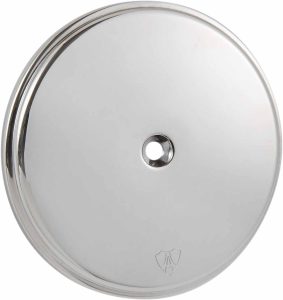
Arlen Ness Stage 1 Smooth Chrome Cover 18-760
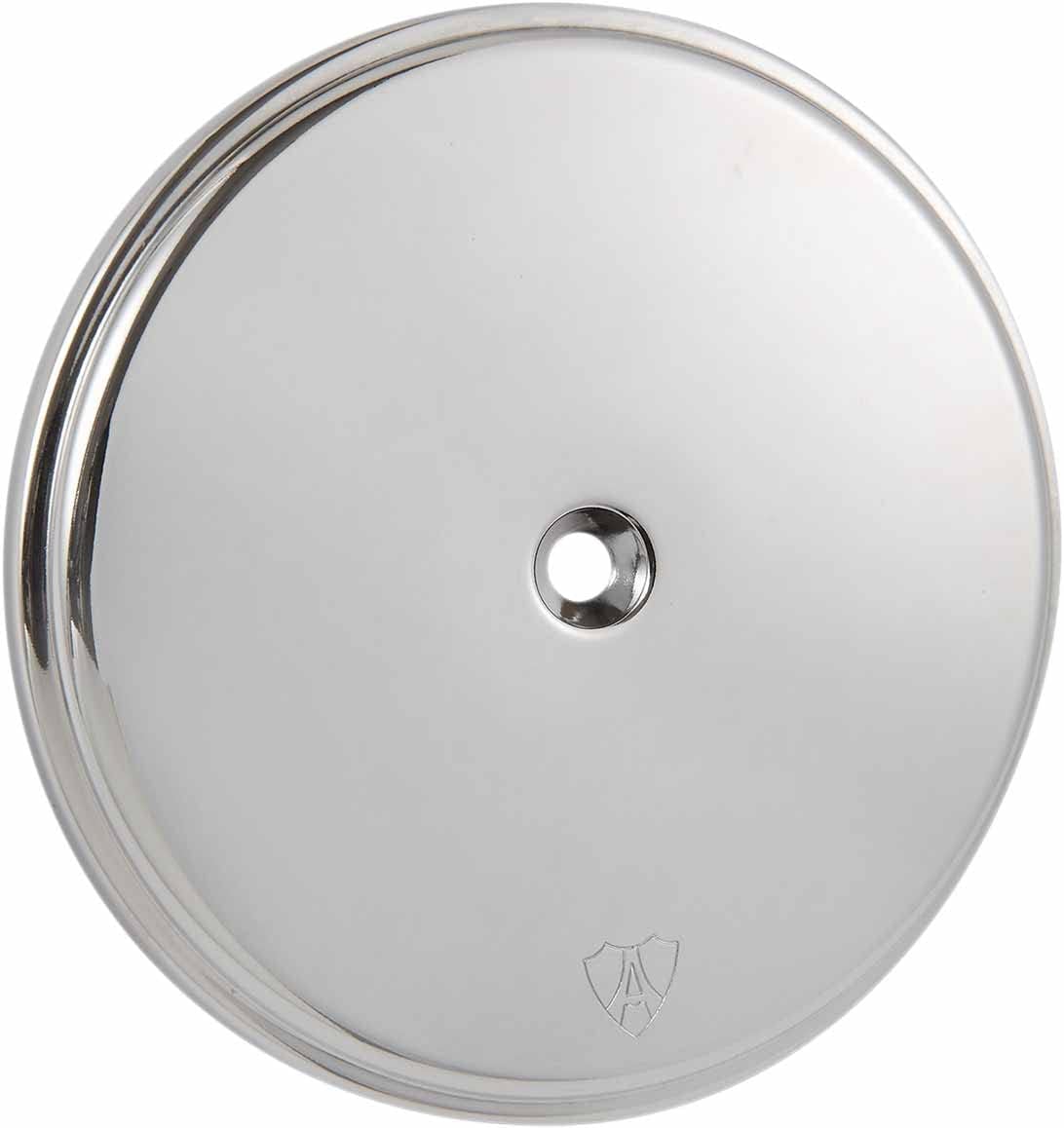
Fits: all Arlen Ness Stage 1 Big Sucker and Billet Sucker bases. This fits the air cleaner, not the motorcycle – identify your base before ordering.
Rating: 4.8 / 5 from 258 ratings
The default cover for a Big Sucker and the best-rated cover in this guide with 258 ratings. Smooth chrome, no vents, no branding – the understated option for riders who want the intake to look finished rather than shouty. Installation is a single bolt and takes about a minute, which is the entire appeal of the covers category: you can change the look of the most visible mechanical part on the bike over a coffee. A Sportster XL1200C owner describes it doing exactly what he wanted. One consistent note from the reviews: the plate is thinner than some buyers expect for the price, and it is a cover rather than a structural component – judge it on finish and fit rather than heft. Remember that this fits the Arlen Ness base specifically. If you are running a Kuryakyn or Vance & Hines intake, this is not your part.
What owners say: “I have a 2012 HD Sportster XL1200C. This cover… – Michael”
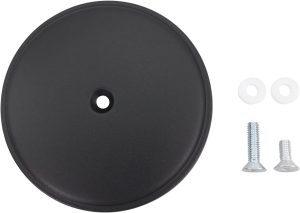
18-761 Air Cleaner Outer Cover, Black
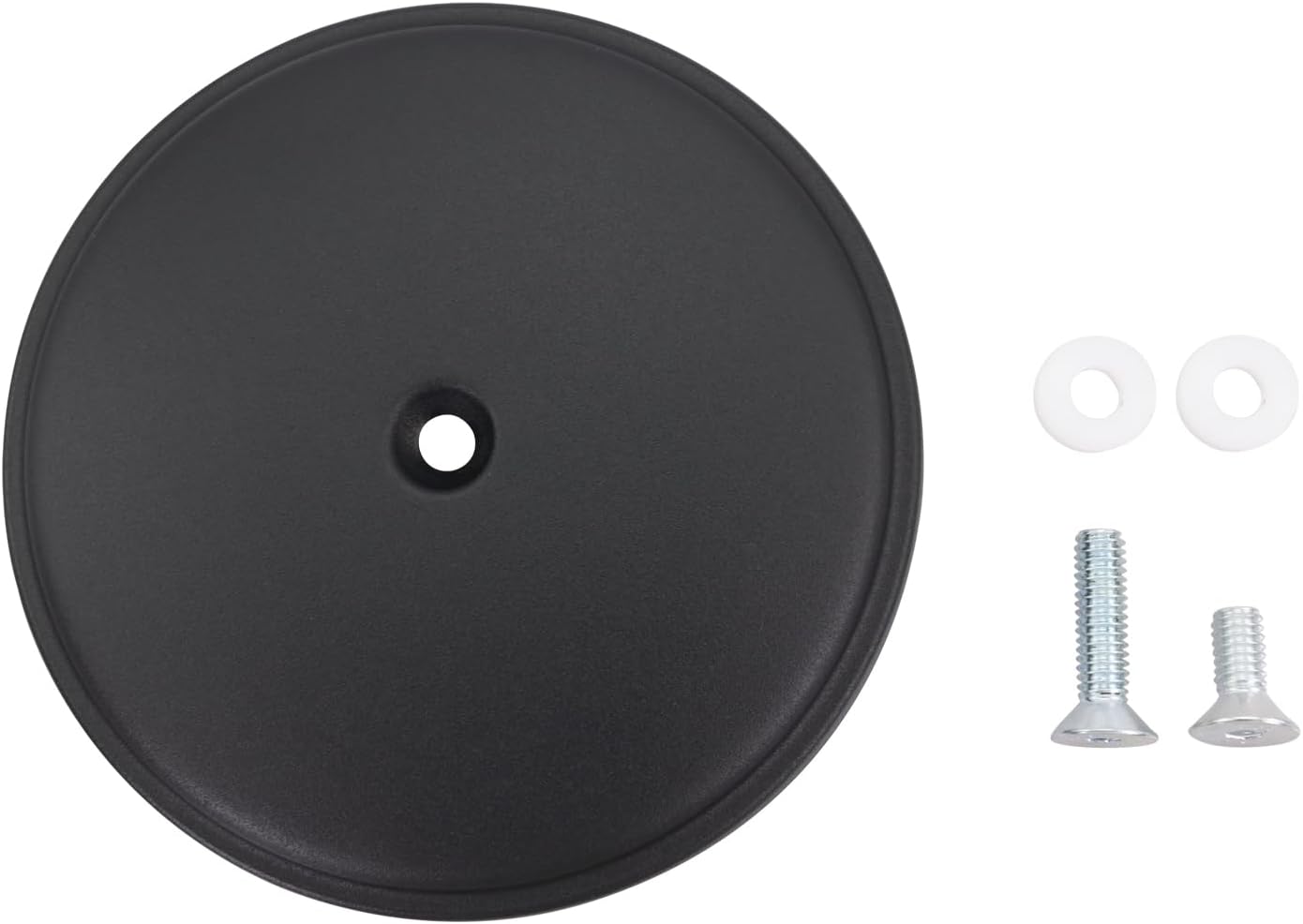
Fits: all Arlen Ness Billet Sucker and Big Sucker Stage bases, with published bike compatibility as well – the most complete fitment data of any cover here.
Rating: 4.8 / 5 from 93 ratings
The same idea as the Arlen Ness cover above at less than half the price, and with better fitment documentation – this listing publishes compatibility by both air cleaner base and motorcycle, which none of the premium covers manage. At around $33 it is the cheapest way to change the look of the intake, and at 4.8 stars the quality is clearly acceptable to buyers. A Road King owner running a Screamin’ Eagle Stage 1 filter confirms it fitting. Installation is a direct swap using the existing screws. Two small points from the reviews. The mounting screw is not colour-matched to the black finish, which owners notice and some replace. And the technical details section lists part number 18-760 – the chrome version’s number – on the black cover’s page, which is a listing error rather than a product problem, but worth knowing if you are cross-referencing.
What owners say: “Ordered for my 2002 Road King with Screamin’ Eagle stage one filter.”
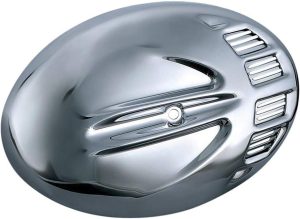
Kuryakyn 9439 Alley Cat Air Cleaner Cover
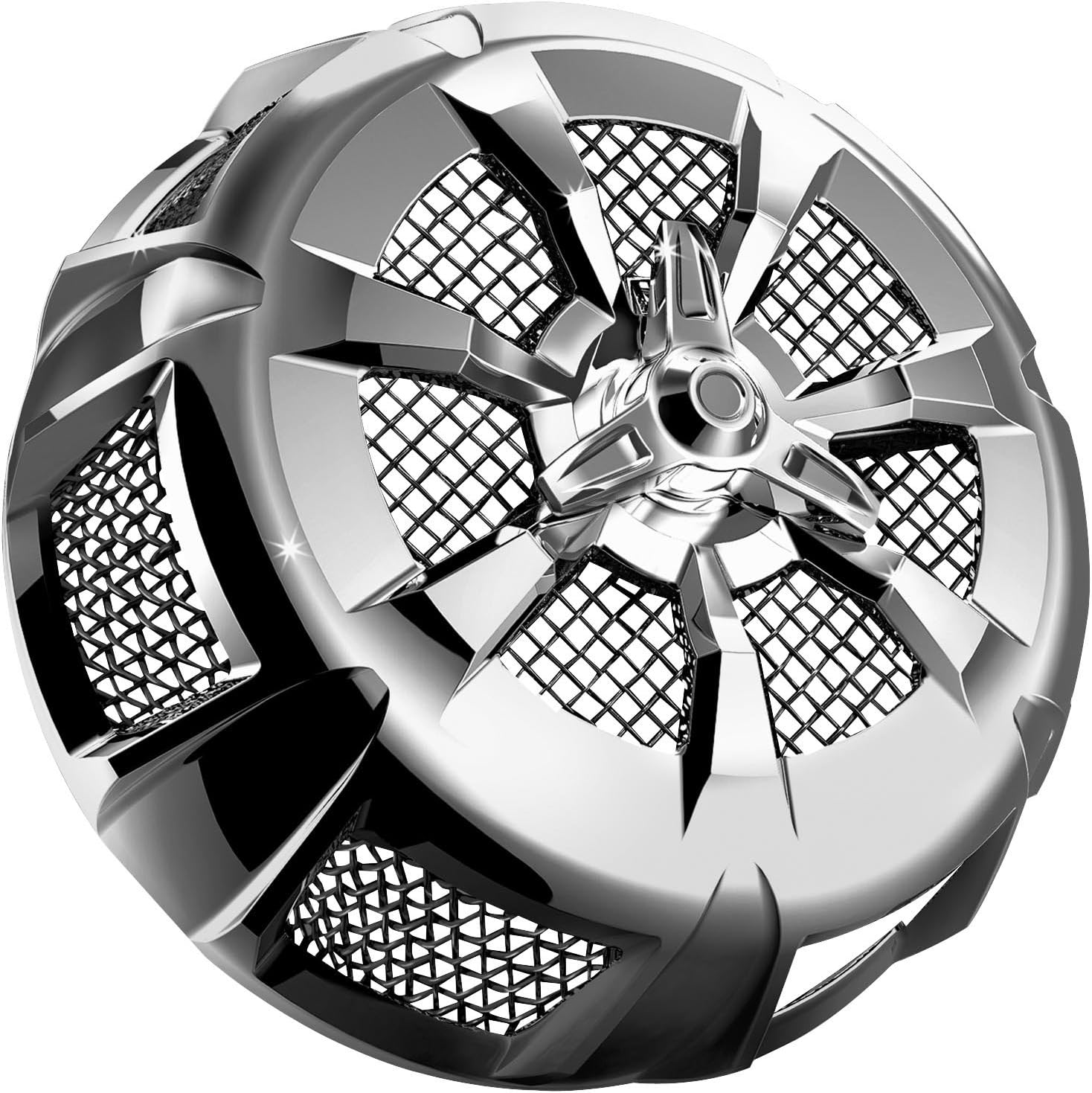
Fits: 1999-2017 Harley-Davidson models, and specified by air cleaner base rather than purely by bike. Owners report using it over Arlen Ness Big Sucker setups.
Rating: 4.5 / 5 from 226 ratings
Kuryakyn builds styling parts, and the Alley Cat is one of their best-known designs – a vented, machined cover that turns the intake into the focal point of the side of the bike. There is no performance claim and Kuryakyn does not make one; the vents are aesthetic, though they do mean the element behind gets more exposure to spray than a smooth cover allows. Installation takes about three minutes according to Amazon’s own review summary, and owners consistently describe it as a straightforward bolt-on. A Street Glide owner running an Arlen Ness Big Sucker underneath reports it mounting without issue. At $155 this is the most expensive cover here by a wide margin, and the criticism in the reviews is exactly that – several owners feel the price exceeds what the part is. That is a fair judgement on any cosmetic component, and it depends entirely on how much the look matters to you.
What owners say: “Mounted the cover over an Arlen Ness Big Sucker on a 2013 Street Glide. – banditrider”
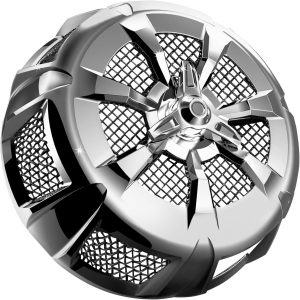
Kuryakyn 8407 Scarab Air Cleaner Cover
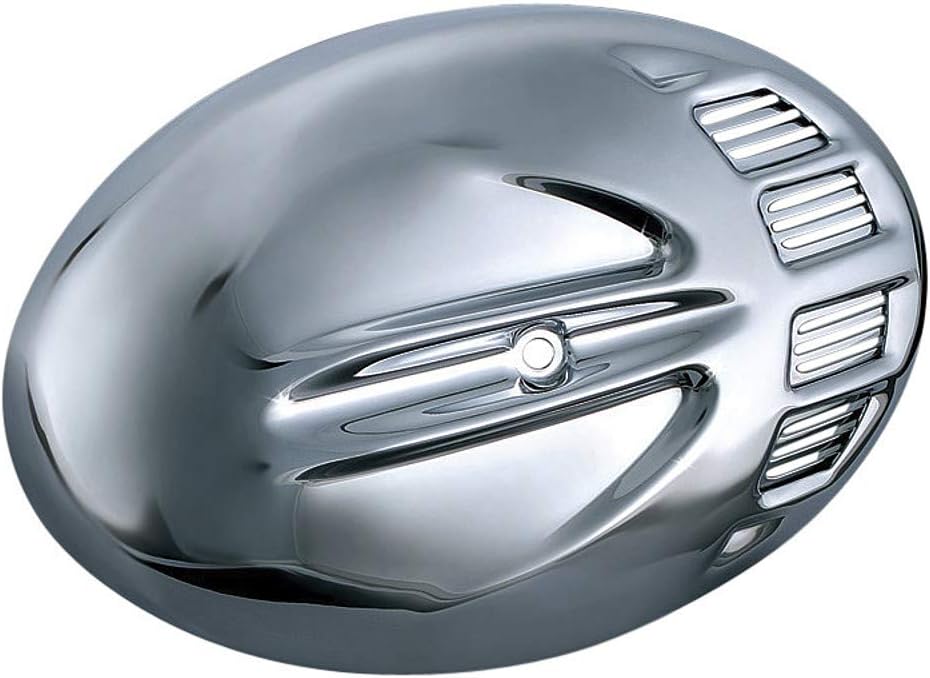
Fits: 2001-2015 Harley-Davidson models. The product description is a single line restating the title – confirm your air cleaner base before ordering.
Rating: 4.6 / 5 from 109 ratings
The Scarab is Kuryakyn’s other well-known cover design and it sits at a more reasonable price than the Alley Cat while keeping the same vented aesthetic. Owners describe installation as taking longer to find the tools than to do the job. A Twin Cam 88 owner running a Screamin’ Eagle Stage 1 setup reports it being the same size as what he removed with a different profile, which is the useful detail: covers in this category are largely interchangeable in dimension and different in appearance. The listing’s weakness is documentation – the entire product description is the title written out again, with no base compatibility stated. Kuryakyn covers generally fit their own and common aftermarket mounting patterns, but on a $105 part it is worth a check rather than an assumption.
What owners say: “It is the same size but a taller profile. – Rick Hurst, Twin Cam 88 with Screamin’ Eagle Stage 1”
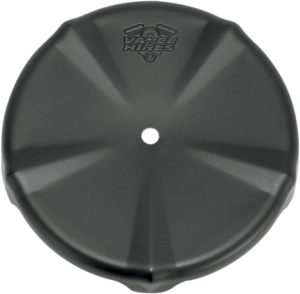
Vance & Hines VO2 Skullcap Crown Insert
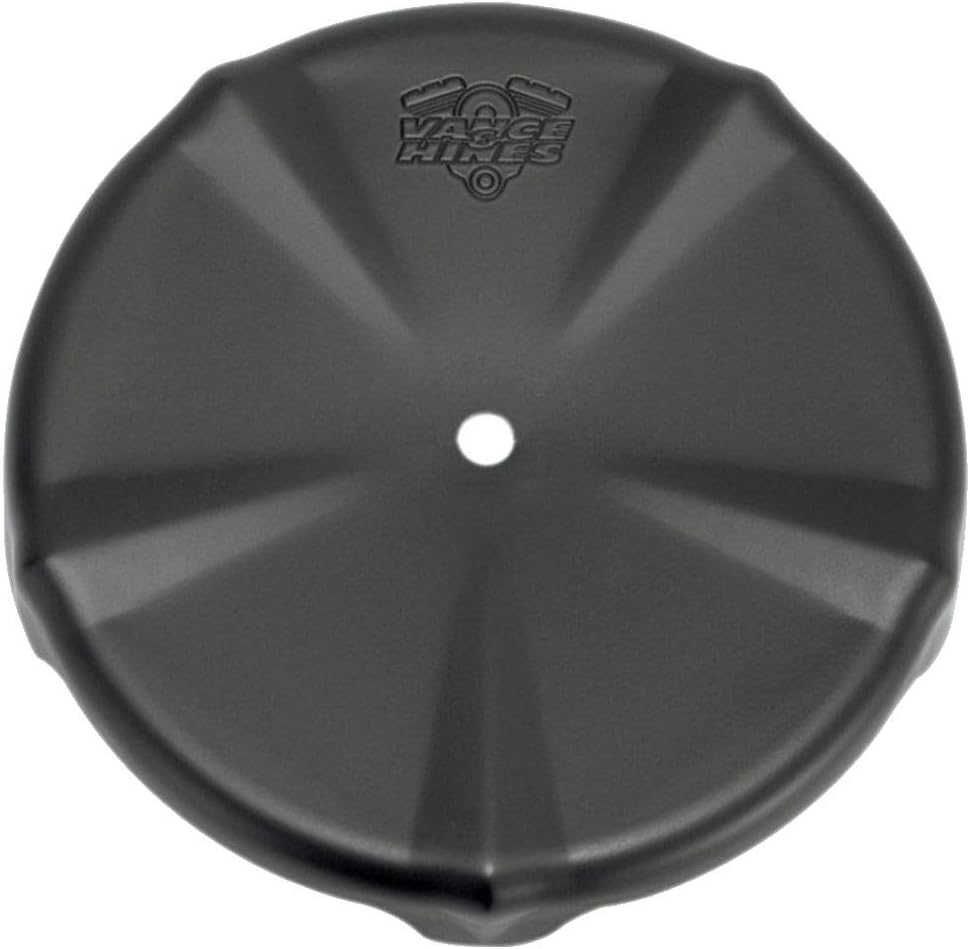
Fits: Vance & Hines VO2 air cleaner bases. Specified by air cleaner type rather than by motorcycle.
Rating: 4.8 / 5 from 43 ratings
Vance & Hines built the VO2 system around interchangeable faceplates, and the Skullcap Crown is one of the range – stamped steel with subtle creasing and a black ceramic finish. If you are running a VO2 intake, swapping the insert is the cheapest way to change the character of the bike’s most visible component, and there are a dozen designs in the family. The 4.8 rating is the highest here alongside the Arlen Ness cover. Two honest caveats worth stating plainly. The review base is small at 43 ratings, and the most detailed reviews on the listing come from owners of a Yamaha Bolt rather than a Harley – so the Harley-specific evidence is thin. And the listing publishes no installation information at all: no instructions, no hardware list, no time estimate. For an experienced owner swapping a faceplate that is not a problem; for a first modification it is less than ideal.
What owners say: “It’s a stamped cover. Not much for expectations. – DG”
Riding in the Rain With an Exposed Air Filter
Barely any product listing addresses this, and it is one of the most practical things a rider needs to know.
A factory airbox is enclosed and draws air from a sheltered point. Many aftermarket Stage 1 kits expose the filter element to the airstream – which is exactly why they flow better, and exactly why heavy rain is a problem. Water hitting an oiled cotton filter soaks it, and a soaked filter does not flow. The symptoms are a bike that runs rough, stumbles under throttle or loses power in a downpour.
What to do about it
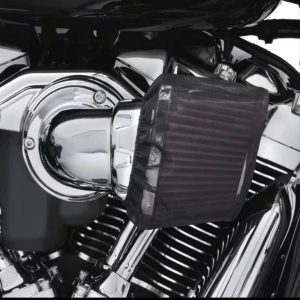
- Fit a rain sock. A stretch cover that goes over the filter and repels water while still passing air. They cost under ten dollars, live under the seat, and take thirty seconds to fit when the sky turns. This is the answer most experienced owners land on.
- Choose an enclosed design if you ride in wet weather regularly. You give up some flow and gain not thinking about it.
- Check the filter after a soaking. If it is saturated, let it dry properly before assuming the engine has a fault.
Owners of exposed filters – K&N cones, VO2 setups, open Kuryakyn covers – routinely recommend buying a rain sock alongside the intake rather than after the first wet ride. It is the cheapest useful accessory in this entire guide.
Waterproof Rain Sock Cover for Harley Air Filter
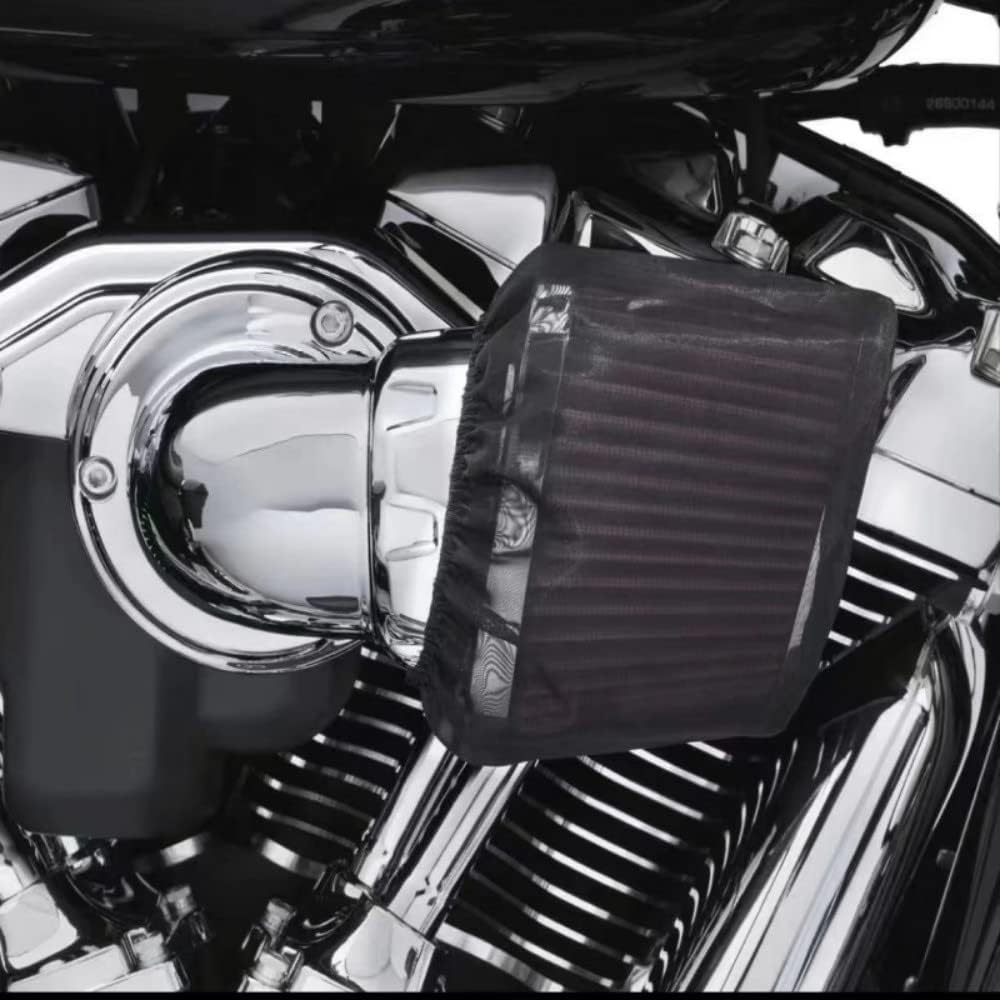
Fits: selected by air cleaner size via variations – you must pick the correct size for your filter. Check the size guide against your intake before ordering.
Rating: 4.6 / 5 from 136 ratings
Nine dollars, and if you run an exposed filter it is the most useful thing on this page. A rain sock stretches over the filter element and repels water while still passing air, which solves the single practical problem with performance intakes: a soaked oiled-cotton filter stops flowing and the bike runs rough in heavy rain. The seller states the breathable cover does not significantly reduce airflow, and a 2023 Breakout owner confirms that no water sticks or penetrates. It lives under the seat and takes a couple of minutes to fit when the weather turns. Two things to get right. Pick the correct size variant for your filter – this is a fitted cover, not a universal bag. And be aware the variation family on this listing is mixed: some options are actually filter elements rather than rain socks, and the description text describes an element. Read the variant you are selecting carefully.
What owners say: “Absolutely no water sticks or penetrates. – Steven F., 2023 FXBR Breakout”
Cleaning and Maintaining a Performance Air Filter
A washable filter is a filter you have to wash. Skip it and airflow drops until you are worse off than with the factory paper element you removed.
How often
Manufacturers quote long intervals – K&N claims up to 100,000 miles between services on road use. Real-world intervals depend entirely on where you ride. Dusty roads, gravel or high mileage in summer mean checking every few thousand miles. A bike ridden on clean pavement can go far longer. Inspect it rather than following a calendar.
The procedure for oiled cotton
- Remove the element and tap out loose debris.
- Spray cleaner on both sides and let it soak for the time the instructions specify. Do not use petrol, solvents or a pressure washer – all three destroy the media.
- Rinse from the clean side outwards with low-pressure water, pushing dirt out the way it came in rather than driving it deeper.
- Let it dry completely. Naturally, not with heat and not with compressed air. This takes hours and it is the step people rush.
- Re-oil lightly and evenly, then leave it twenty minutes for the oil to wick through before refitting.
The over-oiling mistake
More oil is not better filtration. Excess oil reduces airflow – undoing the reason you bought the filter – and can migrate into the intake tract. The correct amount looks like a light, even pink tint, not a saturated red filter. Use the manufacturer’s kit; the applicator is designed to meter it.
Dry filters
Clean and dry thoroughly, no oil. Simpler, and one reason some riders prefer them.
How to Install a Harley Air Cleaner
An hour for most kits, and one of the few engine modifications that needs no special tools.
- Remove the existing cover and filter. Usually a central bolt plus perimeter fasteners.
- Remove the backing plate from the throttle body. Note how the crankcase breather hoses connect before you disturb anything – a photo takes two seconds and saves guessing later.
- Deal with the breathers. This is the step that catches people out. Many performance kits reroute crankcase breathing, and some include breather bolts that must be fitted in a specific orientation. Read the instructions for this part rather than working it out.
- Fit the new backing plate and torque the throttle body fasteners evenly.
- Fit the filter element and cover. Do not overtighten the central bolt – it clamps a filter, not a cylinder head.
- Check for gaps. Any unfiltered path into the intake means dust straight into the engine. Run a finger around the seal before closing up.
- Load the tune if you have one. This is when to do it, not next month.
Things worth knowing
Fitment on covers is about the base, not the bike. Confirm which base you have before ordering a cover.
Not all kits include hardware. Some ship expecting you to reuse factory fasteners, some supply everything. Check before you start rather than mid-job.
Fitment information is frequently missing. Several major products in this category publish no model or year data at all on their listings, and at least one owner reports the stated application being wrong. Cross-check the part number against the manufacturer’s own fitment guide.
Harley Air Cleaner Brands
Arlen Ness
The Big Sucker is the reference product in this category and the name that appears most in search results and forum recommendations. The Stage I kits use a large-surface oiled filter with a backing plate designed to remove the factory restriction, and the ecosystem of covers built for that base is the largest of any brand. Prices run around $170 to $215 for a kit, with covers sold separately – a deliberate choice so you pick the look.
K&N
The filter specialist, and the only manufacturer in this category publishing a specific dyno figure. Their intake systems are complete kits, their replacement elements are the default upgrade for riders who want better flow without changing the visible hardware, and their filters carry the longest service claims in the business.
Vance & Hines
The VO2 range, with an unusually broad selection of interchangeable faceplate inserts – the same base with a dozen different looks. Popular with riders building a coordinated bike, since V&H exhaust and intake share a design language.
Kuryakyn
Primarily a styling brand in this category. Their Alley Cat and Scarab covers are among the best-reviewed cover products available, and they are bought for appearance rather than flow.
Screamin’ Eagle
Harley’s own performance line. More expensive than the aftermarket and available through dealers, with the significant advantage that fitting one is unlikely to complicate a warranty conversation.
S&S Cycle
The serious performance name, with the Tuned Induction range appearing in search results alongside the big brands. Sold mostly through specialists.
Budget and import kits
A real part of the market at $80 to $100, and for a bike where the goal is a visible modification and a bit more induction noise they do the job. What you are not getting is documented flow data or reliable fitment information.
Harley Air Cleaner - FAQs
What is a Stage 1 air cleaner for a Harley-Davidson?
How much HP does Stage 1 add on a Harley?
Is Harley Stage 1 worth it?
Do I need a tuner after installing an air cleaner?
What is the best air cleaner for a Harley-Davidson?
Will an air cleaner make my Harley louder?
What happens to an exposed air filter in the rain?
How often should I clean a K&N or Big Sucker filter?
Do air cleaner covers fit any Harley?
Conclusion
A Stage 1 air cleaner is the best-value modification on a Harley, provided you understand what you are buying. It removes a restriction the factory installed for regulatory reasons, it sharpens throttle response immediately, and it is reversible.
Budget for the tune in the same purchase. Without it you get a fraction of the benefit and a leaner-running engine, and no manufacturer in this category will tell you that on the product page.
Then decide separately about the cover – it is the most visible part of the bike and it has nothing to do with performance. And if you ride in the wet with an exposed filter, spend ten dollars on a rain sock before you need it.
#1 Pick: Best Air Cleaner for Harley
Arlen Ness Chrome Stage I Big Sucker Air Cleaner Kit
The Big Sucker is the reference product in this category – the name that comes up most in forum recommendations, and the base that the largest range of aftermarket covers is built around.
Two things before you buy anything here. Budget for a tune in the same purchase: not one product listing in this category mentions it, and without one you get a fraction of the benefit. And if you want airflow without changing how the bike looks, the K&N drop-in element further down needs no tune at all.