Brake pads are the one part on a Harley where buying the cheapest option has a consequence you can measure in feet of stopping distance. They are also the part where the product listings are least reliable – several of the sets examined for this guide state one friction material in the title and a different one in the description.
Two questions decide what you should buy: what friction material, and how many pairs your bike actually needs. Get the second one wrong and you have a part-finished brake job in the garage.
This guide covers the four materials and what each is genuinely good at, how many pads a Touring model needs versus a Sportster, how to tell when yours are worn, what a set should realistically last, how to change them, and which sets are worth the money at each price point.
One thing worth saying at the top: not a single kit reviewed here includes new caliper pins. Order them separately if yours are worn, because discovering that mid-job is how a one-hour service becomes a weekend.
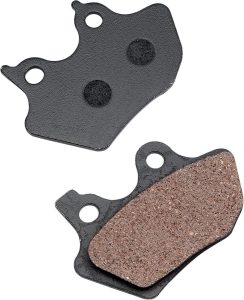
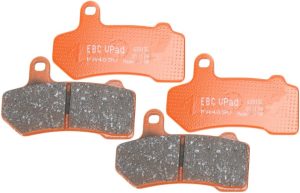
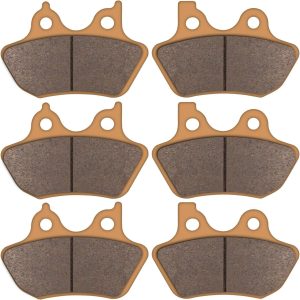
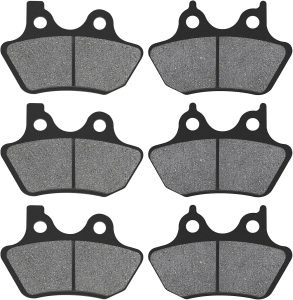
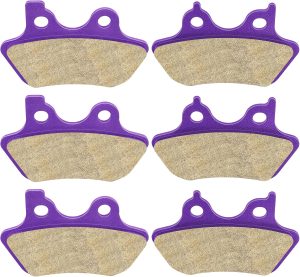
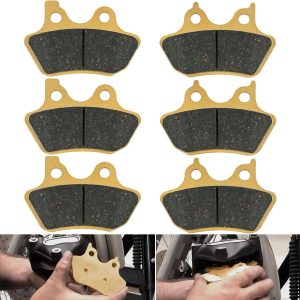
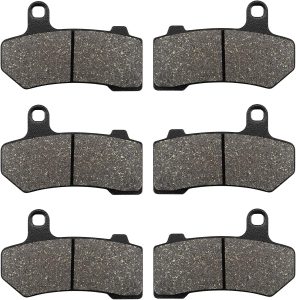
#1 Pick: Best Brake Pads for Harley
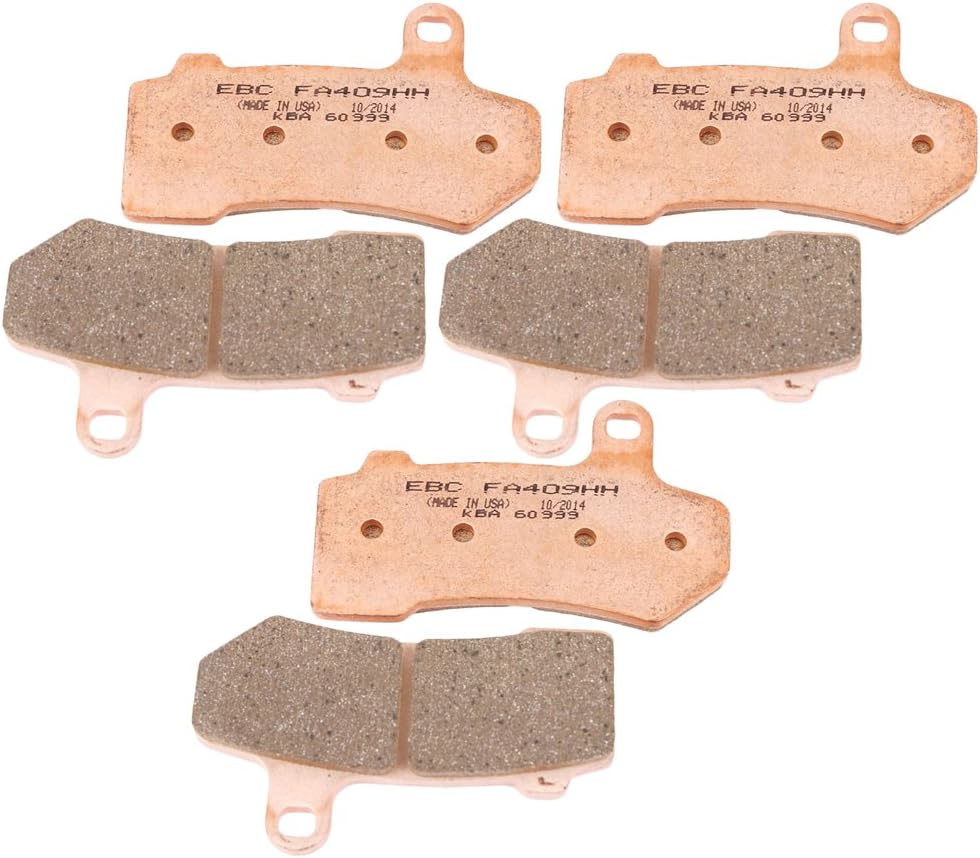
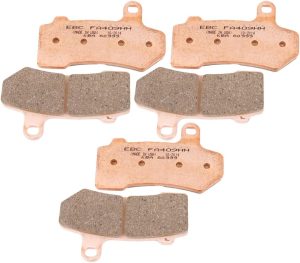
EBC EBPCK1027 Complete Double-H Sintered Brake Pad Kit
EBC’s Double-H is the highest friction rating available and the only set here with longevity confirmed by multiple owners past 30,000 miles. At $121 for a complete three-pair kit that works out cheaper per mile than a $20 set replaced every season.
Before ordering anything: count your calipers. A Touring bike with dual front discs needs three pairs, a Softail or Sportster needs two, and a Tri Glide needs four. Kits labelled complete do not always match.
The top best product [hide]
Sintered, Organic, Ceramic or Semi-Metallic?
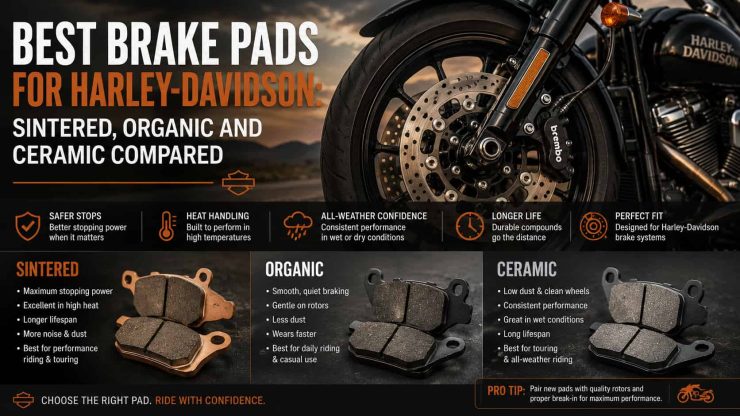
This is the decision that matters, and the terminology in product listings is genuinely unreliable – so here is what each material actually is.
Sintered
Metal particles fused together under heat and pressure. The strongest initial bite of any material, excellent performance when wet, and the least fade under repeated hard braking. This is what a heavy Touring bike loaded with a passenger and luggage wants.
The trade-offs are real: sintered pads wear rotors faster than any other material, they can be noisy until warm, and they transmit more feel through the lever – which most riders consider a feature. EBC’s HH rating is the highest friction grade and identifies their most aggressive sintered compounds.
Organic
Fibres bound in resin, sometimes with carbon or Kevlar added. Quiet, gentle on rotors, progressive feel and low dust. The Lyndall Z-Plus uses a carbon-Kevlar compound and owners report exceptional life from it.
Against that: less outright bite, and organic compounds fade sooner under sustained hard braking. For a lighter bike or a rider who is not routinely hauling weight down mountain roads, that is a fair trade for the quietness.
Semi-sintered
A middle ground – EBC’s V-Pad range sits here. More bite than organic, gentler on rotors than full sintered, quieter than sintered when cold. A sensible default if you cannot decide.
Semi-metallic and “ceramic”
Semi-metallic pads contain metal fibres in a resin binder: decent bite, moderate cost, and they tend to produce more brake dust than the alternatives.
Be careful with “ceramic” on motorcycle listings. In car brakes it means something specific. On motorcycle pads it is frequently marketing. One set in this guide is titled ceramic while its own description calls it a carbon fibre compound – the manufacturer contradicting itself on the same page. Judge these by reviews and price rather than by the word.
Which should you buy?
| Riding | Material |
|---|---|
| Loaded Touring, two-up, mountains | Sintered |
| Mixed road use, want quiet | Semi-sintered or organic |
| Lighter bike, gentle use, low dust | Organic |
| Budget replacement on a low-mileage bike | Semi-metallic |
OEM or Aftermarket Brake Pads?
This comes up in every Harley owners’ group, and the answer is less loyal to the factory than you might expect.
What Harley supplies
Genuine Harley pads are competent, correctly specified for the bike and available from any dealer. They are also expensive relative to what they are, and Harley does not manufacture them – like most OEM consumables they are made to specification by an outside supplier and sold under the bar and shield.
Where aftermarket wins
- Choice of friction material. Harley supplies one compound for your model. The aftermarket lets you choose sintered for bite, organic for quiet and rotor life, or something in between – matched to how you actually ride.
- Documented longevity. EBC’s Double-H has multiple owners independently reporting 30,000-plus miles; Lyndall has reports at 50,000. Harley publishes no comparable figures.
- Price. A complete premium aftermarket set frequently costs less than an OEM front pair.
Where OEM wins
- A bike under warranty, where a dealer conversation about braking is one you would rather not have.
- Certainty of fitment. The dealer looks up your VIN. No cross-referencing, no counting calipers.
- You want exactly what the bike had and are happy with how it braked.
The practical answer
For a bike out of warranty, a quality aftermarket set from EBC, Lyndall or a comparable specialist is the better purchase on every measure that matters – performance, longevity and price. The brands in this guide are the ones supplying that market, and several supply OEM programmes elsewhere in the industry.
What is not a good idea is treating unbranded pads as equivalent to either. Brakes are the wrong system for a leap of faith.
How Many Brake Pads Does Your Harley Need?
The single most common ordering mistake in this category, and it costs people a second delivery in the middle of a job.
Count your calipers
- Touring with dual front discs – Street Glide, Road Glide, Road King, Electra Glide: two front calipers plus one rear. Three pairs of pads.
- Softail, Dyna and Sportster with a single front disc: one front plus one rear. Two pairs.
- Tri Glide and Freewheeler: four calipers. A kit sold as “complete” with three pairs is one pair short, and there is a one-star review on one of the sets below from exactly that situation.
Read the listing carefully
Products in this category are sold in confusing configurations. Some kits are labelled “front and rear” and contain three pairs. Some are labelled the same and contain one. The Lyndall pads reviewed below are an excellent product sold as a single pair – meaning a Touring bike needs three sets, which changes the price comparison completely.
Before ordering, work out how many calipers your bike has and check how many pairs are in the box. It takes a minute and it is the difference between finishing the job and waiting three days.
Caliper pins and hardware
No kit examined for this guide includes new caliper pins, and one EBC buyer reports paying about $6 each for them separately. Inspect yours while the caliper is apart – a worn or corroded pin makes a pad drag and wear unevenly, and it is cheap to replace while everything is already open.
Caliper Types: Why 2008 Matters
Harley changed Touring brakes significantly in 2008, and it affects which pads fit.
From 2008, Touring models moved to Brembo-manufactured calipers with a different pad shape from the earlier design. That is why brake pad listings split so consistently at 2007/2008, and why a set described as fitting 2000-2007 is genuinely a different part rather than a marketing distinction.
What this means when shopping
- Check which side of 2008 your bike falls on before anything else. It eliminates half the listings immediately.
- “Brembo style” in a listing refers to the 2008-and-later caliper, not to pads made by Brembo.
- Brembo also sells pads directly for these calipers, alongside EBC, Lyndall and the rest.
Front caliper count
Touring models with dual front discs have two front calipers. Some earlier and lighter models run a single front disc. This is separate from the 2008 question and equally worth checking – it is what determines whether you need two pairs of front pads or one.
The quickest way to be certain of both: look at the bike. Count the front discs, then check your model year against the listing.
When to Replace Harley Brake Pads
How to check
Look at the friction material thickness through the caliper opening. Most manufacturers specify replacement at around 1/16 inch – roughly 1.5mm – of material remaining. If you can see the metal backing plate approaching, you are past due.
Do all of them together on an axle. Uneven wear front to rear is normal; uneven wear between the two front calipers is not, and points at a sticking piston or a seized caliper pin.
The warning signs
- Squealing that does not go away once warm. Cold squeal on the first stop of the day is normal on sintered pads. Constant squeal is not.
- A grinding sound. That is backing plate on rotor, and you are now buying rotors as well.
- Lever travelling further before the brake bites.
- Longer stopping distances or the bike pulling under braking.
- Rotor scoring you can feel with a fingernail.
How long should they last?
The honest answer is that it varies enormously with material, weight and riding style, and that most product listings provide no data at all. What the reviews actually support:
- Quality sintered – EBC Double-H: multiple owners confirm 30,000-plus miles.
- Premium organic – Lyndall Z-Plus: one owner reports 50,000 miles over ten years.
- Budget sets: very little reliable data, and what exists is mixed. One owner reports a semi-metallic set worn out in a single season; another reports a cheap ceramic rear pair gone in two months.
That spread is the real argument for spending more. A $120 set that lasts 30,000 miles costs less per mile than a $20 set replaced every season, and it involves three fewer brake jobs.
Best Brake Pads for Harley-Davidson
Eight sets across every material and price point. Check the material line and the pair count on each – both vary more than the titles suggest.
EBC EBPCK1027 Complete Double-H Sintered Brake Pad Kit
Material: sintered, Double-H (HH) – the highest friction rating available. Made in Ohio.
Fits: FLHX Street Glide 2008-2015 and FLHXS Special 2015. Complete kit – two front pairs and one rear.
Rating: 4.8 / 5 from 1,041 ratings
The benchmark, and the most-reviewed brake product in this guide by a wide margin. EBC’s Double-H is their most aggressive sintered compound, carrying the HH friction rating, and it is what a heavy Touring bike loaded with a passenger and bags actually needs. The evidence on longevity is the strongest here too: multiple owners independently confirm passing 30,000 miles on a set, which is the number that makes the price make sense. At $121 for a complete three-pair kit it works out cheaper per mile than a $20 set replaced every season, and it saves you two brake jobs along the way. Two things to know. Sintered pads wear rotors faster than organic ones and can squeal until they warm up – both are characteristics of the material rather than faults. And like every kit here, no caliper pins are included; one owner reports paying around $6 each for them separately.
What owners say: “They fit on my 2017 HD Ultra Limited. They have great stopping power. I ride in Washington’s rainy roads and they perform great. – 2017 Harley-Davidson Ultra Limited”
Lyndall Z-Plus Carbon-Kevlar Brake Pads 7195-Z+
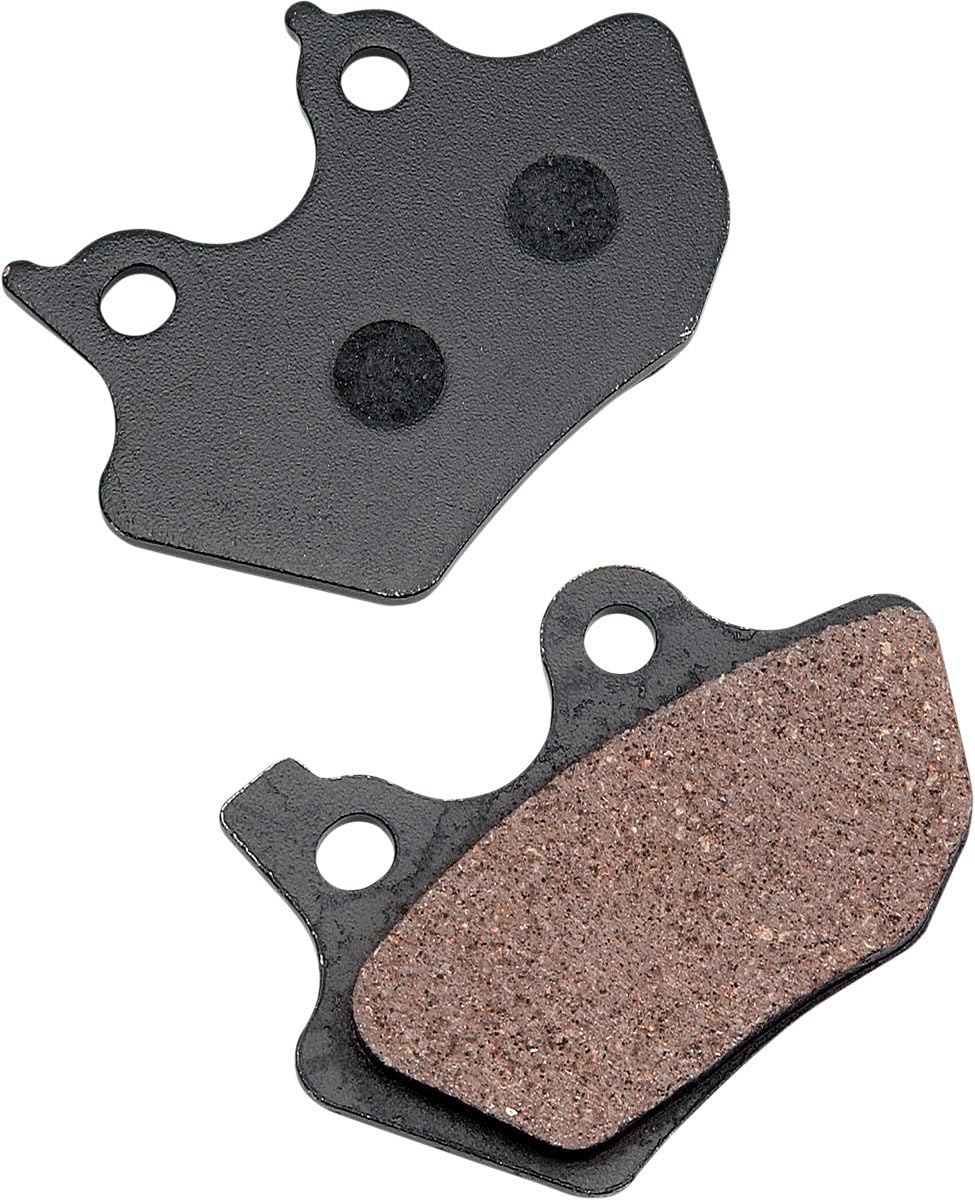
Material: organic, DuPont carbon-Kevlar compound.
Fits: most 2000-2007 Harleys – Softail, Dyna and Touring. IMPORTANT: this is a SINGLE PAIR, front or rear. A Touring model with dual front discs needs three.
Rating: 4.7 / 5 from 143 ratings
The longevity champion of this guide, and by a startling margin – one owner reports fifty thousand miles over ten years on a set. Lyndall is an American specialist and the Z-Plus uses a DuPont carbon-Kevlar organic compound, which delivers the things sintered pads do not: quiet operation, minimal rotor wear, low dust and a progressive feel at the lever. If you have ever replaced rotors and did not enjoy the invoice, that last point matters more than it sounds. The catch is arithmetic. These are sold as one pair. A Touring bike with two front calipers and one rear needs three sets, which puts the real cost around $180 – more than the complete EBC kit. For a Softail or Sportster needing two pairs the maths is closer. As an organic compound they give up some outright bite compared with sintered, which is the trade you accept for the quiet and the rotor life.
What owners say: “I’ve been using Lyndall Z-Plus pads on my 2003 Deuce for over 10 years and close to 50,000 miles. – 2003 Harley-Davidson Deuce”
EBC EBPCK2013 Front Semi-Sintered V-Pad Kit
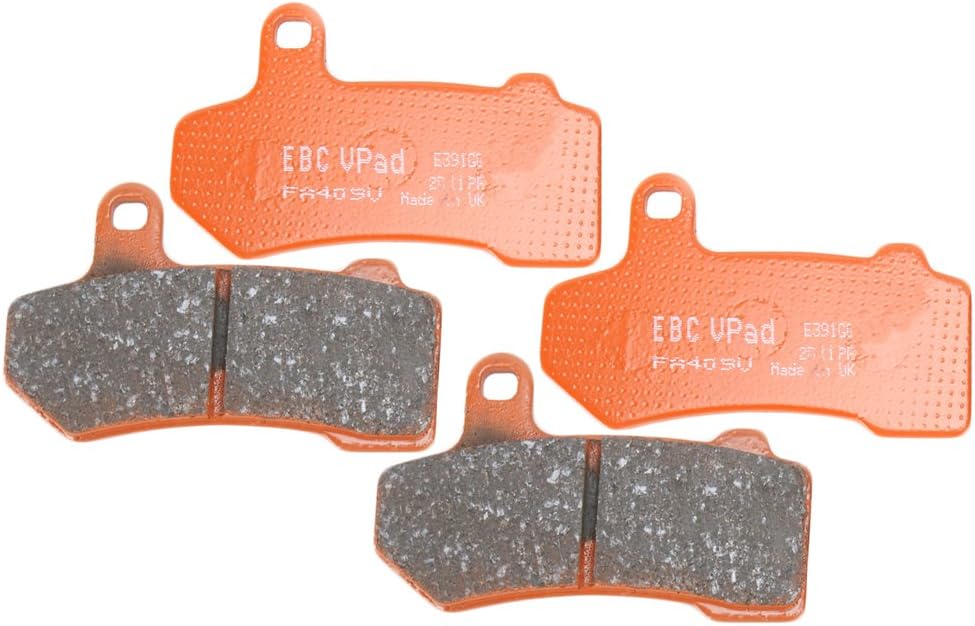
Material: semi-sintered V-Pad. Note that Amazon’s own material field says ‘Ceramic’ on this listing, which is incorrect.
Fits: FLHTCU Ultra Classic 2008-2015 and FLHTCUL Ultra Low 2015. FRONT ONLY – despite reading like a complete kit.
Rating: 4.6 / 5 from 184 ratings
EBC’s V-Pad sits between sintered and organic: more bite than an organic compound, gentler on rotors than full sintered, and noticeably quieter when cold. For a rider who found sintered pads noisy or who has had enough of buying rotors, this is the sensible middle ground from a brand with real longevity credibility. Two things this listing gets wrong that you should not repeat. Amazon’s material attribute says Ceramic; it is not ceramic, it is semi-sintered, and EBC’s own product name says so. And despite reading like a complete kit, this is a front-only set – a Touring bike will still need a rear pair to finish the job. Read the position field before ordering. Once past those, it is a well-regarded product from the strongest brand in this category.
What owners say: “They work like a champ. I have NO braking noise; and my stopping power is second to none. – 2010 Harley-Davidson Electra Glide Classic”
Zinger Severe-Sintered Brake Pads for Harley 2000-2007
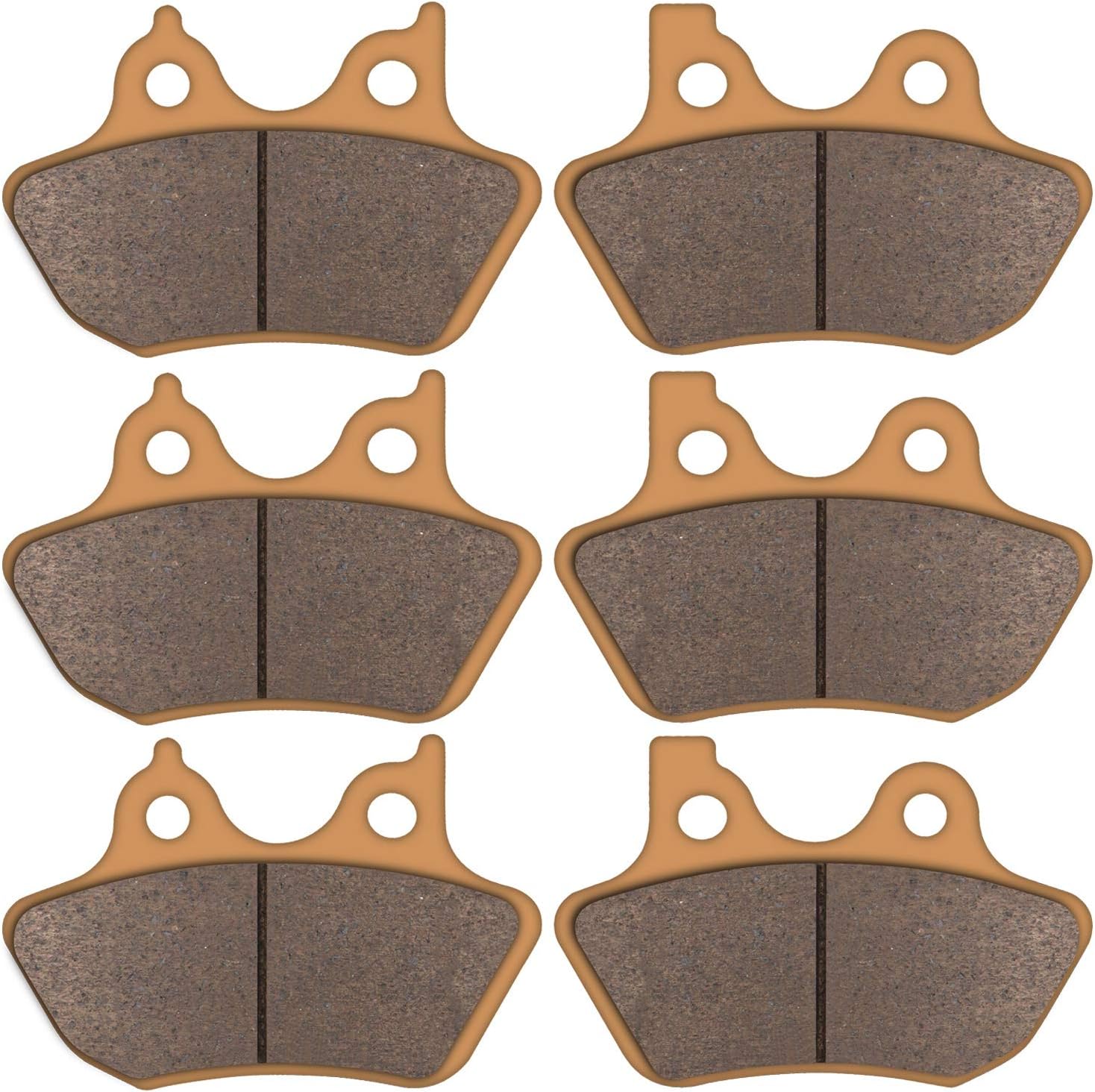
Material: severe-sintered, copper content 65% or higher – a racing-grade compound.
Fits: Touring, Softail, Dyna, Sportster and V-Rod 2000-2007. Complete – two front pairs plus one rear.
Rating: 4.6 / 5 from 322 ratings
A high-copper severe-sintered compound aimed squarely at maximum bite, sold as a complete three-pair kit for around $54 – which puts serious sintered braking at less than half the price of the EBC equivalent. For a 2000-2007 Harley that covers a lot of platforms in one part number, which is unusual in this category. The thing to understand is what severe-sintered means. A racing-grade compound bites harder and is correspondingly harder on rotors than a road compound, so the pads may outlast the discs rather than the other way round. Amazon’s own aggregation rates the durability feedback as mixed: one owner reports barely any wear since 2022, another reports them wearing out quickly. That spread is wider than on the EBC set, and it is what you are accepting for the price difference.
What owners say: “Application was on 06 Harley Touring. These pads bite harder than the organic pads I had on previously. – 2006 Harley-Davidson Touring”
AHL Front and Rear Brake Pad Set for Harley Touring
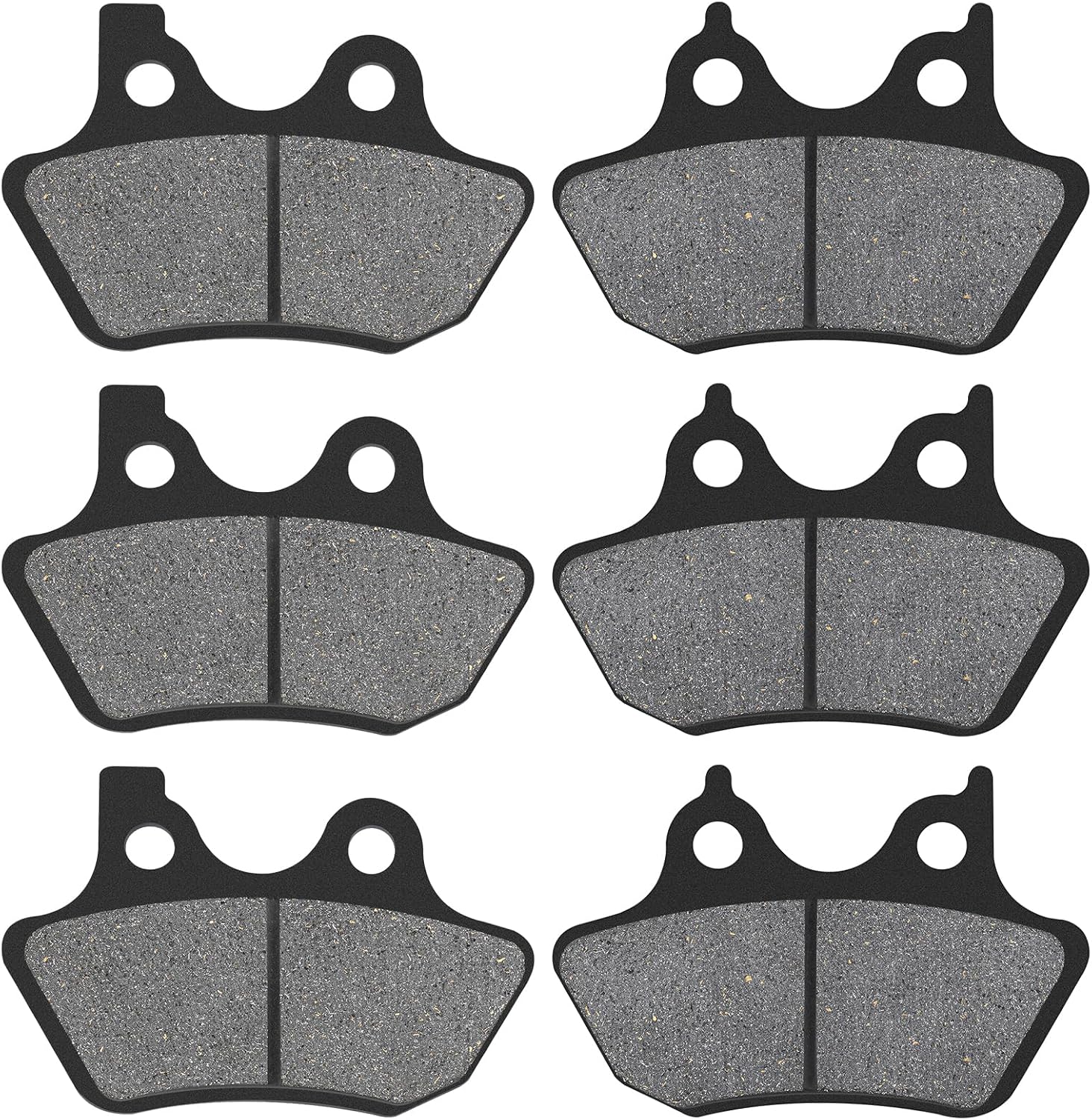
Material: semi-metallic on the standard variant. A sintered variant exists on the same listing at a higher price – check which you are selecting.
Fits: Touring 2000-2007 plus Dyna, Sportster and V-Rod. Three pairs – two front, one rear.
Rating: 4.6 / 5 from 443 ratings
A complete three-pair set for under $20, with 443 ratings behind it and broad platform coverage. For a bike that is being tidied up before sale, a low-mileage machine, or a rider who would rather do the job annually and cheaply, this is a reasonable proposition and the rating supports it. Two warnings that apply to this whole price bracket. First, this single listing sells two different friction materials through the variation selector – semi-metallic at the low price and sintered at around $60 – so confirm which one you are actually buying, because the performance difference is substantial. Second, the reviews carry a recurring ‘missing parts’ theme with several mentions, so check the box contents against your caliper count before starting the job rather than after.
What owners say: “3/16 is spec for new pads. They have that and Fits my 2003 ultra classic perfectly. These Semi metallic pads stop well. – 2003 Harley-Davidson Ultra Classic”
ECCPP Carbon Fibre Brake Pads for Touring 2000-2007
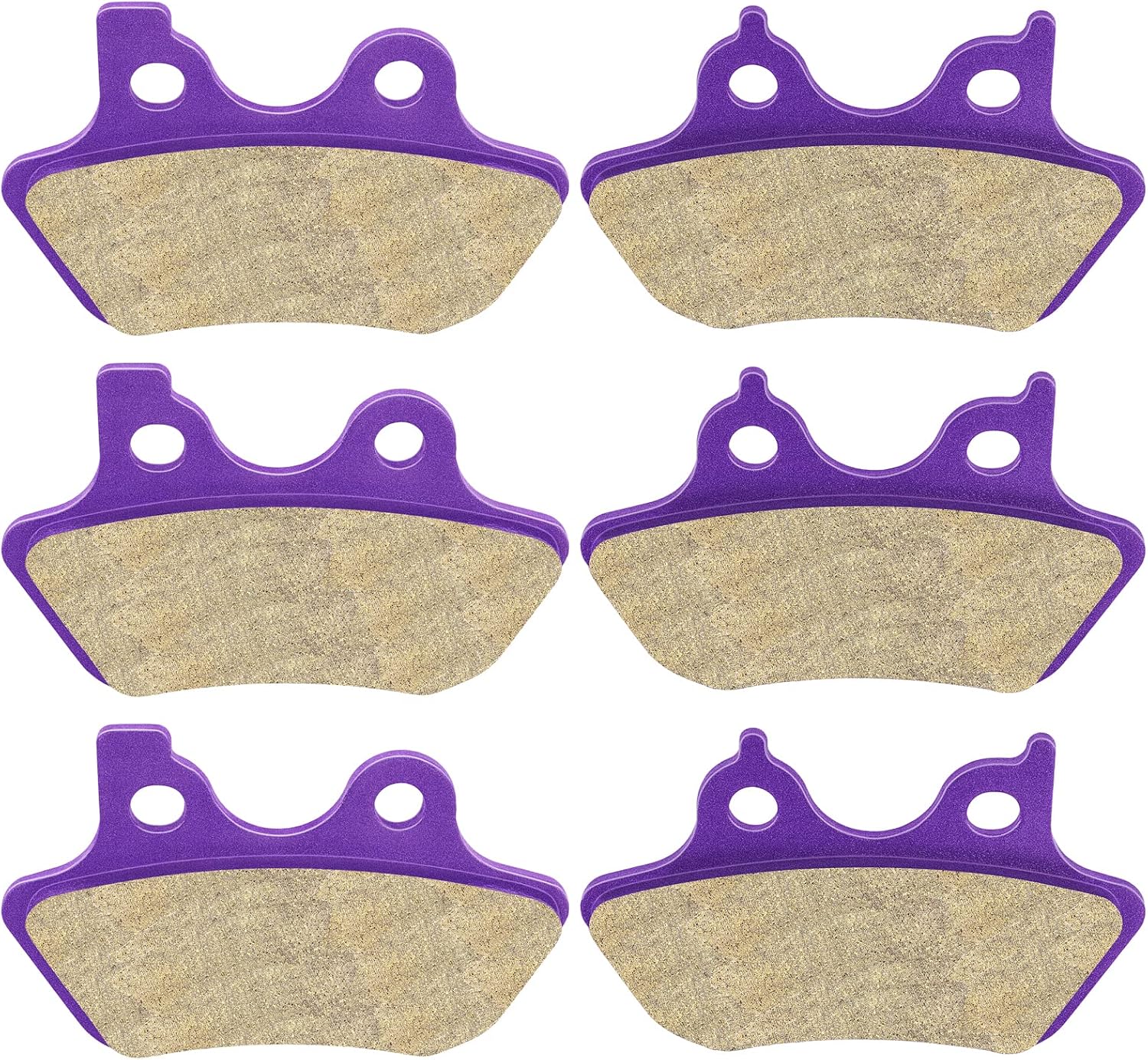
Material: described as carbon fibre, which in practice is an organic compound rather than a distinct class.
Fits: Touring 2000-2007, Dyna 2000-2005 and V-Rod. Six pads – front and rear.
Rating: 4.4 / 5 from 580 ratings
The largest review base of any budget set here at 580 ratings, and at under $18 for a six-pad set it is about as cheap as a complete brake job gets. ECCPP describe the compound as carbon fibre; in practice that places it with the organic materials rather than making it a separate category, which means quieter operation and gentler rotor wear than sintered, with correspondingly less bite. Amazon’s own aggregation of the reviews rates both noise and dust as divided – meaning owners disagree, which is what you would expect from a set at this price where consistency between batches is the variable. There is also a second price variant on the same listing at $39.99 with no clear explanation of what differs. If you go this route, check the quantity in the variant you select against the number of calipers on your bike.
What owners say: “it’s a 2001 Electra glide and all I can say is there great pads they produce little to no dust and they stop on point. – 2001 Harley-Davidson Electra Glide”
Heavy-Duty Ceramic Brake Pads for Harley 2000-2007
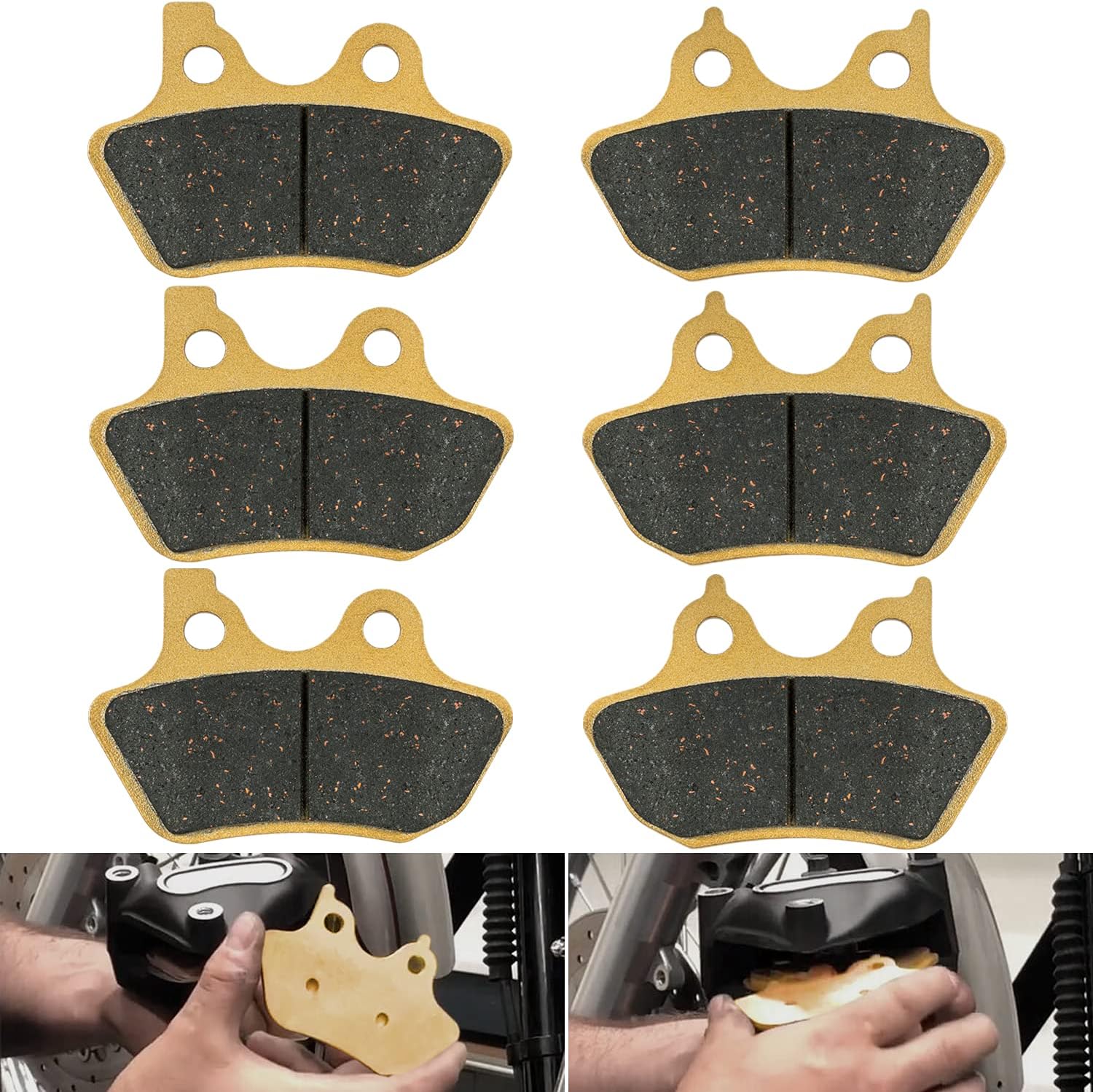
Material: listed as ceramic with copper fibres – but the product description on the same page calls it a carbon fibre compound. The listing contradicts itself.
Fits: Touring, Softail, Dyna and Sportster 2000-2007. Two front pairs plus one rear.
Rating: 4.5 / 5 from 210 ratings
Included here largely as a worked example of why the word ceramic should be treated carefully on motorcycle brake listings. The title and the Amazon material attribute both say ceramic; the product description on the same page describes a superior carbon fibre compound. Those are different materials, and the manufacturer is contradicting itself in two places on one listing. The set itself is a complete three-pair kit at around $23 with a respectable 4.5 rating across 210 reviews, so it is not a bad product – but buy it on the reviews and the price rather than on the material claim. The recurring complaints are worth knowing: several owners describe it as very dusty, one reports the rear pair worn out in two months, and another reports front squeal at low speed.
What owners say: “Great pads! Perfect fit on my Electra Glide. Fast and quiet braking. 100% would purchase again!. – Harley-Davidson Electra Glide”
Front and Rear Brake Pads for Harley Touring 2008-2022
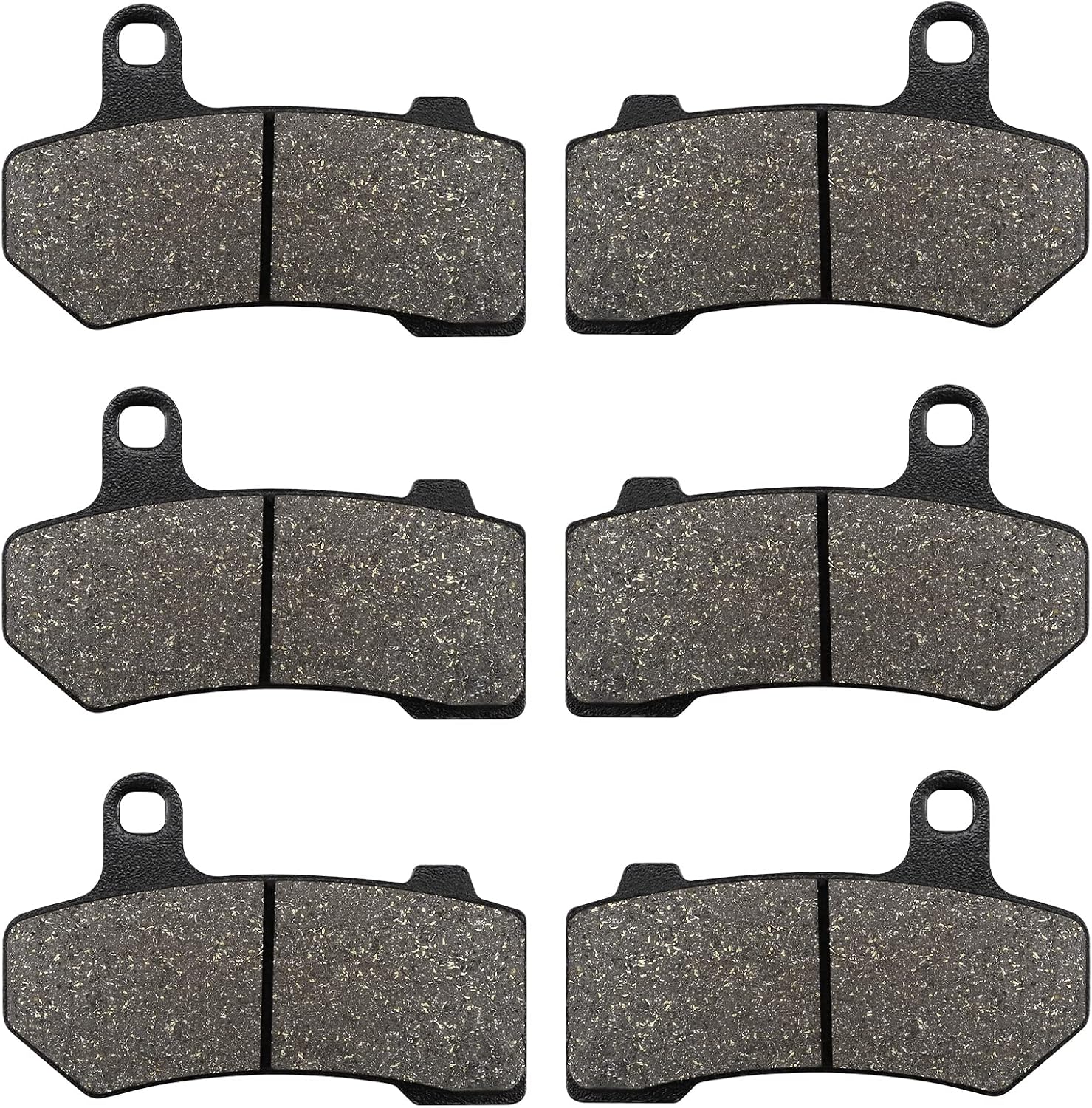
Material: semi-metallic on the standard variant, with a sintered variant at a higher price on the same listing.
Fits: Touring 2008-2022 – Street Glide, Road Glide, Road King, Ultra – plus V-Rod. Three pairs. NOT enough for a Tri Glide, which has four calipers.
Rating: 4.4 / 5 from 127 ratings
The budget option covering the newer Touring generation – 2008 through 2022, which most cheap sets do not reach. Three pairs for under $20, and for a late-model bike needing pads before a sale or a rider on a tight budget it does the job. Two specific cautions from the reviews, both worth taking seriously. One owner measured the friction material at under 1/8 inch against a stated 0.277 inch – roughly half the advertised thickness, which directly affects how long they last. And there is a one-star review from a Tri Glide owner who discovered three pairs does not cover four calipers. Neither of those is a reason to avoid the set outright at this price, but both are reasons to measure what arrives and to count your calipers first.
What owners say: “Installed on 12 streetglide. These pads work amazing. No problems, easy install. Would recommend. – 2012 Harley-Davidson Street Glide”
How to Replace Harley Brake Pads
An hour for both ends on most models, and one of the more satisfying jobs to do yourself – provided you respect the one step that matters.
- Support the bike securely and remove the wheel only if your caliper design requires it. Most Harley calipers allow pad replacement in place.
- Check the fluid level in the master cylinder before you push the pistons back. As the pistons retract they push fluid backwards, and a full reservoir overflows onto paintwork. Remove some fluid first if it is near the top.
- Remove the caliper – usually two bolts – and support it so it does not hang on the brake hose. A zip tie to the fork leg works.
- Note how the old pads sit before removing them, including any shims or anti-rattle springs.
- Push the pistons back slowly with a proper tool or a flat block of wood. Never lever against the rotor.
- Clean the caliper and inspect the pins. Replace them if worn – this is when to do it.
- Fit the new pads and reassemble, torquing the caliper bolts to specification.
- Pump the lever until it firms up before you move the bike. This is not optional. Ride off with an un-pumped lever and the first time you need the brake, it will not be there.
Bedding in
New pads need mating to the rotor surface. The usual method: a series of moderate stops from around 30 mph, letting the brakes cool between them, avoiding hard stops for the first 100 miles or so. Skipping this is why some riders conclude their new pads are poor – they are simply not bedded yet.
Sintered pads in particular can feel wooden and squeal for the first few dozen miles. Give them the bedding-in period before judging them.
Brake Pad Brands for Harley
EBC Brakes
The dominant name in motorcycle braking and the one with the deepest range. Their Double-H sintered compound carries the highest friction rating available and is manufactured in Ohio; the V-Pad semi-sintered line sits below it for riders who want less rotor wear and less cold noise. EBC is also the brand with the most credible longevity data in the reviews – 30,000-plus miles is repeatedly confirmed by owners.
Lyndall Brakes
An American specialist using a carbon-Kevlar organic compound. The Z-Plus is the product riders reach for when they want quiet braking and minimal rotor wear, and the longevity reports are the best in this guide – one owner citing fifty thousand miles. Note that these are sold as single pairs, so a Touring bike needs three.
Zinger
A severe-sintered copper-rich compound aimed at maximum bite. Strong performance, and worth understanding that a racing-grade sintered compound is harder on rotors than a road compound. Durability reports in the reviews are mixed.
ECCPP, AHL and unbranded sets
The budget end, typically $15 to $25 for a full set, and they occupy a genuine place – a low-mileage bike that gets replaced pads before a sale, or a rider who would rather do the job annually. Two warnings. Longevity data is thin and what exists is inconsistent. And several of these listings sell two different friction materials under one product page via the variation selector, at very different prices – check which variant you are actually adding to the basket.
Harley Brake Pads - FAQs
How many brake pads does a Harley Touring need?
What is the difference between sintered and organic brake pads?
How long do Harley brake pads last?
How do I know when my brake pads need replacing?
Are ceramic brake pads good for a Harley?
Do brake pad kits include caliper pins?
Why do my new brake pads squeal?
Can I replace just the front or just the rear pads?
Do I need to bleed the brakes after changing pads?
Conclusion
Count your calipers first. A Touring bike with dual front discs needs three pairs, a Softail or Sportster needs two, and a Tri Glide needs four – and kits sold as “complete” do not always match.
Then choose material by how you ride. Sintered for a loaded Touring bike; semi-sintered or organic if quiet operation and rotor life matter more than outright bite. Ignore the word “ceramic” on motorcycle listings unless the reviews back it up.
And on cost: a premium sintered set at $120 that runs 30,000 miles is cheaper per mile than a $20 set replaced every season, and it saves you three brake jobs. Brake pads are not where the savings are.
#1 Pick: Best Brake Pads for Harley
EBC EBPCK1027 Complete Double-H Sintered Brake Pad Kit
EBC’s Double-H is the highest friction rating available and the only set here with longevity confirmed by multiple owners past 30,000 miles. At $121 for a complete three-pair kit that works out cheaper per mile than a $20 set replaced every season.
Before ordering anything: count your calipers. A Touring bike with dual front discs needs three pairs, a Softail or Sportster needs two, and a Tri Glide needs four. Kits labelled complete do not always match.