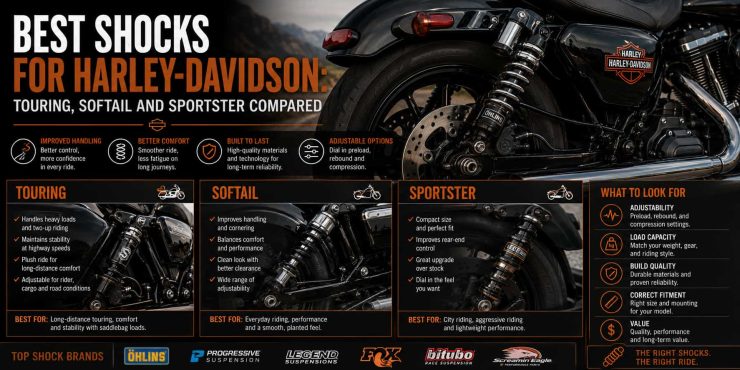
Ask a hundred Harley owners what the best upgrade to their bike was and rear shocks come up more often than exhaust, more often than a tune, and far more often than anything cosmetic. Ask on Reddit and the thread is titled “was it worth it?” – and the answers are overwhelmingly yes.
The reason is simple. Harley builds bikes to a price, and the rear suspension is where the accounting shows. Stock shocks on most models have limited travel, minimal damping control and no meaningful adjustment. They are adequate on smooth road at moderate speed with one rider. Add a passenger, a loaded tour pack or a broken surface, and they run out of ideas.
This guide covers what actually changes when you upgrade, how to pick the right length, the difference between emulsion, gas-charged, remote-reservoir and air systems, which brands are worth their money, and the honest answer to whether a $1,000 set is three times better than a $320 set.
One thing before anything else: shock length is not a preference, it is a fitment specification. Get it wrong and you either scrape the exhaust on every bump or raise the bike out of its geometry. The section on length comes first for that reason.
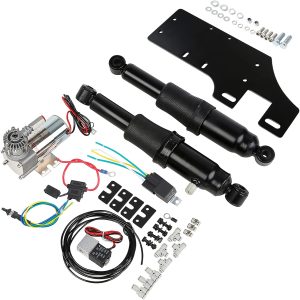
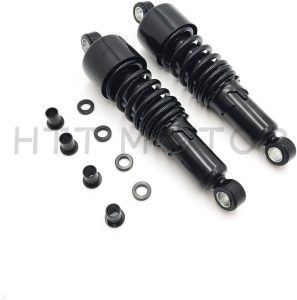
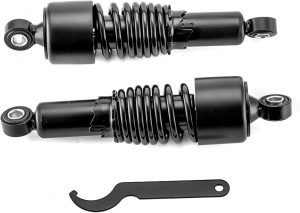
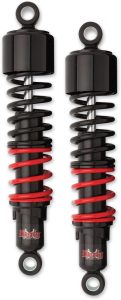
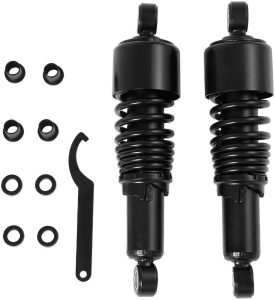
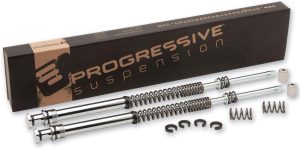
#1 Pick: Best Shocks for Harley-Davidson
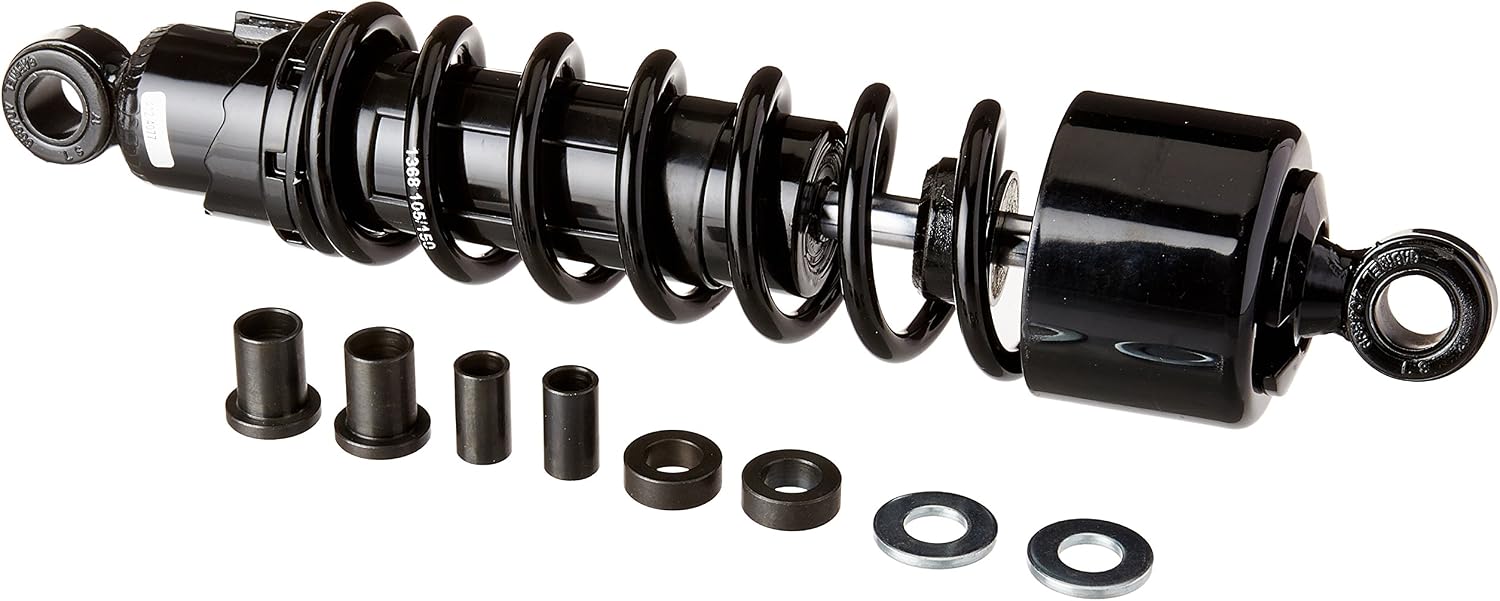
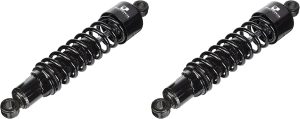
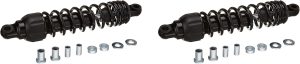
Progressive Suspension 412-4077B 13" Heavy Duty Low
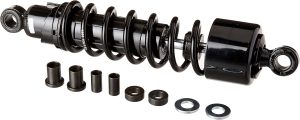
The 412 series is the default upgrade in this category and the best improvement per dollar you will find: a gas-charged coil-over with a proper spring rate and threaded preload adjustment, at roughly a third of what premium shocks cost.
Riding two-up or loaded over long distances? The Progressive 444 with remote reservoirs is the comfort answer. Want the ceiling regardless of price? Legend’s Revo-A with adjustable rebound. And measure your existing shocks eye to eye before ordering anything – length is a fitment specification, not a preference.
The top best product [hide]
Are Aftermarket Shocks Worth It on a Harley?
This is the question every forum thread circles around, so it is worth answering directly before any product talk.
What you actually notice
The change riders report most is not “smoother” in a vague sense – it is the disappearance of harsh bottoming. Stock shocks on a loaded Touring bike run out of travel over a sharp bump and hit their limit with a bang you feel through the seat and the bars. A properly specified aftermarket set with correct spring rate and damping absorbs the same bump instead of running out of room.
The second thing is control over multiple bumps. Stock damping recovers slowly, so a series of ripples sets the bike pogoing. Better shocks settle after each one.
The third, and the one that matters if you ride two-up, is load capacity. A passenger plus luggage on a bagger is a lot of extra weight over the rear wheel, and it is where stock suspension gives up first.
Where the money goes
- $80-130: budget replacement or lowering shocks. Better than a worn-out stock set, no damping sophistication. Bought mostly for the look or for lowering.
- $290-350: the sweet spot. Proper spring rates, real damping, preload adjustment. This is where most riders should be, and where the improvement over stock is largest per dollar.
- $650-1,000: remote reservoir, rebound adjustment, high-end construction. Genuinely better, but the improvement over a good $320 set is smaller than the improvement from stock to $320.
The honest verdict
If your stock shocks are original and the bike has miles on it, almost any quality replacement transforms the ride. The first $300 buys most of the available improvement. Beyond that you are buying adjustability and refinement, which matter enormously if you ride hard, two-up, or loaded – and matter much less if you ride solo on decent roads.
And one caveat riders discover late: upgrading only the rear can expose how soft the front forks are. The bike now controls the back well and dives at the front. That is why fork cartridges appear in this guide.
Shock Length: The Number That Decides Fitment
Shocks are sold by eye-to-eye length, and this is a fitment specification rather than a preference. Fit the wrong length and you change the bike’s geometry, its ground clearance and how much the exhaust and bags clear the road.
| Length | Effect | Typical use |
|---|---|---|
| 10.5 inch | Lowered – roughly 2 inches below stock on Touring | Shorter riders, lowered custom builds |
| 11 – 12 inch | Mildly lowered | Compromise between look and clearance |
| 12.5 – 13 inch | Stock height on most Touring models | The default replacement |
| 13.5 inch | Slightly raised | More travel and clearance, heavier loads |
What lowering actually costs you
Lowering looks good and helps shorter riders get both feet down, and both are legitimate reasons. But it is a trade, not a free upgrade:
- Less suspension travel. A 10.5-inch shock has physically less room to move than a 13-inch one, so it reaches its limit sooner. Lowered bikes bottom out more, not less.
- Reduced ground clearance. Floorboards, exhaust and bags all sit closer to the road, and hard cornering finds that out.
- Geometry changes. Lowering the rear steepens the rake and quickens the steering, which some riders like and others find nervous.
If your goal is comfort rather than looks, going shorter is the wrong direction. If your goal is a lowered stance, accept the trade and consider a lowering kit for the front too so the bike stays balanced.
Sportster is different
Sportsters run shorter shocks than Touring bikes – 10.5 to 13 inches covers most of the range, with 12 to 13 being roughly stock depending on model and year. A 10.5-inch shock on a Sportster is a genuine lowering job.
Measure your existing shocks centre to centre on the mounting eyes before ordering. It takes two minutes and removes all the guesswork.
Emulsion, Gas-Charged, Remote Reservoir and Air
Four constructions, and the differences are about how the shock handles heat and how much control you get over the damping.
Emulsion shocks
The simplest and cheapest design: oil and gas share the same chamber. Under hard repeated use the two mix – the oil foams – and damping fades. On a gentle road you never notice. On a rough one, loaded, you feel the shock get vaguer as it heats up. Most budget shocks are emulsion.
Gas-charged with internal floating piston
A piston separates the oil from the nitrogen charge, so they cannot mix and the damping stays consistent as things heat up. This is the technology in most mid-range shocks and it is the single biggest step up from budget parts. If you are choosing between a cheap set and a $300 set, this is largely what you are paying for.
Remote reservoir
The oil volume is increased with an external reservoir connected by a hose, which manages heat better again and usually comes with adjustable rebound damping. This is high-end territory – the shocks are longer-lasting under abuse and adjustable to the rider rather than to an average. Worth it for heavy riders, two-up touring and anyone who rides hard.
Air shocks
Air pressure provides the spring rate, so you adjust ride height and stiffness with a pump or an onboard compressor rather than by turning a preload collar. The appeal is obvious: soft and low when you are solo, firm and tall when you load the bike or add a passenger, changed in seconds.
Harley fitted air shocks to many Touring models from the factory, which is why so many owners are looking for replacements – the originals leak with age. Aftermarket air ride kits also let you drop the bike dramatically at a stop, which is a big part of the bagger aesthetic.
The trade-offs are complexity and failure modes. Air systems have lines, fittings and a compressor, and each is a thing that can leak. Damping control on cheaper air kits is usually less sophisticated than a good coil-over. And when an air system fails you lose ride height, not just comfort.
Which Shock Gives the Smoothest Ride?
The answer is not a brand – it is a set of specifications, and understanding them saves you from buying an expensive shock that rides worse than a cheaper one.
Spring rate matched to your weight
This matters more than anything else on the list. A spring that is too stiff for the load transmits every bump instead of absorbing it. A spring that is too soft uses up its travel immediately and then bottoms out. Manufacturers publish shocks in different spring rates for a reason – “heavy duty” is not a quality grade, it is a spring rate for heavier loads. A 150-pound solo rider buying heavy-duty shocks gets a harsh ride and blames the shocks.
Rebound damping
How fast the shock extends after compressing. Too fast and the bike kicks back at you over a bump. Too slow and it packs down over successive bumps and never recovers. Adjustable rebound is the feature that separates high-end shocks from mid-range ones, and it is what lets you tune the ride to your weight and your roads rather than accepting an average.
Enough travel
A comfortable shock is one that does not run out of room. This is the case against lowering when comfort is the goal, and the case for buying stock-length or slightly longer if you carry weight.
Preload set correctly
Preload does not change the spring rate – it changes where in the travel the bike sits. Set it for your usual load so the suspension has room to move in both directions. Most riders never touch it, and a lot of complaints about harsh shocks are really complaints about preload wound up hard from the factory.
The practical answer
For most riders the smoothest ride comes from a gas-charged shock in stock length, with a spring rate matched to their actual weight and preload set properly. That is a $300 part, not a $1,000 one. Spend the extra on rebound adjustment if you ride two-up, carry luggage, or weigh substantially more or less than average.
Best Rear Shocks for Harley Touring
The core of this guide. Four options from the value benchmark to the premium ceiling – check the fitment note on each before ordering.
Progressive Suspension 412-4077B 13" Heavy Duty Low
Fits: the Amazon listing publishes no model table. Owners report fitting them to Street Glide, Road Glide and Road King – confirm the 412 series part number for your model and year on Progressive’s own fitment guide.
Specs: 13 inch eye-to-eye, heavy duty spring rate, low profile, threaded preload adjustment.
Rating: 4.5 / 5 from 121 ratings
This is the shock most Harley riders should be looking at, and the 412 series is the default upgrade in this category for good reason. It is a gas-charged coil-over with a proper spring rate and threaded preload adjustment, at a price where the improvement over tired stock shocks is the largest per dollar you will find anywhere in this guide. A 2023 Street Glide owner describes the ride as much smoother than the stock shocks the bike came with, which is the typical report. Adjustment takes about two minutes with the supplied spanner. One honest note from the reviews: a minority describe the difference as modest rather than transformative. That is almost always a spring rate question – “heavy duty” is a spring rate for heavier loads, not a quality grade, and a lighter solo rider will find it firm. Match the rate to your actual weight rather than assuming heavy duty is better.
What owners say: “Much smoother ride than stock shocks that came with my 2023 Street Glide.”
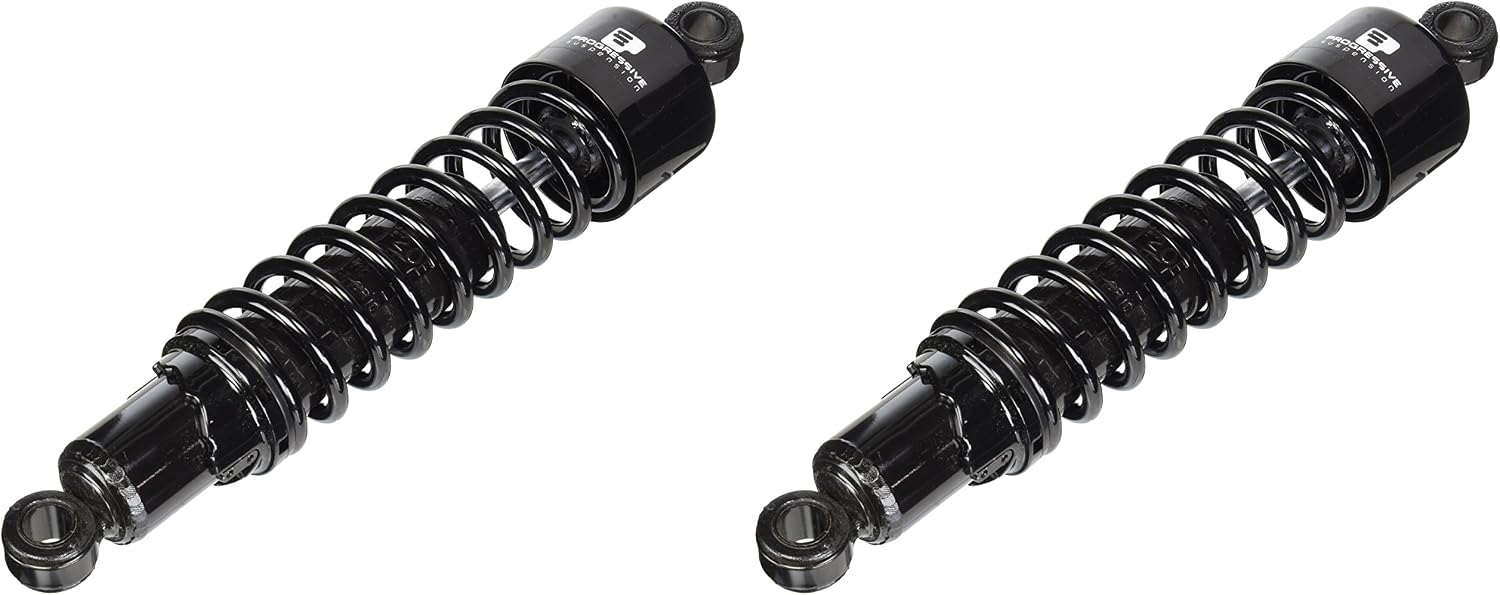
Progressive Suspension 412-4003B 13.5" Heavy Duty
Fits: no compatibility table on the listing. Owners report use across Sportster, Dyna and Road King applications. 13.5 inch is slightly above stock height on most Touring models.
Specs: 13.5 inch eye-to-eye, heavy duty spring rate, gas-charged.
Rating: 4.8 / 5 from 160 ratings
The highest-rated shock in this guide at 4.8 stars across 160 ratings. At 13.5 inches it sits marginally taller than stock on most Touring bikes, which buys a little extra travel and ground clearance – useful if you carry weight or ride broken roads. Owners describe being able to drop off kerbs without the harsh bottoming that stock shocks produce, which is exactly the improvement this category is about. Installation is straightforward: undo the old set, fit these in their place, with a jack or even a sensible improvised support under the frame. The recurring caveat in the reviews is worth quoting directly because it illustrates the single most common mistake in this category: a 150-pound rider found the heavy duty spring rate stiff. That is not a defect. It is the wrong spring rate for that rider, and it is why matching the rate to your weight matters more than the badge.
What owners say: “Install was pretty straightforward. Undo the old set and put these on in their place.”
Progressive Suspension 444-4020B Big Mile Riders
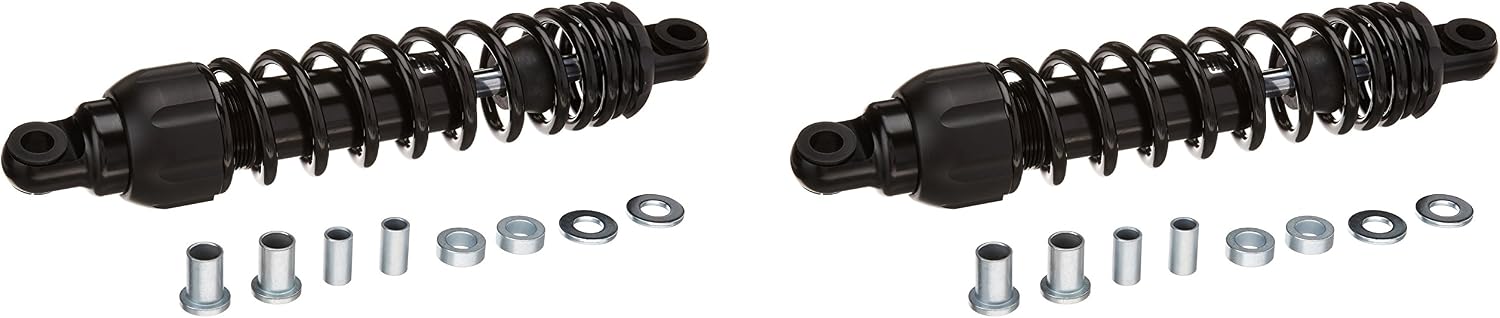
Fits: no compatibility table on the listing. In practice bought by Touring owners, frequently as a replacement for failing factory air shocks. Confirm the 444 part number for your model.
Specs: 13 inch eye-to-eye, remote reservoir, heavy duty. Progressive’s touring-focused series.
Rating: 4.6 / 5 from 77 ratings
If the question is which shock gives the smoothest ride, this is the strongest answer in the guide. The 444 series is Progressive’s touring line – remote reservoir construction for consistent damping over long distances, and a design brief aimed squarely at riders covering big miles two-up. The review themes are comfort, absence of bottoming and behaviour under load, which is exactly the profile. The most useful owner report comes from a 2004 Electra Glide Ultra Classic running the factory air shocks that needed constant attention – a common story, since Harley’s original air systems leak with age. Swapping to a sealed coil-over removes an entire category of maintenance along with improving the ride. The obvious objection is the price: at around $680 this is more than double the 412 series. Whether that is worth it depends on how you ride. Two-up, loaded, long distance – yes. Solo commuting on decent roads – the 412 gets you most of the way for less than half.
What owners say: “I have a 2004 HD Electra Glide Ultra-Classic that had the stock air-ride rear shocks which required constant attention.”
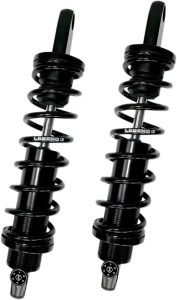
Legend Suspension Revo-A Adjustable Coil Shocks, 13"
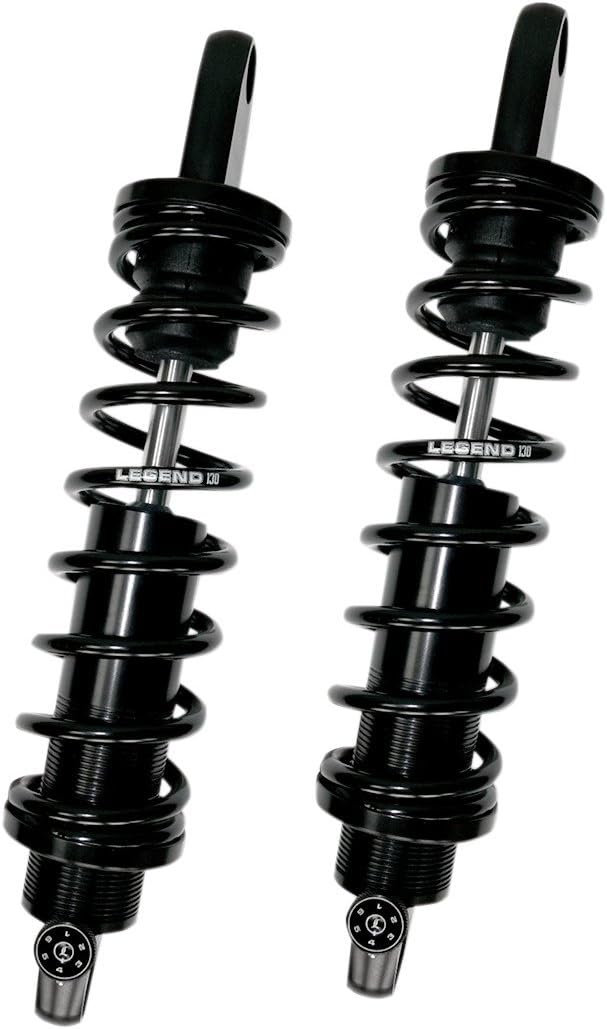
Fits: the Amazon description is a single line and names no models or years. Legend builds the Revo series specifically for Harley baggers – check part number 1310-series against your model on the manufacturer’s site.
Specs: 13 inch, adjustable rebound damping, American-made. Six adjustment positions.
Rating: 4.6 / 5 from 189 ratings
The most expensive shock here at around $1,000 a pair, and the one that generates the strongest reactions. Legend builds specifically for the bagger market and the Revo-A is their signature product: adjustable rebound damping across six positions, which is the feature that separates high-end suspension from mid-range. Rebound control is what stops the bike kicking back over a bump or packing down over a series of them, and being able to tune it to your weight and your roads rather than accepting a factory average is the whole argument for spending this much. Owner language is unusually emphatic – the comparison that comes up is going from a Ford Festiva to a Cadillac. Installation is straightforward with one quirk several owners mention: the mounting holes on one side can need a little persuasion, and setting sag equally on both shocks takes patience. If you ride long distances loaded and the budget exists, this is the ceiling. If it does not, the 444 delivers most of it for two-thirds less.
What owners say: “The difference in quality between these and the stock shocks is night and day.”
Air Ride Suspension
Adjustable ride height in seconds, and the practical replacement for Harley factory air shocks once their seals give up. Understand the trade-offs first.
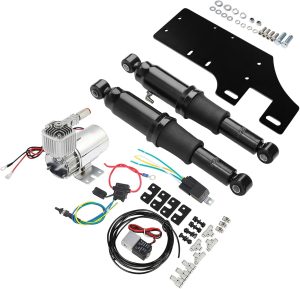
XFMT Rear Air Ride Suspension Kit for Harley Touring
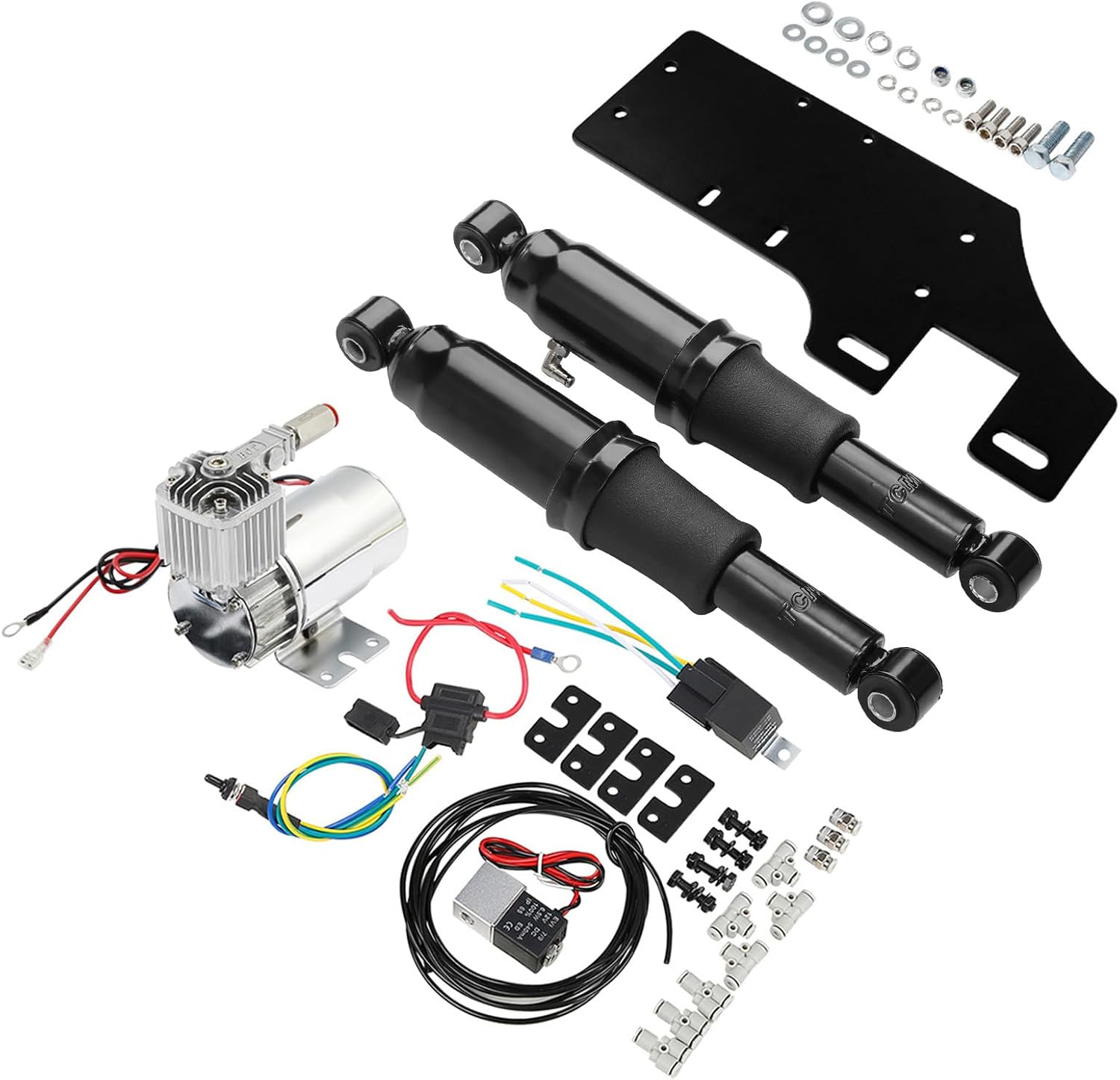
Fits: clearly listed – Harley Touring including Road King, Street Glide, Road Glide, Electra Glide and Ultra Classic, 1994-2025.
Specs: adjustable from roughly 9.64 inches fully compressed to 14.17 inches extended. Includes compressor, lines and controller.
Rating: 4.1 / 5 from 142 ratings
Air ride is what lets a bagger sit slammed at a stop and rise to a usable ride height on the move, and it is also the practical answer for owners whose factory air shocks have finally leaked their last. This kit includes the shocks, compressor, lines and wiring, and the fitment list is one of the clearer ones in this guide – Touring models from 1994 through 2025. An owner fitting it to a 2011 Electra Glide Classic describes the wiring diagram as easy enough to follow if you can read a diagram, which is a fair characterisation of the job overall. Be realistic about what $190 buys in an air system. The recurring complaint across reviews is air leaks, and a minority report failures within weeks. Air systems have more parts to fail than a coil-over – lines, fittings, a compressor – and at this price the components are not premium. If your priority is stance and adjustability, this delivers it. If your priority is ride quality and reliability over years, a sealed coil-over is the safer purchase.
What owners say: “This kit was installed on a 2011 EG Classic. The wiring diagram was easy enough to follow if you know how to read a diagram.”
SLMOTO Rear Air Ride Suspension Kit
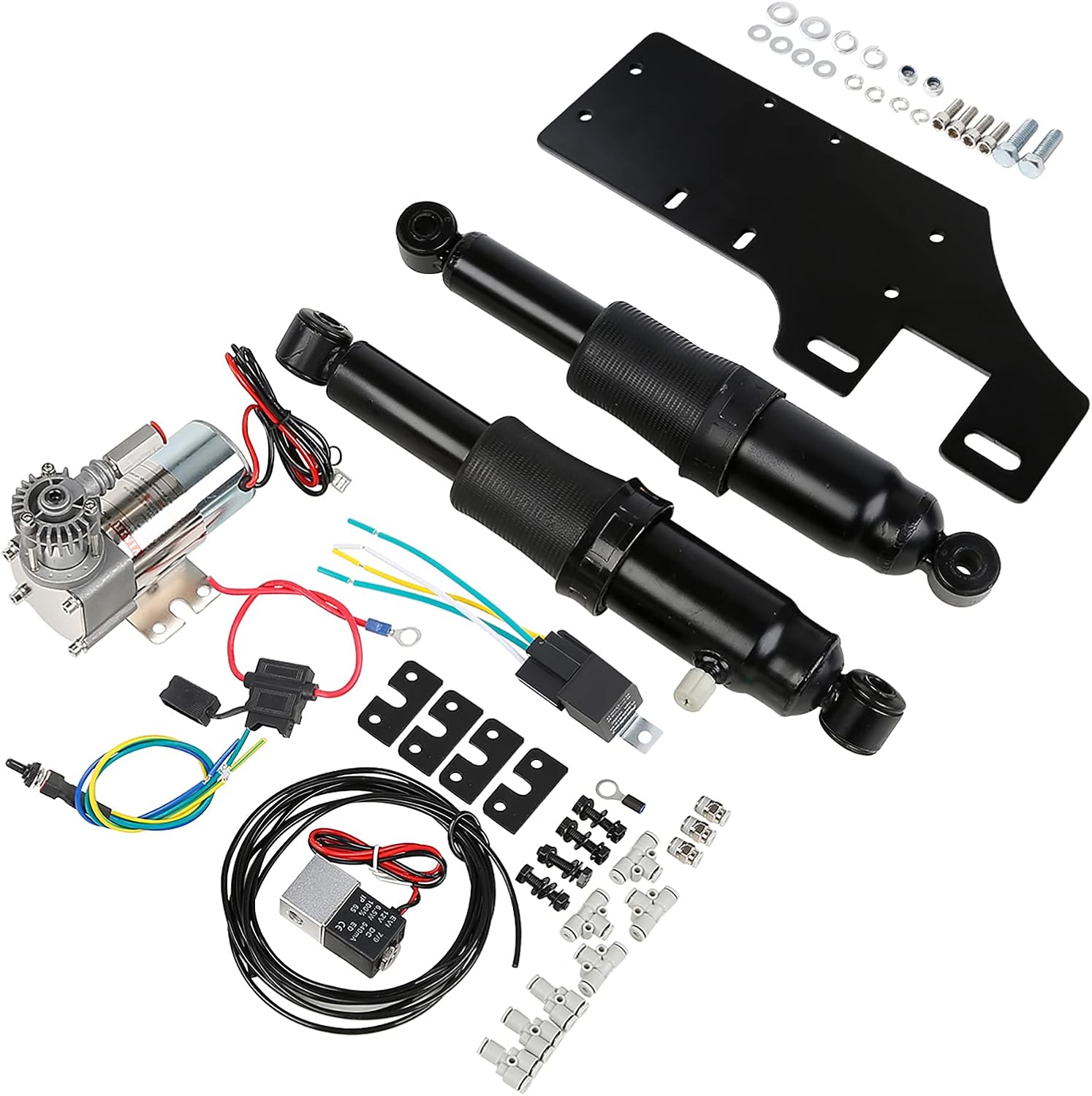
Fits: Harley Touring and bagger models – Street Glide, Road King, Road Glide, Electra Glide and CVO, 1994-2025.
Specs: adjustable from roughly 9.64 to 14.17 inches. Compressor and lines included.
Rating: 4.0 / 5 from 125 ratings
Functionally the same proposition as the XFMT kit at a near-identical price, with the same fitment coverage across Touring models from 1994. Owners describe installation as reasonably straightforward and the system as working as intended once fitted. The review distribution is worth looking at honestly before buying: 4.0 stars with 12 percent one-star reviews is a polarised result rather than a mediocre average, and the complaints centre on component quality – one owner reports the air lines arriving dry-rotted. There is also a handling observation worth passing on from an owner who otherwise liked the kit: the bike felt less stable at higher speeds when the system was set low, which makes sense given what dropping ride height does to geometry. Air ride is a stance-first modification, and it is best understood that way rather than as a comfort upgrade.
What owners say: “Installs pretty easily and works well. Only negative is it seems to make the bike unstable at higher speeds if set low.”
Lowering Shocks
For stance or for shorter riders. Both are legitimate reasons – just be clear that lowering costs travel and clearance rather than improving comfort.
LS003 10.5" Slammer Lowering Shocks
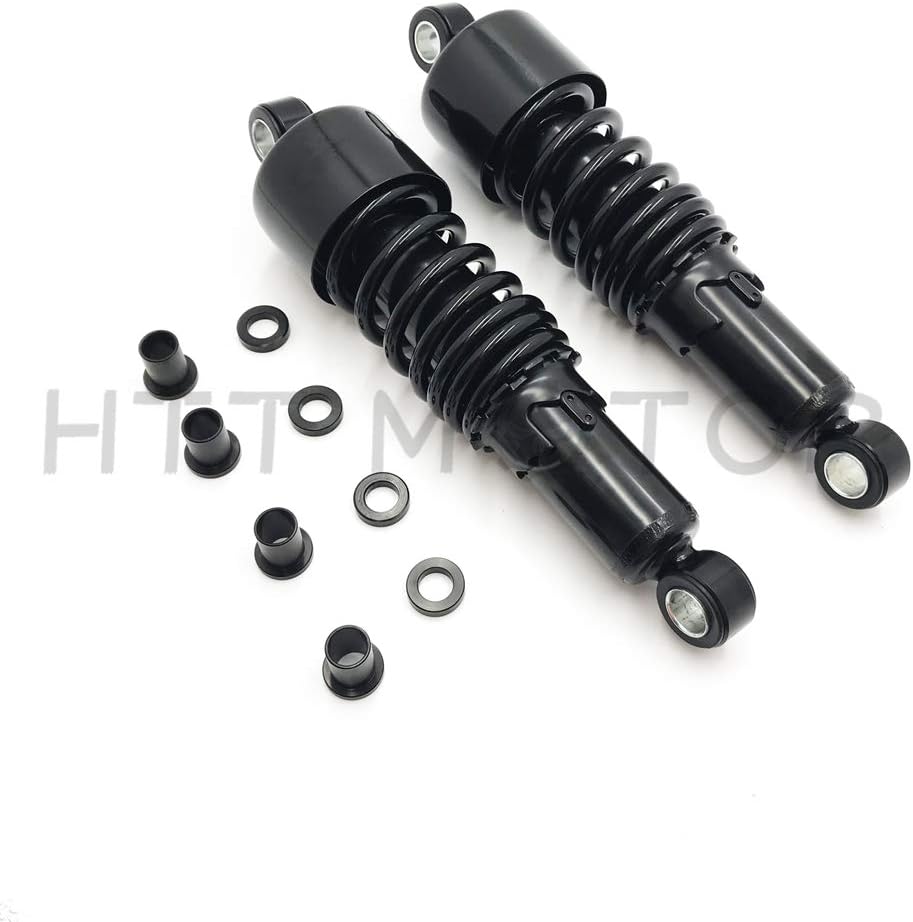
Fits: the description lists 24 Touring models from 1984 to 2013 – the most complete fitment table in this guide. Note that the product title contradicts this and mentions Sportster; trust the description, and verify against your model.
Specs: 10.5 inch eye-to-eye – roughly 2 inches below stock Touring height. Adjustable preload.
Rating: 4.5 / 5 from 126 ratings
The best value lowering option here, and it publishes the fullest fitment table of anything in this guide – 24 Touring models across three decades. At around $80 for a pair with adjustable preload, the value is obvious. One owner replacing 15-inch Progressives to bring the bike back to a lower stance describes being extremely happy with them. Two things to understand before ordering. First, the listing contradicts itself: the title mentions Sportster while the description lists Touring models exclusively. The description is the reliable part, so read it rather than the headline. Second, and this applies to every lowering shock rather than just this one, dropping two inches costs you suspension travel. Owners note that on anything but the highest preload setting the bike can find its limits over rough surfaces. That is the trade lowering always involves. Also note the item is non-returnable.
What owners say: “Purchased these to replace my 15″ Progressives to lower the bike back to stock size. I’m extremely happy with them.”
WeiSen 10.5" Preload Adjustable Lowering Shocks
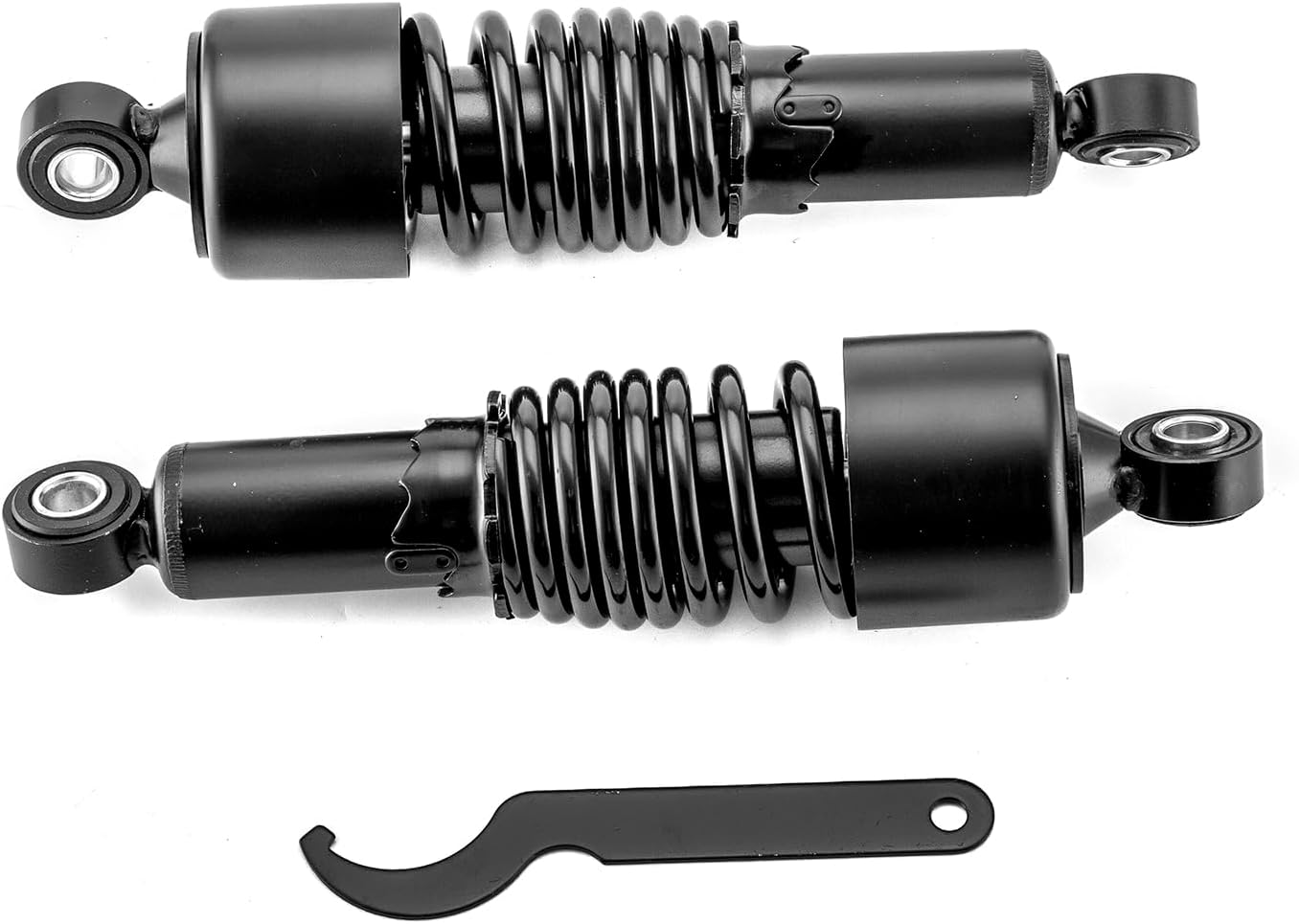
Fits: Harley Touring FLT, FLHT, FLHR, FLTR and FLHX, 1980-2025, excluding trikes and models with fork cartridges. The listing gives 1980-2025 in the bullets and 1980-2022 in the description.
Specs: 10.5 inch eye-to-eye (267mm), preload adjustable.
Rating: 4.0 / 5 from 120 ratings
The lowering option that covers the newest bikes – a 2025 Street Glide owner confirms fitment, which puts it ahead of most budget shocks whose year ranges stop a decade ago. Preload is adjustable and the price is reasonable. What earns this listing genuine credit is that the manufacturer says the quiet part out loud in their own bullet points: they warn directly that the lower position will make riding a little firmer. That is more honesty than most sellers in this category manage, and it matches the reviews – several owners describe the ride as rough, with at least one replacing them. Take that warning at face value. If you want the bike lower and accept a firmer ride as the price, this does the job across a wide year range. If you want comfort, a lowering shock is the wrong product entirely and you should be looking at the stock-height section above. Amazon flags this listing as a frequently returned item.
What owners say: “Fit my 2025 Street Glide. I like to ride low and these done the trick for me.”
Best Shocks for Harley Sportster
Sportsters run shorter shocks than Touring bikes and the factory units are notoriously basic. Two very different approaches below.
Burly Brand 13" Stiletto Shocks B28-1251
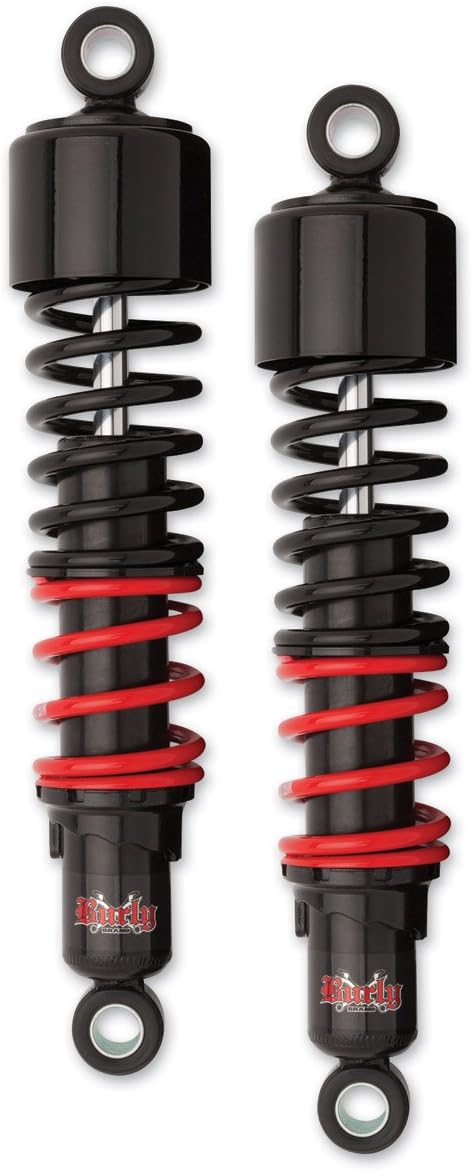
Fits: the listing names no specific years. Burly states 13 inch or 15 inch for most Sportster models – 13 inch is around stock height for the platform.
Specs: 13 inch eye-to-eye, progressive-rate spring, chrome or black.
Rating: 4.4 / 5 from 54 ratings
The comfort answer for a Sportster, and the platform needs one – factory Sportster shocks are among the least sophisticated suspension Harley fits to anything. Burly’s Stiletto uses a progressive-rate spring, meaning it stays compliant over small surface imperfections and firms up as it compresses further into its travel, which is a sensible design for a bike that has limited travel to work with. Owner language is blunt about what it replaces: one describes the factory rear shocks as trash and the upgrade as saving your back. At 13 inches it is roughly stock height, so it improves the ride without changing the bike’s stance or clearance. Two caveats. The listing names no model years, so check Burly’s own fitment guide against your bike. And one owner reports the company declining a warranty claim, which is worth weighing at this price point.
What owners say: “Sportster factory rear shocks are trash – do yourself a huge favor and buy a set of these. It’ll help save your back.”
SLMOTO 10.5" Rear Shocks for Harley Sportster
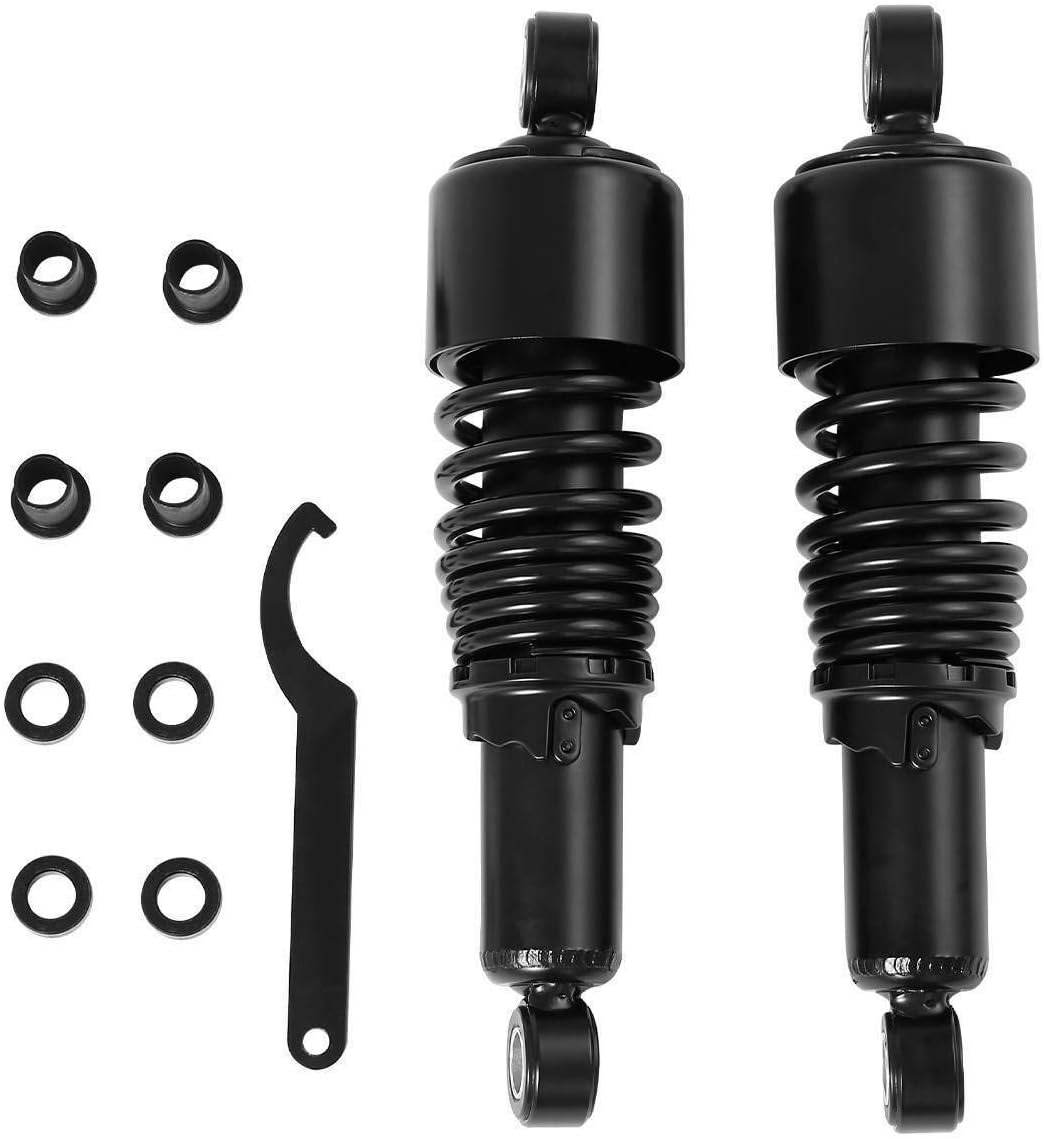
Fits: Harley Sportster XL883 and XL1200 Custom 2004-2012, including Iron and related variants. One of the more specific Sportster fitment lists here.
Specs: 10.5 inch eye-to-eye – a lowering length for a Sportster.
Rating: 4.7 / 5 from 76 ratings
At $56 a pair this is the cheapest product in the guide and it carries a 4.7 rating, which sounds like an outright win. Read what the reviews actually say and the picture sharpens: the praise is almost entirely about appearance, fit and build quality, and Amazon’s own review summary contains no tags relating to ride quality at all. An owner on a 2015 Forty-Eight sums it up – better than the stock shocks the bike came with, and he loves the slammed look. That is an honest description of what this product is for. At 10.5 inches on a Sportster you are lowering the bike meaningfully, which costs travel on a platform that had little to spare. Buy these if the slammed stance is the goal and you accept a firmer ride. If you want the Sportster to be more comfortable rather than lower, the Burly above is the product you actually want, at five times the price.
What owners say: “Installed on 2015 Sportster Forty-Eight. Better than stock shocks that came on bike. Love the slammed look.”
Front Suspension: Fork Cartridges
The upgrade riders want after fixing the rear, when the front end suddenly feels like the weak point.
Progressive Suspension 31-2501 Monotube Fork Cartridge Kit
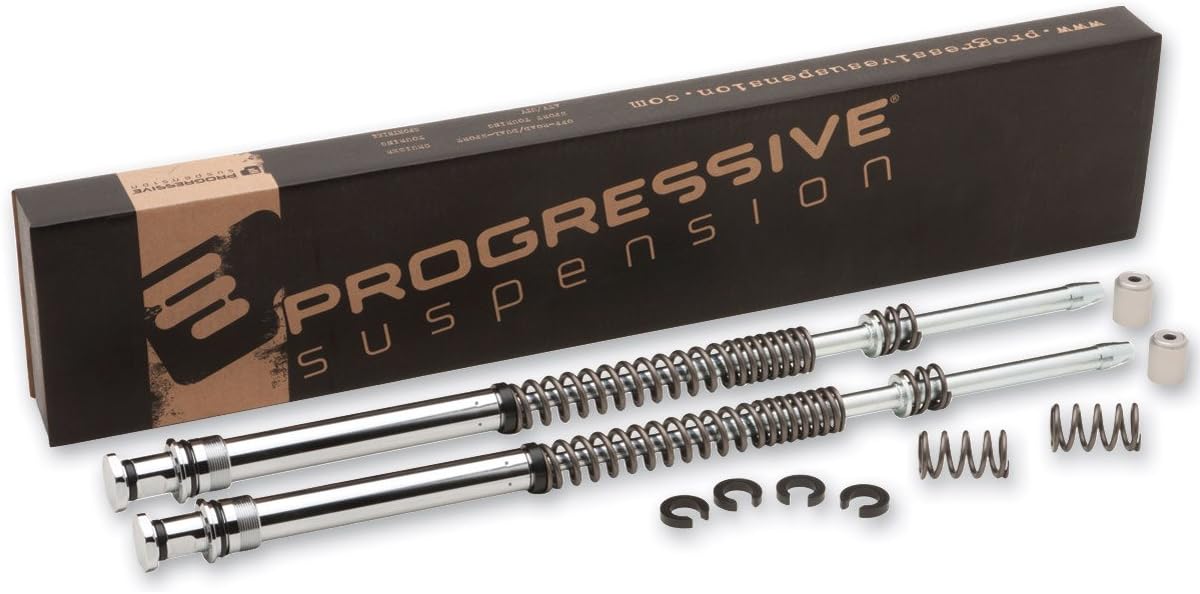
Fits: clearly stated on the listing – a direct internal replacement for all FLH and FLT models from 1997 to 2009. One of the few listings in this guide with unambiguous fitment.
Specs: monotube cartridge kit, installs inside the existing fork legs. Not a rear shock.
Rating: 4.7 / 5 from 112 ratings
The part that answers the complaint riders have after upgrading the rear: the front now feels vague by comparison. This is not a shock – it is a cartridge kit that replaces the internals of your existing fork legs, converting a damper-rod fork into a monotube cartridge fork without changing anything visible on the bike. The result is controlled damping in both directions instead of the crude arrangement Harley uses as standard, which means less dive under braking and far better composure over bumps. A 2008 Street Glide owner describes researching alternatives and ending up here after being unsatisfied with the stock ride. It is worth understanding that this is the second half of a suspension upgrade rather than an alternative to rear shocks – riders who do both describe the bike as feeling like a different machine. The fitment window is narrow at 1997-2009 FLH and FLT, so check yours before ordering.
What owners say: “Not being satisfied with the stock ride on my ’08 Harley Street Glide, I ended my research with this kit.”
Harley Shock Brands Compared
Brand searches dominate this category – riders look for Progressive or Ohlins by name rather than for “rear shocks”. Here is what each one actually is.
Progressive Suspension
The volume leader in the Harley aftermarket and the brand most riders end up with. The range spans the 412 series – the mid-range coil-over that is the default upgrade – through to the 444 with remote reservoirs. Progressive’s advantage is breadth: they publish shocks in multiple lengths and spring rates for nearly every Harley platform, so getting the right part for your weight and your bike is straightforward. Pricing runs roughly $290 to $700.
Ohlins
The premium name, and the one Harley itself uses for Screamin’ Eagle co-branded suspension. Swedish-built, remote reservoir, fully adjustable, and priced accordingly. The engineering is genuinely a step above and riders who have used them rarely go back. The practical problem is availability through general retailers – Ohlins moves largely through specialists and dealers, and listings on marketplaces come and go.
Legend Suspension
American-made and focused specifically on the bagger market, with the Revo series being their signature product. Adjustable rebound, high build quality and prices at the top of the range – around $1,000 a pair. Legend is the brand you see on bikes built for long-distance comfort rather than for looks.
Burly Brand
Best known for the Slammer lowering shocks and the Stiletto series. Burly sits between budget and mid-range, and their products are bought as much for stance as for performance. Availability on marketplaces has become inconsistent.
Fox
The mountain bike and off-road suspension specialist with a Harley Touring line. Strong engineering reputation, sold mostly direct and through specialists rather than general retail.
Bitubo, Hagon, Arnott
Smaller specialists each with a following. Arnott in particular is known for air suspension systems on baggers.
Unbranded and import shocks
A large part of what is available on marketplaces, at $50 to $130 a pair. For a bike with worn-out originals they are a real improvement, and for a lowering job where the point is stance they do the job. What you are not getting is sophisticated damping or a spring rate matched to your weight. Judge them against worn stock shocks, not against a $320 Progressive set.
How to Install Harley Rear Shocks
One of the more approachable jobs on the bike – typically an hour with hand tools – provided you support the bike properly.
What you need
A jack or lift that can take the weight under the frame, not under the exhaust or the floorboards. Metric and Torx sockets. A torque wrench, because shock bolts are structural and both under- and over-tightening cause problems.
The procedure
- Support the bike and unload the rear suspension. Raise it until the rear wheel is just off the ground or the shocks are at full extension with no weight on them. This is the step people skip and it is the one that matters – a shock under load will fight you and can pinch fingers.
- Remove the saddlebags on a Touring model. Access to the upper mount is usually impossible otherwise.
- Undo the lower bolt first, then the upper. Support the shock as you free the second one.
- Compare old and new side by side before fitting – length, bushing type and mounting hardware. Discovering a mismatch now is much better than discovering it half-installed.
- Fit the upper mount first, loosely. Then swing the shock into the lower mount. You may need to raise or lower the bike slightly to line the holes up – that is normal, and levering it into place with a screwdriver is how bushings get damaged.
- Torque both bolts to specification once everything is aligned.
- Repeat on the other side, then set preload equally on both. Unequal preload makes the bike handle strangely and is a surprisingly common mistake.
After fitting
Ride gently for the first few miles and check the bolts afterwards. Set preload for your normal load rather than leaving it wherever it arrived – most shocks ship at a middle setting that suits nobody in particular.
Air systems
An air ride kit is a bigger job: shocks, air lines, a compressor and a switch or controller, plus wiring and somewhere to mount everything. Budget an afternoon, plan the line routing so nothing chafes or gets pinched, and leak-test the fittings before you rely on it.
Setting Preload and Sag
The single most useful thing you can do after fitting shocks, and the step nearly everyone skips.
Preload sets where in its travel the suspension sits with you on the bike. Too little and the bike sits low in its travel with no room to compress over a bump. Too much and it rides high and harsh, using only the stiff top of the spring’s range.
Measuring sag
- With the bike on a stand and the rear wheel off the ground, measure from the axle to a fixed point on the frame or fender. Write it down.
- Sit on the bike in riding position, feet on the boards, with a helper steadying it. Measure again.
- The difference is your rider sag. For a Harley you are looking for roughly a quarter to a third of total travel.
Too much sag means increase preload. Too little means back it off. Adjust both shocks equally.
If you cannot get it right
Running out of preload adjustment in either direction means the spring rate is wrong for your weight, not that the shock is faulty. That is the case for buying shocks specified for your actual weight rather than picking a model name.
Riding two-up
Add preload before the passenger gets on, not after you notice the bike wallowing. On air shocks this is a matter of adding pressure, which is precisely why people fit them.
Harley Shocks - FAQs
Are aftermarket shocks worth it on a Harley?
What size shocks does my Harley need?
Which shock gives the smoothest ride?
Do lowering shocks make the ride worse?
What is the difference between emulsion and gas-charged shocks?
Are air shocks better than coil shocks on a Harley?
How long do Harley shocks last?
Do I need to upgrade the front forks too?
How do I set preload on my shocks?
Conclusion
Get the length right first – measure your existing shocks eye to eye and match it unless you specifically want to lower the bike and accept losing travel and clearance.
Then buy a gas-charged shock in a spring rate that matches your weight, and set the preload properly when it is on. That combination costs around $300 and delivers most of the improvement available. Remote reservoirs and adjustable rebound are real upgrades on top of that, and they earn their money if you ride two-up, carry luggage or cover long distances.
And if you upgrade the rear and the front now feels vague, that is not a fault – it is the front forks finally being the weakest part of the bike.
#1 Pick: Best Shocks for Harley-Davidson
Progressive Suspension 412-4077B 13" Heavy Duty Low
The 412 series is the default upgrade in this category and the best improvement per dollar you will find: a gas-charged coil-over with a proper spring rate and threaded preload adjustment, at roughly a third of what premium shocks cost.
Riding two-up or loaded over long distances? The Progressive 444 with remote reservoirs is the comfort answer. Want the ceiling regardless of price? Legend’s Revo-A with adjustable rebound. And measure your existing shocks eye to eye before ordering anything – length is a fitment specification, not a preference.