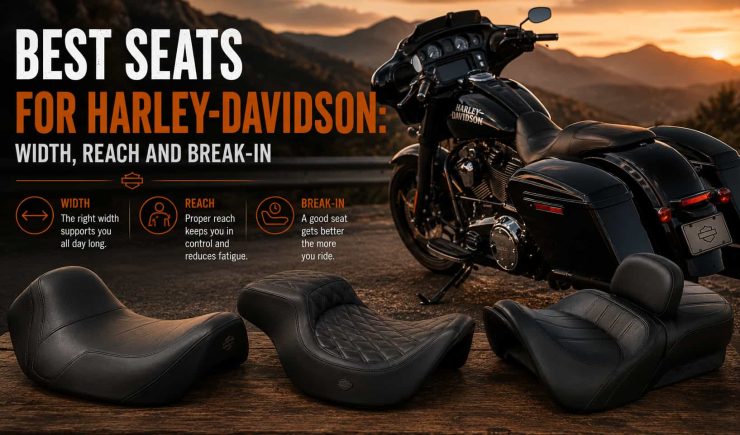
Almost every article about Harley seats talks about comfort as if it were one number that goes up. It is not. Changing your seat changes four things at once, and three of them have nothing to do with how soft it feels in the showroom.
A new touring seat typically sits you one to two inches higher than stock. That single change means your feet reach the ground differently, your eyes sit higher relative to the windshield you already set up, and your reach to the bars gets shorter. Riders fit a seat, love the padding, and then spend a month wondering why the wind now hits their face and why the bike feels taller at a stop.
The second thing nobody warns you about: a good seat feels hard when it is new. Premium seats from Saddlemen, Mustang and Le Pera need roughly 500 to 1,000 miles before the foam takes your shape. Plenty of people return a genuinely excellent seat at the 100-mile mark because it felt firmer than the squishy stock one.
So this page starts with what actually changes when you fit a seat, then covers foam against gel honestly including the problem gel has in the sun, then the backrest compatibility trap that catches people out, and only then the seats themselves.
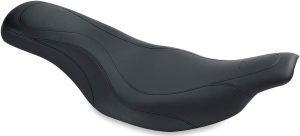
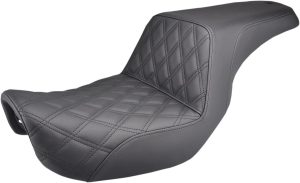
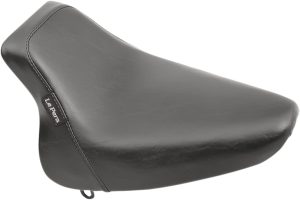
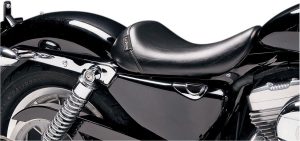
#1 Pick: Best Seat for Harley Touring
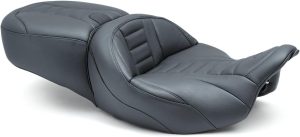
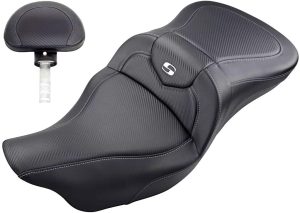
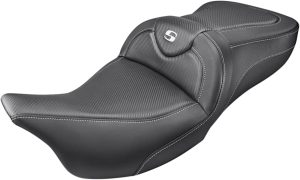
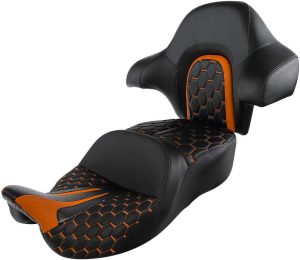
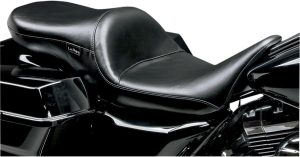
Mustang 79006 Super Touring Deluxe One-Piece Seat
19 inches at the rider – the widest here, and width is what stops the pain at hour four. Sets you back 1.75 inches. 279 ratings. Check your backrest type first.
The top best product [hide]
What a New Seat Actually Changes on Your Harley
Your height at a stop
Most aftermarket touring seats add padding, and padding raises you. One to two inches sounds trivial until you are holding 900 lb at a gas station on a slight camber. If you currently flat-foot the bike with nothing to spare, read the seat height change before anything else.
The opposite applies too. A low-profile solo seat can drop you enough to solve a reach problem that no amount of lowering kit would fix as cheaply.
Your relationship with the windshield
This is the consequence people miss. Windshield height is chosen relative to your eye level. Raise the seat two inches and you are now looking through the screen instead of over it, or catching turbulence off its top edge that was not there before. If you fit a taller seat and your helmet suddenly gets loud, the seat is why – and the fix is the screen, not the helmet.
Your reach to the bars and controls
Seats do not just move you up, they move you fore and aft. A seat that sets you back changes your reach to the grips and to the foot controls at the same time. That is exactly what reach seats are designed to do – and exactly what catches out people who buy a seat purely for the padding.
Where the weight sits
A wide, well-shaped seat spreads your weight across a larger area, which is the actual mechanism behind long-distance comfort. It is not about softness. A soft narrow seat concentrates pressure in the same small spot that hurt on the stock seat, just with more sinking first.
Why a Good Seat Feels Hard at First
The most consistent theme across owner reviews of premium seats is that they are firm out of the box and take 500 to 1,000 miles to break in. This is not a defect and it is not marketing cover.
Soft is not comfortable
Soft foam compresses fully under your weight in the first minutes of a ride. Once it has bottomed out, you are effectively sitting on the pan underneath with a thin layer between. That is why the plushest-feeling seat in the showroom is often the worst one at hour four.
Dense foam resists compression, keeps supporting you after it has taken your shape, and spreads load rather than letting you sink into a hole. The trade is that it feels unyielding for the first few hundred miles while it conforms.
What this means practically
- Give a new seat at least 500 miles before judging it. Ideally a thousand.
- Judge it on a long ride, not a short one. Any seat is fine for twenty minutes. The differences appear at hour three.
- Do not buy the softest option unless your riding is genuinely short-distance.
- If a seat still hurts after proper break-in, it is the wrong shape or width for you – and that is a real reason to change it.
Foam, Gel, and the Problem With Gel in the Sun
Dense foam
What most premium seats use, and what Mustang and Le Pera build their reputations on. Supports without bottoming out, breaks in to your shape, and stays predictable across temperatures. The downside is the break-in period described above.
Gel
Saddlemen’s SaddleGel and similar systems put a gel layer over foam. Gel spreads pressure rather than compressing, so it genuinely helps with hot spots, and it does not need the same break-in.
The honest problem, and it comes up in owner reviews of both Saddlemen seats and aftermarket gel pads: gel absorbs heat and holds it. A bike parked in direct sun for a few hours gives you a seat that stays uncomfortably warm long after you set off. In a hot climate this is a real consideration, not a footnote. A seat cover when parked solves it, but you have to actually use one.
Memory foam
Conforms well, and reacts to temperature the other way round – noticeably firmer in the cold until it warms to your body.
Gel pads as an alternative to a new seat
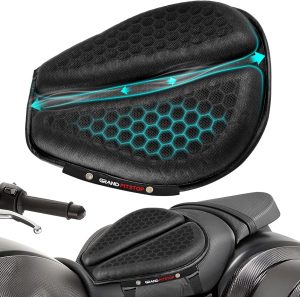
Before spending five hundred dollars, consider that a gel pad costs forty. It sits on your existing seat, spreads pressure, and adds airflow underneath in the case of honeycomb designs. It will not fix a badly shaped seat or a width that is wrong for you, and it raises you slightly, which brings back the height issue above. But for a rider whose stock seat is nearly right and gets uncomfortable after two hours, it solves the problem for a tenth of the money. The honeycomb pad below has over 1,300 ratings, which tells you how many people this works for.
Seat Width: The Number That Matters Most
Where manufacturers publish it, seat width is the most useful specification on the page – and most listings leave it out.
Your weight is carried by two small bones at the base of your pelvis. The wider the supporting area under them, the lower the pressure at any one point, and pressure is what causes pain on a long ride. This is why a wide, firm seat beats a narrow, soft one over distance every time.
Two seats here publish real numbers. The Mustang 79006 Super Touring is 19 inches at the rider and 14 at the passenger. The Le Pera Maverick Daddy Long Legs is 15 inches at the rider and 14 at the passenger. That four-inch difference at the rider is enormous in practice, and it explains most of the comfort gap between a touring seat and a slim custom one.
The trade is real though. A wide seat pushes your thighs further apart, which effectively raises your inseam requirement at a stop, and it can feel bulky if you are a smaller rider. Wide is better for distance; it is not automatically better for you.
What to check before buying
- Rider width in inches, if the manufacturer states it
- Whether the shape has a defined bucket or is flat – a bucket locks you in one position, which is good for distance and bad if you like to move around
- Passenger area width separately, if you ride two-up – many touring seats are generous at the front and mean at the back
Reach Seats: For Riders the Stock Seat Does Not Fit
If you are shorter or taller than the rider Harley designed the seat around, a reach seat is a more effective and much cheaper fix than changing the bike.
Extended reach – moving you back
These set the rider further back, which lengthens the distance to the bars and the pegs. Built for taller riders who feel cramped, and for anyone whose knees sit too high on a touring bike.
Two here publish exact figures. The Le Pera Maverick Daddy Long Legs moves you back two inches. The Mustang 79006 moves you back 1.75 inches. That is the kind of number to check against your own situation rather than guessing from the product photo.
Reduced reach – moving you forward and down
The mirror image, for shorter riders. Moving forward and lower shortens the reach to the bars and gets more of your foot on the ground. Harley’s own Reach seats do this, and it is one of the highest-value changes a shorter rider can make – it addresses the actual problem instead of lowering the suspension and losing ground clearance.
How to work out what you need
Sit on your bike normally, then note two things: where your elbows are, and how much of your foot is on the ground at a stop. Cramped elbows and a bent-forward torso mean you want extended reach. Tiptoes and a long stretch to the bars mean you want reduced reach. Do not buy for padding until you have solved the geometry.
The Backrest Compatibility Trap
This catches out more buyers than anything else in this category, and the money involved is not small.
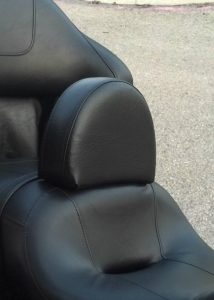
Driver backrests attach one of two ways: to a receiver built into the seat, or to the bike’s frame or fender rails. These are not interchangeable, and a seat that works with one will not work with the other.
- The Mustang 79006 Super Touring Deluxe is explicitly not compatible with frame-mounted backrests. If you already run one, this seat will not work with it and you will discover that after spending $768.
- The Grasshopper driver backrest requires a seat with a cutout for it. Fit it to a seat without one and it has nothing to mount to.
- The Saddlemen Road Sofa comes in two versions – with and without a backrest receiver – at roughly a $250 price difference. Buying the wrong one is an expensive mistake.
Before you order: establish whether you have or want a backrest, whether it mounts to the frame or the seat, and whether the seat you are looking at has a receiver. If a listing does not say, ask the seller. This is the single most common source of returns in this category.
A Warning About Fitment on Marketplace Listings
Something specific to buying seats online, and worth knowing before you click.
Many genuine Saddlemen and Le Pera listings carry only a part number and an automated “check if this fits” widget, with no written model list. The part numbers are real and the seats are genuine – but the compatibility data is thin, and it shows in the reviews. The Saddlemen Step-Up listing carries a one-star review that says simply that it did not even fit. A Le Pera Daddy Long Legs buyer writes that it was not the correct seat as described.
What to do: find the part number in the listing title, then check that number against the manufacturer’s own fitment chart on their website before ordering. Saddlemen, Mustang and Le Pera all publish proper fitment data. The two minutes this takes is cheaper than a return on a $500 seat.
Best Seats for Harley-Davidson
Sixteen options grouped by what they solve, from a $38 gel pad to a $800 touring seat with a backrest. Every one is currently available and checked, and the brands are genuine – Saddlemen, Mustang and Le Pera all sell here under their own real part numbers.
Check the part number against the manufacturer’s fitment chart before ordering, and remember the break-in period before you judge one.
Touring and Bagger Seats, Two-Up
For distance with a passenger. Expect these to raise you slightly and to need break-in.
Mustang 79006 Super Touring Deluxe One-Piece Seat
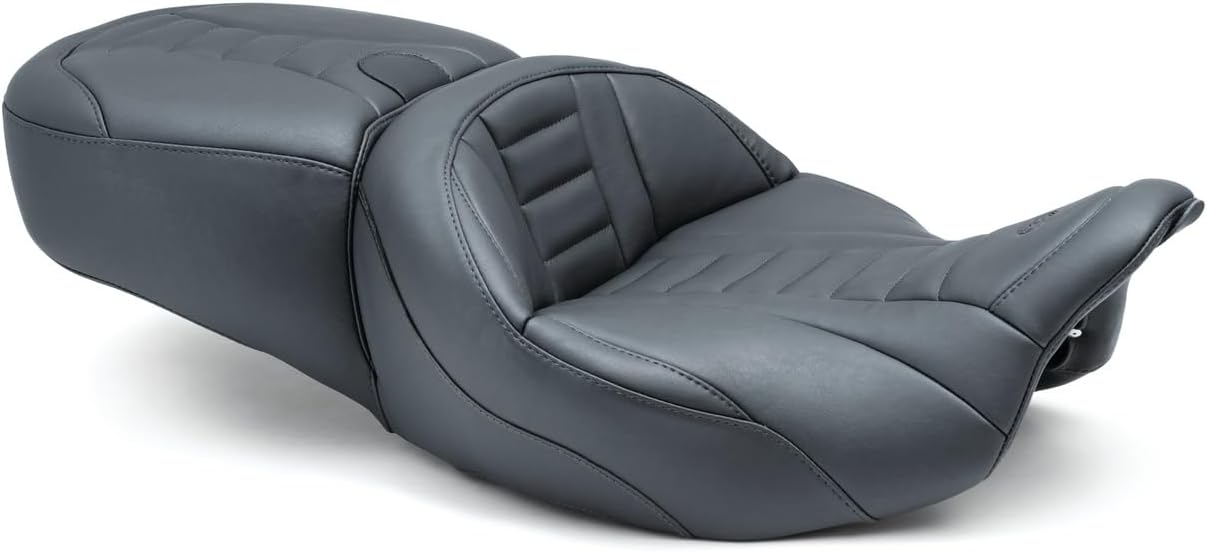
Type: one-piece 2-up touring seat, extended reach. Rider width 19 inches, passenger 14 inches. Sets the rider back 1.75 inches. Dense foam. Around $768.
Fits: Harley Road King, Street Glide and Electra Glide 2008-2021. CRITICAL – will NOT work with Mustang or Harley-Davidson frame-mounted backrest kits.
Rating: 4.6 / 5 from 279 ratings
The widest rider seat here at 19 inches, and that number is the whole argument. Width spreads your weight over a larger area, and pressure is what hurts at hour four – so a 19-inch rider platform does more for distance comfort than any amount of softness.
It also sets you back 1.75 inches, which makes it an extended-reach seat as well. Good if you feel cramped on a Touring bike; something to check against your own reach if you do not.
The passenger feedback is the strongest signal here. One owner reports his wife used to get restless after an hour or two and is now happy to ride all day – and with 279 ratings this is the largest review base of any premium seat on this page.
The critical caveat is in bold above: this seat is explicitly incompatible with frame-mounted backrests from both Mustang and Harley. If you run one, this is not your seat, and finding that out after spending $768 is a bad afternoon.
What owners say: “My wife used to get restless after an hour or two, but now she’s happy to ride all day.”
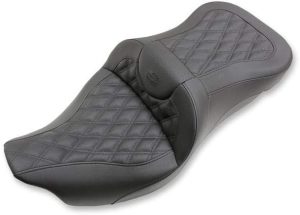
Saddlemen Road Sofa Carbon Fiber with Driver Backrest
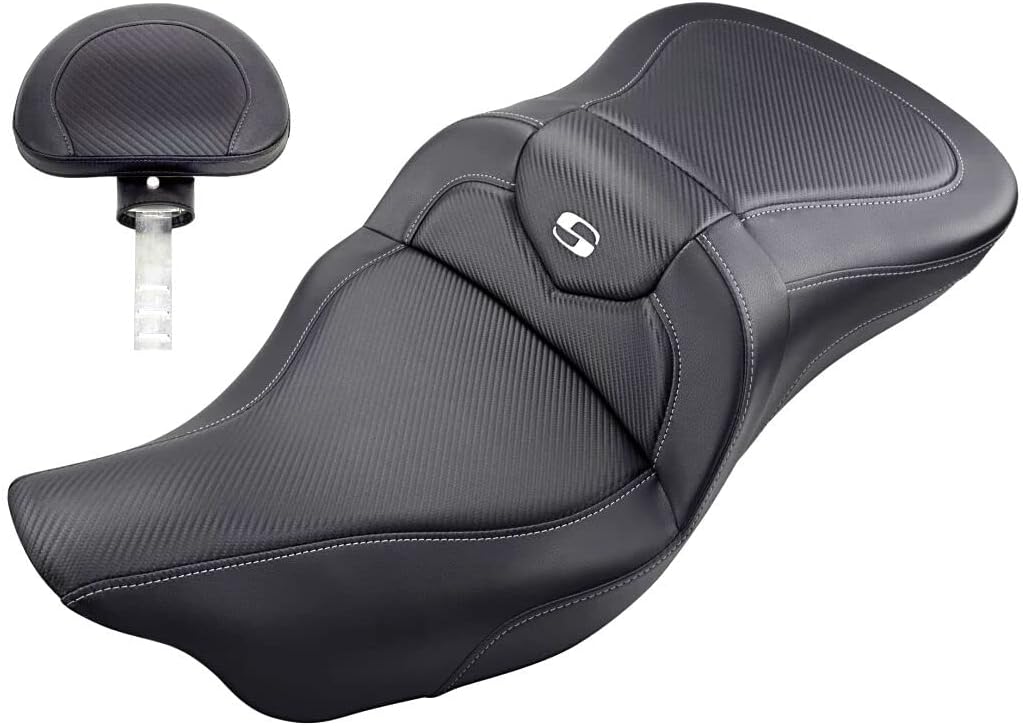
Type: 2-up touring seat with adjustable driver backrest included. GelCore front and rear over foam. Tall lumbar support. Made in the USA. Around $801.
Fits: Harley Touring models 2008 and later. Part number 808-07B-185BR – the BR suffix means the backrest is included.
Rating: 4.8 / 5 from 26 ratings
The highest-rated seat on this page at 4.8, and the complete answer if you want a driver backrest without solving a compatibility puzzle – it comes with one, adjustable, already matched to the seat.
GelCore front and rear is the Saddlemen approach: gel spreads pressure where foam compresses under it, which is why these skip most of the break-in other premium seats need. The passenger section is noticeably larger than stock on a Street Glide according to one owner.
The most telling review here comes from a rider comparing it directly against what he had before: on his 2019 Electra Glide he finds it more comfortable than his Mustang seat, which was already more comfortable than stock.
Two things. It is the most expensive seat here at around $801 – though note that is roughly $250 over the same seat without the backrest, which is about what a good backrest costs anyway. And it is still firmer than people expect at first; the gel reduces break-in but does not eliminate it.
What owners say: “I have this on my 2019 Electra Glide. More comfortable than my Mustang seat, which was more comfortable than stock.”
Saddlemen Road Sofa Carbon Fiber Seat
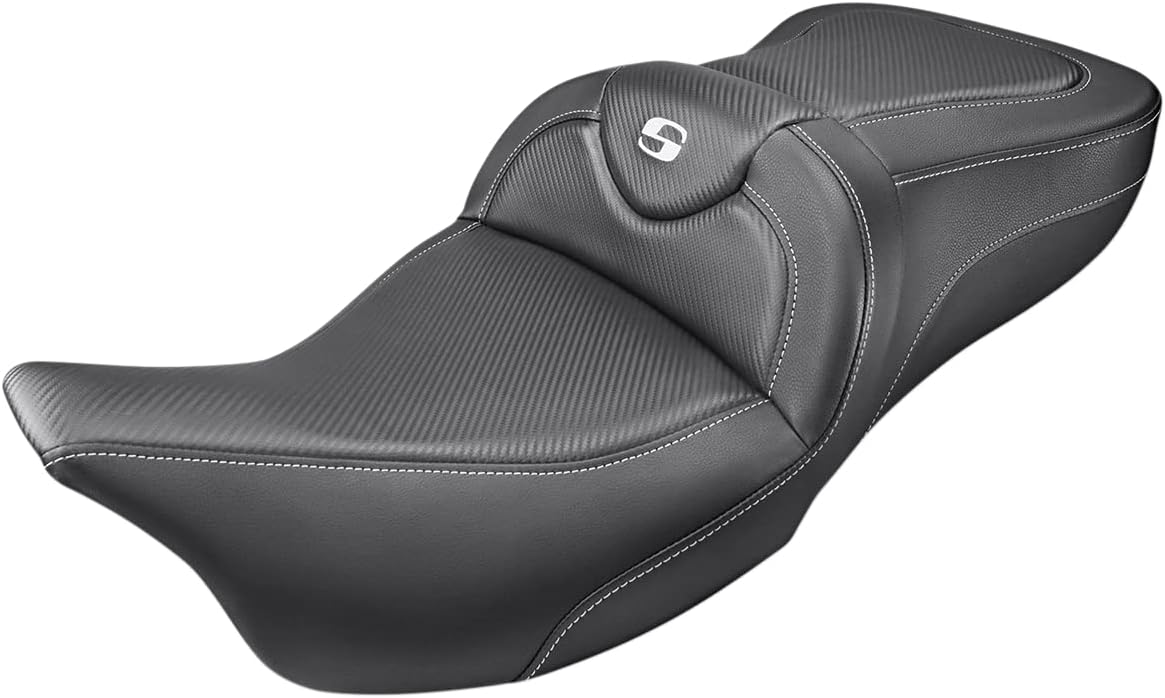
Type: 2-up touring seat, no backrest receiver fitted. SaddleGel front and rear over foam, split-cushion design. Made in the USA. Around $549.
Fits: Harley Touring 2008-2022 – FLHR Road King, FLHRC Road King Classic 2008-2013, and related FL models. Part number 808-07B-185.
Rating: 4.4 / 5 from 69 ratings
The same seat as the one above without the backrest, at roughly $250 less. If you already have a backrest solution or do not want one, this is the sensible version.
The split-cushion design with SaddleGel front and rear is what Saddlemen are known for, and the owner reports back it up: one rider at 5 foot 7 and 175 lb describes a couple of hundred miles with no complaints and then a 1,400-mile trip. Another notes the wider base means more of you is actually on the seat rather than hanging off the edges.
Expect firmness at first. One review directly quotes the received wisdom in this category – that it is hard and takes 500 to 1,000 miles to break in – which is exactly right and applies to nearly everything at this level.
What owners say: “I’m 5’7 175 lbs. Took off for a couple hundred mile trip with no complaints, then a 1400 mile trip. – 5’7″, 175 lb rider”
C.C.Rider Step-Up Seat with King Tour-Trunk Backrest Pad
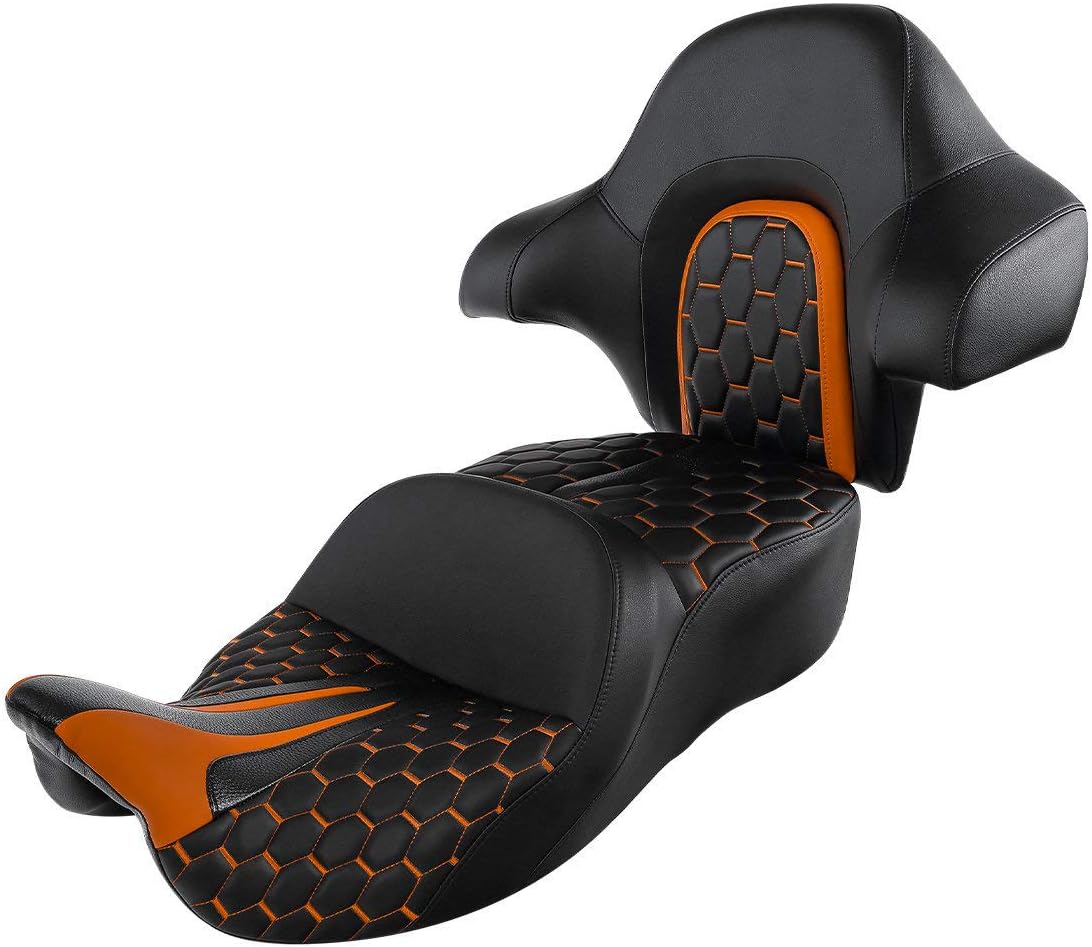
Type: one-piece 2-up step-up touring seat plus trunk backrest pad. Rider width 16.5 inches, passenger 15.4 inches. Backrest pad 25.4 by 17.6 inches. Memory foam, microfibre leather. Around $539.
Fits: Harley Touring and Tri Glide 2014-2023 equipped with a King Tour-Trunk. The trunk pad is part of the package, so the trunk is required.
Rating: 4.3 / 5 from 60 ratings
A complete package rather than just a seat: the step-up seat plus a matching pad for the King Tour-Trunk, which normally costs extra. For a Touring bike with a trunk this is good value at $539.
It publishes real dimensions, which is unusual at this price – 16.5 inches at the rider, 15.4 at the passenger, and a generous 25.4 by 17.6-inch backrest pad. Memory foam rather than gel, so no sun heat issue.
The owner evidence is the strongest kind: one rider covered 7,100 miles in nine weeks including Houston to Sturgis and back.
The important limitation is explicit in the reviews and it is about your height. The seat shape pushes your body forward and costs you roughly two inches of room, so tall riders find it cramped. If you are over about six foot, look at the Mustang or the Saddlemen extended reach instead.
What owners say: “7100 miles in first 9 weeks and just rode to Sturgis from Houston and then back.”
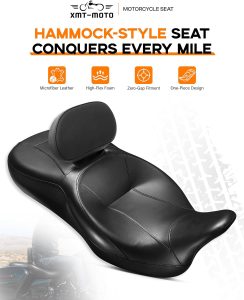
XMT-MOTO One-Piece Hammock Seat with Rider Backrest Support
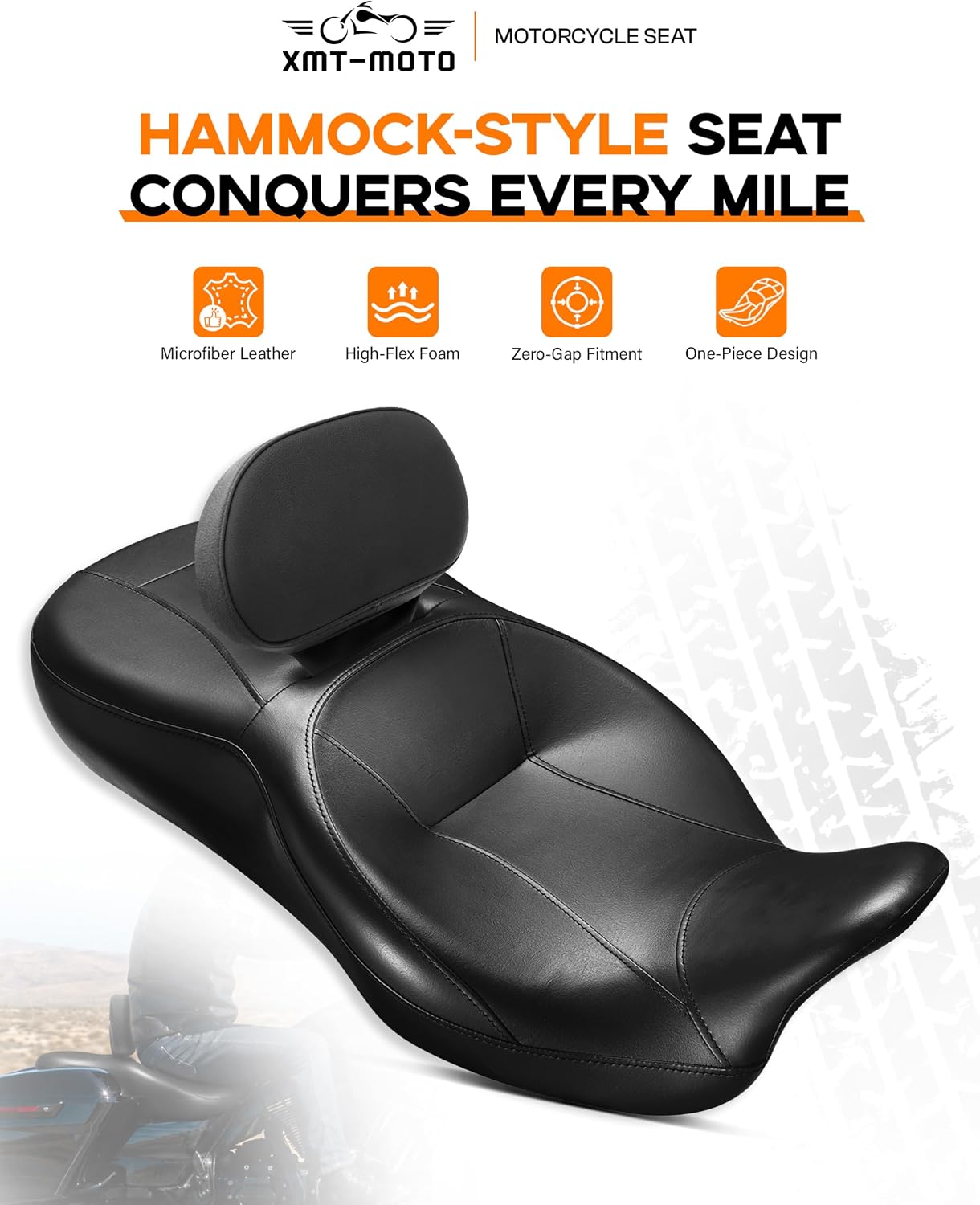
Type: one-piece 2-up hammock-style touring seat. Total length 30.7 inches, rider width 16.3, passenger 15.7, thickness 5.9 inches. Synthetic leather. Around $170.
Fits: Harley Touring 2009-2023 – Road King, Street Glide, Electra Glide, FLHR, FLHX, FLTR. Supports fitting an optional rider backrest.
Rating: 4.4 / 5 from 565 ratings
The budget alternative, and with 565 ratings it has more owner feedback than any premium seat here. At $170 against $549 to $801 for the American brands, the value question is obvious.
It publishes full dimensions, which most listings at this price do not: 16.3 inches at the rider, 15.7 at the passenger, 5.9 inches thick. It also supports adding a rider backrest, which many cheap seats do not.
The most useful review is from a 375 lb rider on a 2024 Tri Glide who was about to spend $800 on a Mustang and tried this instead. That is the honest use case: it is not a Saddlemen, but it may be enough.
Two caveats from owners. The passenger section is definitely narrower than the stock Sundowner, so if your passenger is happy now, measure first. And this is a marketplace brand, not a licensed copy of anything – it sells under its own name, which is to its credit, but expect materials to match the price.
What owners say: “I’m a big dude (375 lb) with a ’24 Tri Glide. I was just about ready to put out $800 for a Mustang. – 2024 Tri Glide”
Mustang 76382 DayTripper One-Piece Seat
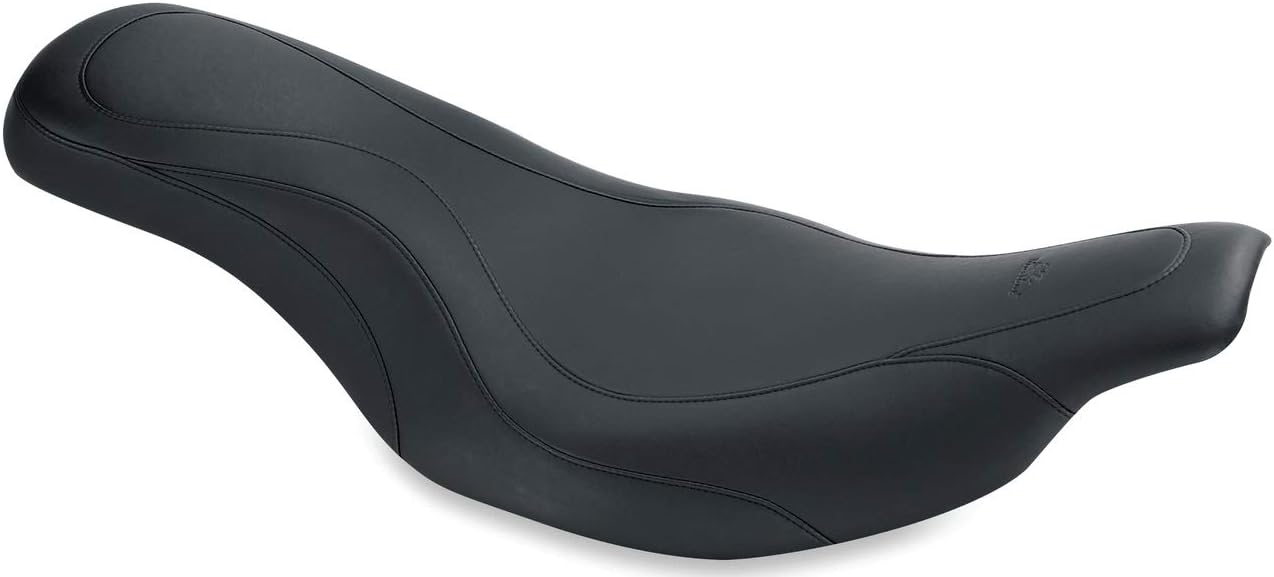
Type: one-piece 2-up, slim low-profile. Rider width 12.5 inches, passenger 8 inches. Places the driver slightly lower and further back. Around $569.
Fits: Harley Electra Glide 1997-2007 and Road Glide 1998-2007. Note this is the older Touring platform, not 2008 and later.
Rating: 4.6 / 5 from 46 ratings
A deliberately slim seat rather than a sofa, and the numbers make that clear: 12.5 inches at the rider against 19 on the Super Touring. This is a different design philosophy, not a cheaper version.
What it buys you is a lower and slightly rearward riding position. One owner at 5 foot 10 reports going flat-footed on his Glide with this fitted – which for a shorter rider on a Touring bike is worth more than padding.
And it covers 1997-2007 Electra Glide and Road Glide, a platform that newer seats mostly ignore. If you have an older dresser, your options are limited and this is a good one.
Be realistic about distance though. An owner states plainly that his backside goes numb after about 120 miles. That is what a 12.5-inch rider width does – it is a comfortable seat for a day of riding around, not a 400-mile day.
What owners say: “Sits you back a bit, which is quite comfortable, and allows me at 5’10 to go flat footed on my Glide. – 5’10” rider”
Solo Seats for Sportster, Dyna and Softail
Lower profile, lighter, and the choice when you ride alone.
Saddlemen Step-Up LS Seat, Sportster
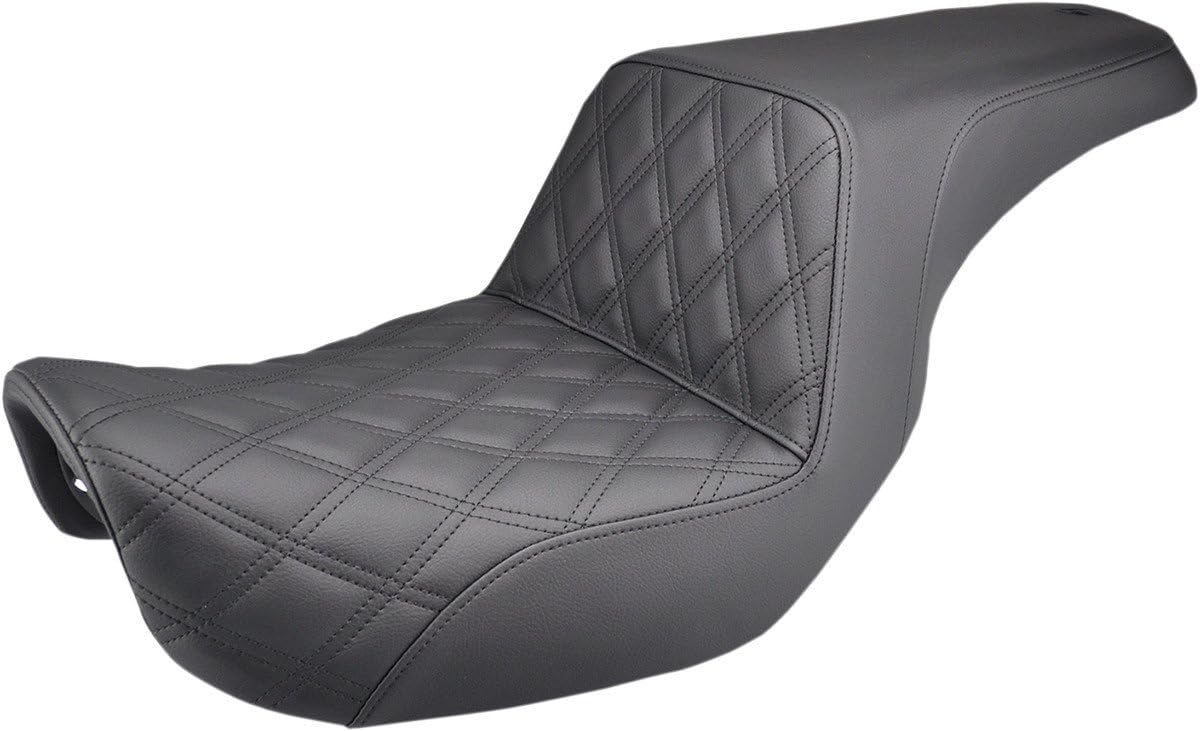
Type: 2-up step-up design – rider sits in a bucket, passenger on a raised pad. Saddlemen foam. Part number 807-11-172. Around $449.
Fits: Sportster models – but note the listing carries only the part number 807-11-172 with no written model list. Check 807-11-172 against Saddlemen’s own fitment chart before ordering.
Rating: 4.6 / 5 from 88 ratings
The Step-Up is the seat that defines the look on a lot of Sportster builds, and the shape does something functional as well as visual: the raised rear section acts as a backstop, so you are locked into one position rather than sliding back under acceleration.
An owner at 6 foot and 165 lb on a 2018 Sportster with mid controls and 12-inch T-bars describes exactly that – the seat locks him in. That is the point of the design.
Two practical notes from owners. It sits you slightly higher than stock, which a 2020 Iron 1200 owner confirms. And you may need a longer seat bolt than the factory one, which is a $10 part but worth knowing before the bike is apart.
The fitment caveat matters here more than anywhere: this listing has no model list, and it carries a one-star review that says simply that it did not fit. Check the part number against Saddlemen’s chart.
What owners say: “At 6ft and 165lbs, the bike is 2018 with mid controls and 12 inch T-bars, and this seat locks me in. – 6’0″, 2018 Sportster”
Le Pera Bare Bones Solo Seat, Softail
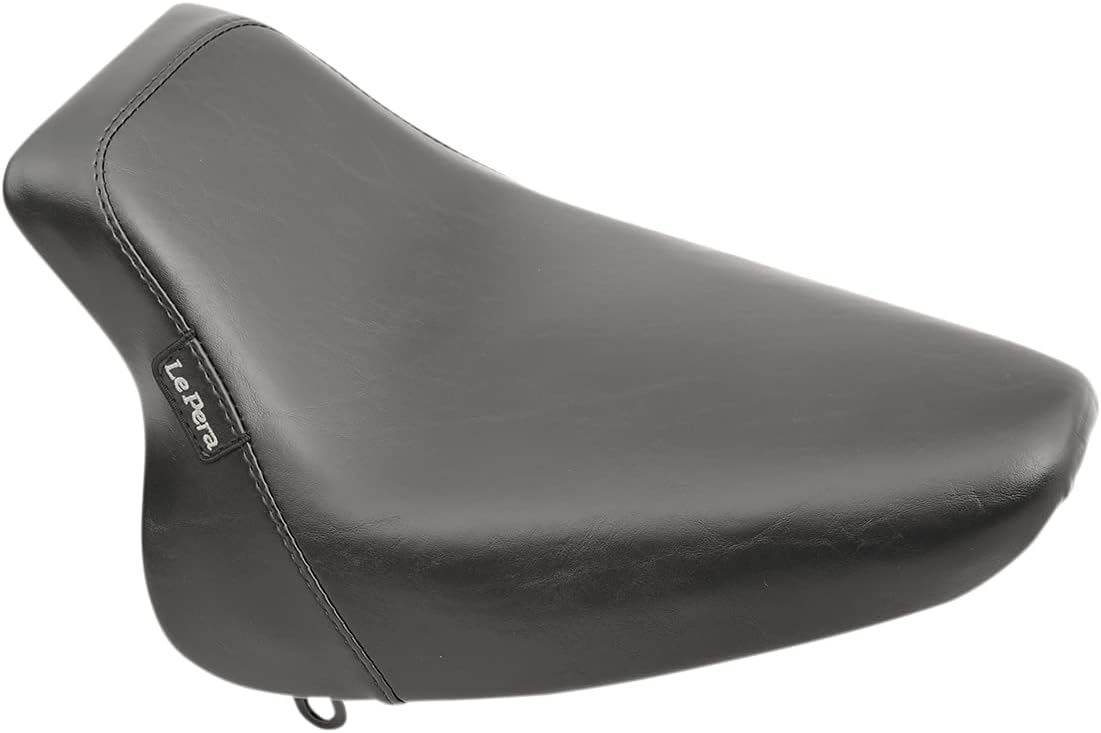
Type: solo seat, low profile, vinyl with no studs. Described by Le Pera as the lowest production seat available. Made in the USA. Around $285.
Fits: Harley Softail 1984-2007 – a detailed model list is published including FLSTSC Springer Classic, Heritage and related. Solo only, no passenger provision.
Rating: 4.3 / 5 from 77 ratings
The classic bare bones solo seat, and the reason to buy it is height rather than padding. Le Pera call it the lowest production seat available, and dropping your seat height is the most effective thing a shorter rider can do to a Softail.
The build is minimal by design – vinyl, no studs, thin foam. That is the trade: the low profile comes from having less material under you.
The most honest review here is also the most impressive. One owner fitted it to a 2003 Heritage just before riding California to Michigan and back, doing eight-hour days. So it is possible – though the same reviews contain the counterweight, that it is a little hard on the backside over distance.
Unlike several listings in this category, Le Pera publish a proper model list here. Use it.
What owners say: “Put on my 2003 Heritage just before a trip from California to Michigan and back. 8 hours driving a day. – 2003 Heritage”
Le Pera Bare Bones Solo Seat, Sportster XL
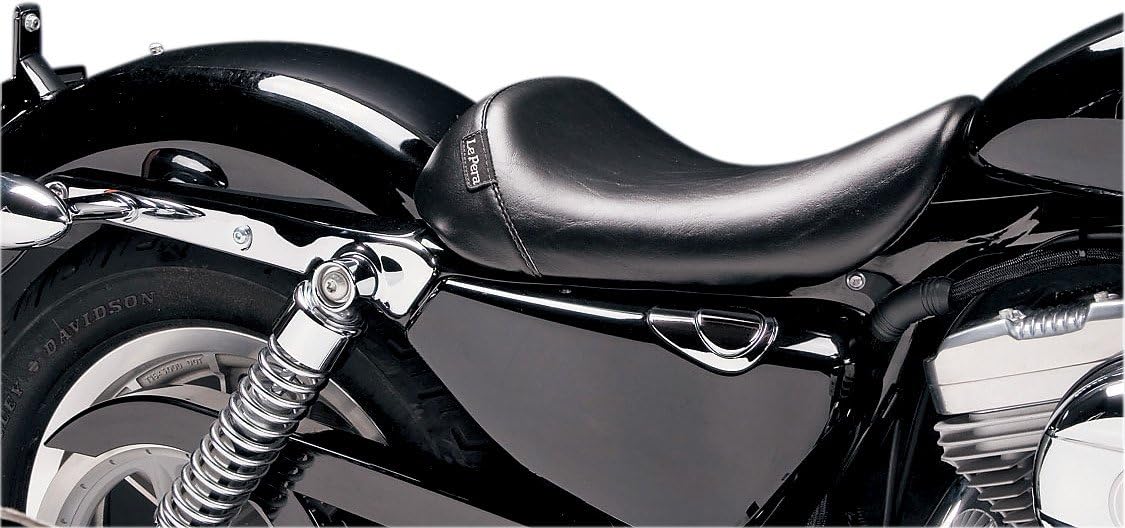
Type: solo seat, low profile, vinyl. Lowest production seat height. Made in the USA. Part number LF-006. Around $265.
Fits: Sportster XL models with a published list including XL883R Roadster, XL883L Low and related. Solo only.
Rating: 4.9 / 5 from 22 ratings
The Sportster version of the same seat, and it carries the highest rating on this page at 4.9 – though from only 22 ratings, so treat that as encouraging rather than conclusive.
Same philosophy: lowest possible seat height, minimal material, clean lines. On a Sportster, where the seat height is already the reason many riders chose the bike, going lower still is a real option.
One owner at 6 foot 1 and 160 lb on an XL1200L rides it comfortably for four-hour trips and calls it great around town, which is a fair description of what a bare bones seat does well.
The counterweight is in another review and worth quoting because it is specific: too stiff, and he slides off the back when accelerating from a light. That is the flat bare-bones profile – there is no bucket to hold you. If you want to be locked in place, look at the Step-Up above instead.
What owners say: “I ride it comfortable for 4 hour trips (I’m 160lbs, 6’1, XL1200L). It’s great around town. – 6’1″, XL1200L”
Reach Seats
For riders the stock seat does not fit. These publish actual displacement figures, which is what makes them useful.
Le Pera Maverick Daddy Long Legs Seat
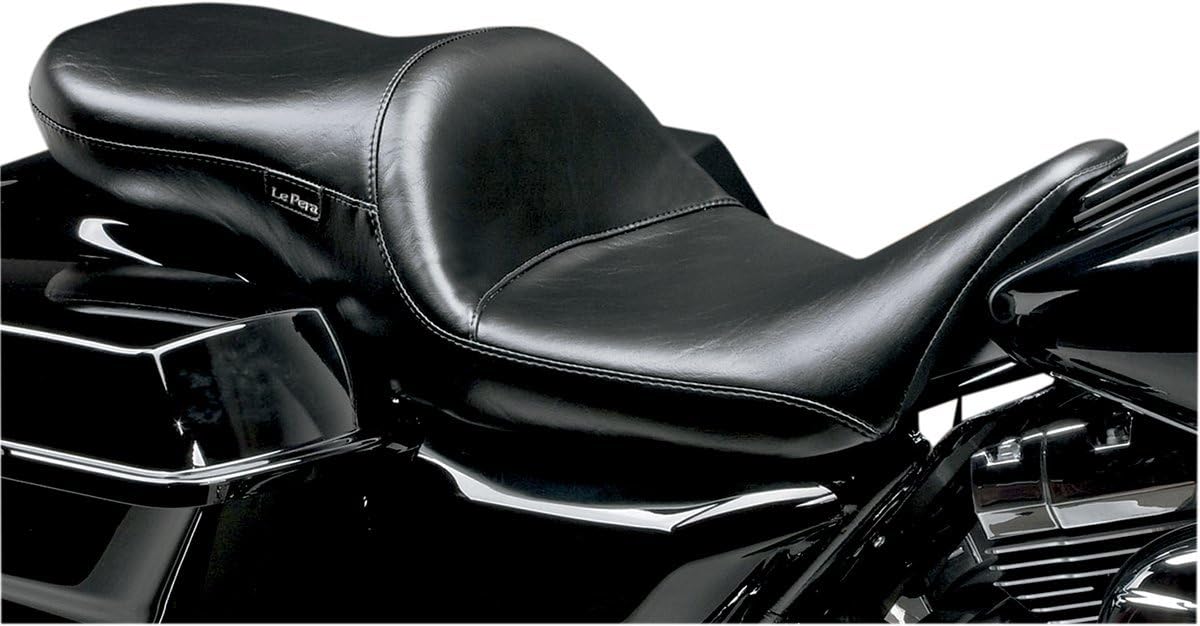
Type: 2-up extended reach seat. Set back 2 inches for taller riders. Rider seating area 15 inches wide, passenger 14 inches. Foam over steel base, vinyl. Around $507.
Fits: the listing carries only part number LK-957DLS with no model list. Check LK-957DLS against Le Pera’s own fitment chart before ordering.
Rating: 4.5 / 5 from 51 ratings
The clearest specification of any reach seat here: set back 2 inches, 15 inches wide at the rider, 14 at the passenger. Those three numbers tell you exactly what you are buying, which is more than most seats in this category manage.
Two inches is a significant change. It is aimed squarely at tall riders who feel folded up on a stock seat, and the review that makes the case comes from a rider at 6 foot 7 with almost 30 years and dozens of bikes behind him, who calls it without comparison.
Two honest warnings. It is very firm – one three-star review describes it as harder than woodpecker lips, adding that maybe it will break in. And the smooth unstitched surface is slippery, which combined with the two-inch setback means you notice it under acceleration until you adjust.
And the fitment problem applies here too: no model list on the listing, and a review from a buyer who says it was not the correct seat as described. Check the part number first.
What owners say: “I’m 6’7″ and have been riding for almost 30 years and owned dozens of bikes. This is without comparison. – 6’7″ rider”
Saddlemen 808-07B-184 Extended Reach Road Sofa LS
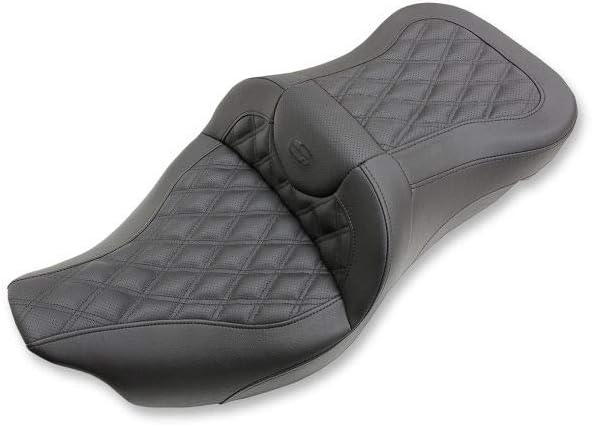
Type: 2-up extended reach touring seat, no driver backrest. Progressive density foam. Rider position moved rearward. Around $568.
Fits: Harley FLHR Road King 2008-2018, FLHRXS Road King Special 2017-2018, FLHT Electra Glide and related Touring models.
Rating: 4.3 / 5 from 63 ratings
The extended reach version of the Road Sofa, for Touring riders who want the Saddlemen construction with more legroom.
The most useful review is from a rider at 6 foot 5 and 350-plus lb who reports all the leg room he could handle plus instant comfort – which is a specific and demanding test case.
Progressive density foam here rather than pure gel, which means proper break-in: one owner puts it precisely, that it is a firm seat but after about 500 miles he loves it. That number keeps appearing across this whole category and it is worth believing.
One thing the reviews disagree on, and it is worth understanding rather than dismissing. A 6-foot-5 rider calls the seat big; a one-star reviewer calls it very narrow. Both are probably right – the extended reach nose is narrow where it needs to be to move you back, and the seat widens behind that. If you sit forward, it will feel narrow.
What owners say: “I am 6’5″ and weigh 350+ lbs, had all the leg room I could handle as well as instant comfort. – 6’5″, 350+ lb rider”
Gel Pads: The Cheap Fix First
Try these before spending five hundred dollars. If your stock seat is nearly right, a pad may be all you need.
GRAND PITSTOP Foldable Gel Seat Cushion, 3D Honeycomb, Large
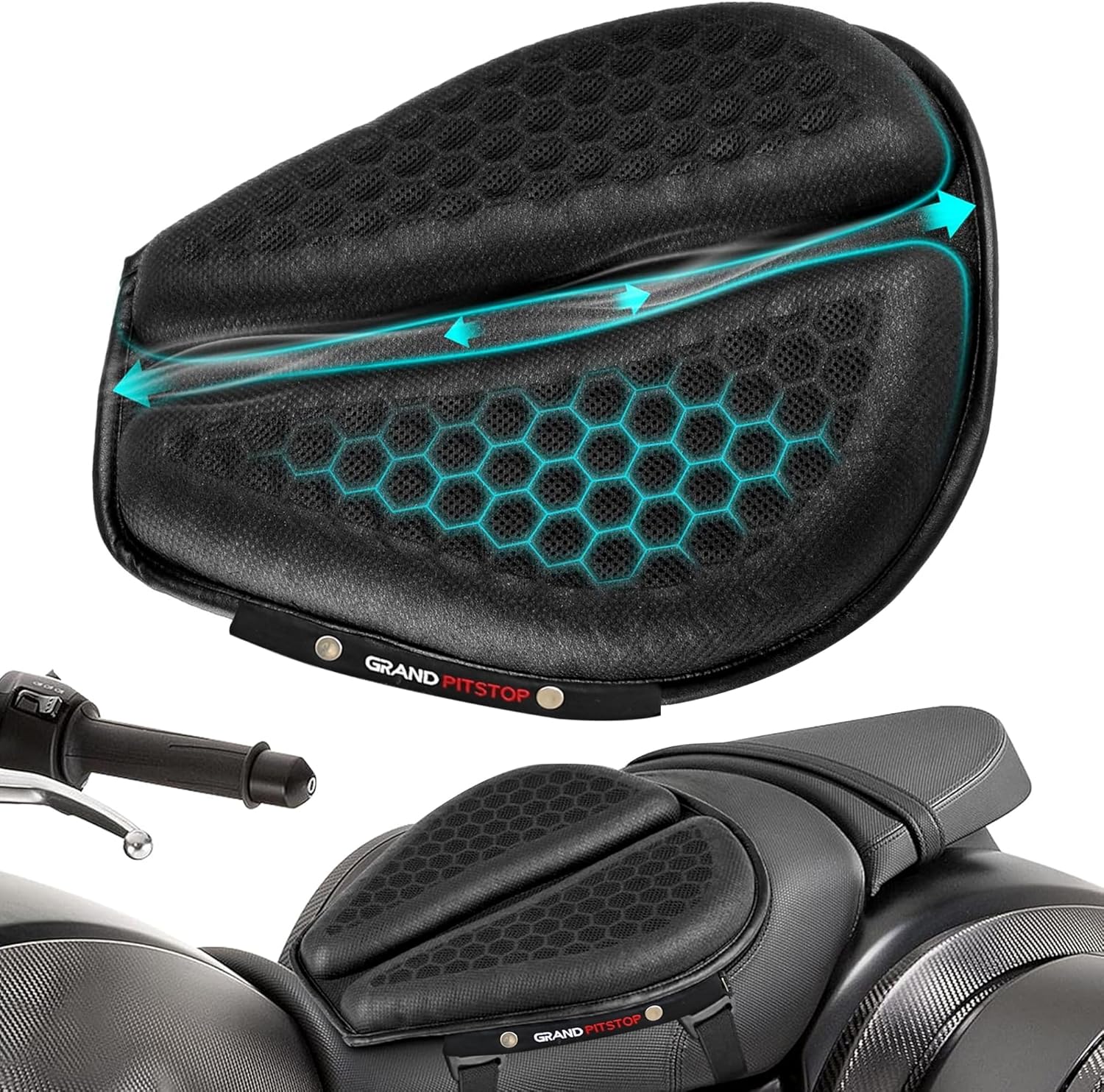
Type: gel and memory foam seat pad, 3D honeycomb structure with airflow. Universal fit, straps to the seat. Large cruiser size. Around $38.
Fits: universal – straps over your existing seat, not model specific. Note a trike owner’s warning that on a large seat it will not cover the full width or length.
Rating: 4.4 / 5 from 1,335 ratings
Try this before spending five hundred dollars. At $38 with over 1,300 ratings, it is by a wide margin the most-bought item on this page, and for a rider whose stock seat is nearly right it may be the entire fix.
The honeycomb structure does two things: spreads pressure like any gel pad, and lets air move underneath, which matters on a hot day in a way solid gel does not.
The review that captures the appeal comes from an owner who had an Air Hawk air pad and could not find comfort with it, then tried this and could.
Two real limitations. It heats up substantially in the sun – owners say so directly, and this is the gel problem described earlier on this page. And it is smaller than a big cruiser seat, so on a Touring bike or trike it covers the middle rather than the whole area.
What owners say: “Had an Air Hawk air seat pad and couldn’t find any comfort. Tried the Grand Pitstop gel seat, can’t compare.”
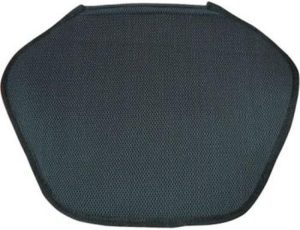
Butt-Buffer Seat Pad with Airflow Cover and Polymer Gel
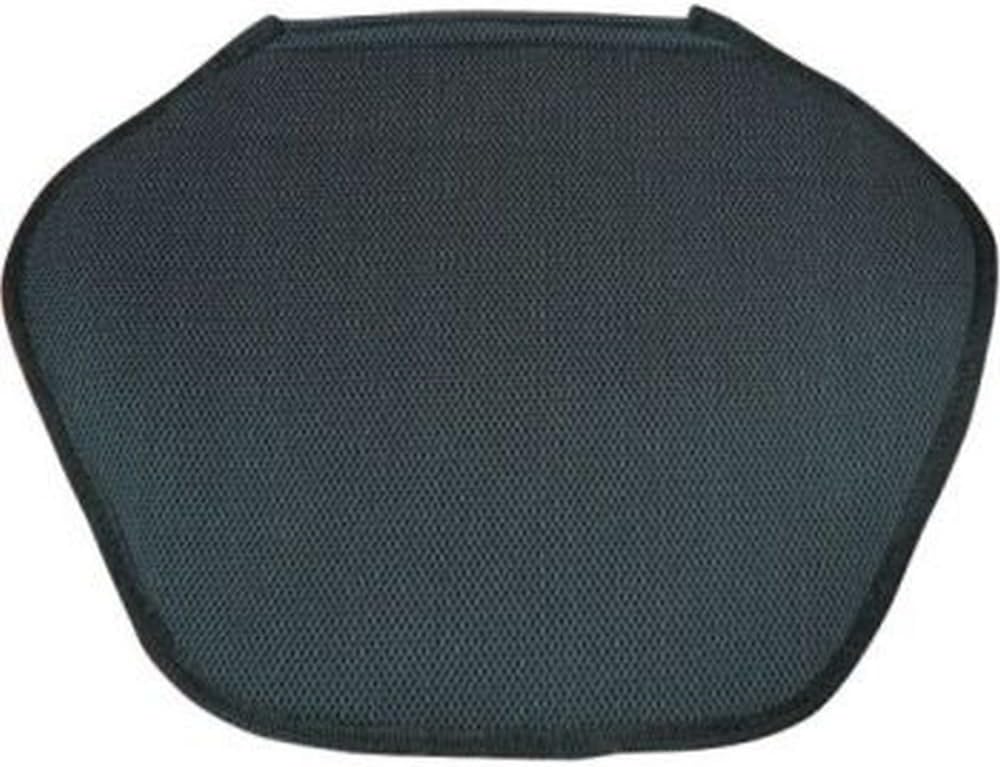
Type: premium seat pad. Large pebble polymer gel with a ventilated airflow cover. About an inch thick. Universal fit. Around $123.
Fits: universal – Harley-Davidson, Honda, Can-Am, BMW and others. Size L.
Rating: 4.5 / 5 from 50 ratings
The premium end of the pad category at $123, roughly three times the honeycomb one. What you get for that is a pebble-structure polymer gel rather than a simple gel sheet, plus a proper ventilated cover.
An owner on a 2023 Street Glide reports taking it on a five-hour trip and finding it works well, which is the right test for this kind of product.
Two honest points. Owners describe it as floppy and heavy, around an inch thick – this is a substantial thing sitting on your seat, not a thin cover. And despite the marketing claim that the polymer does not fully compress, one three-star reviewer states plainly that it does, and that his backside still got sore.
At $123 it sits awkwardly between the $38 pad and a proper seat. Worth it if the cheaper pad nearly worked and you want more of the same; less compelling if your seat is fundamentally the wrong shape.
What owners say: “I received my Butt Buffer for my 2023 HD Street Glide and took a 5 hour trip. It works well. – 2023 Street Glide”
Seat Bolts and Backrests
Small parts that solve real problems – including the one Harley owners lose most often.
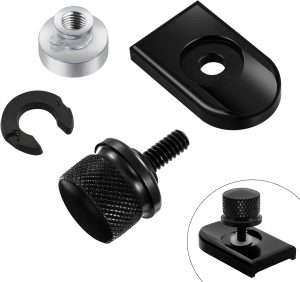
PBYMT Quick Release Seat Bolt Kit with Tab Cover
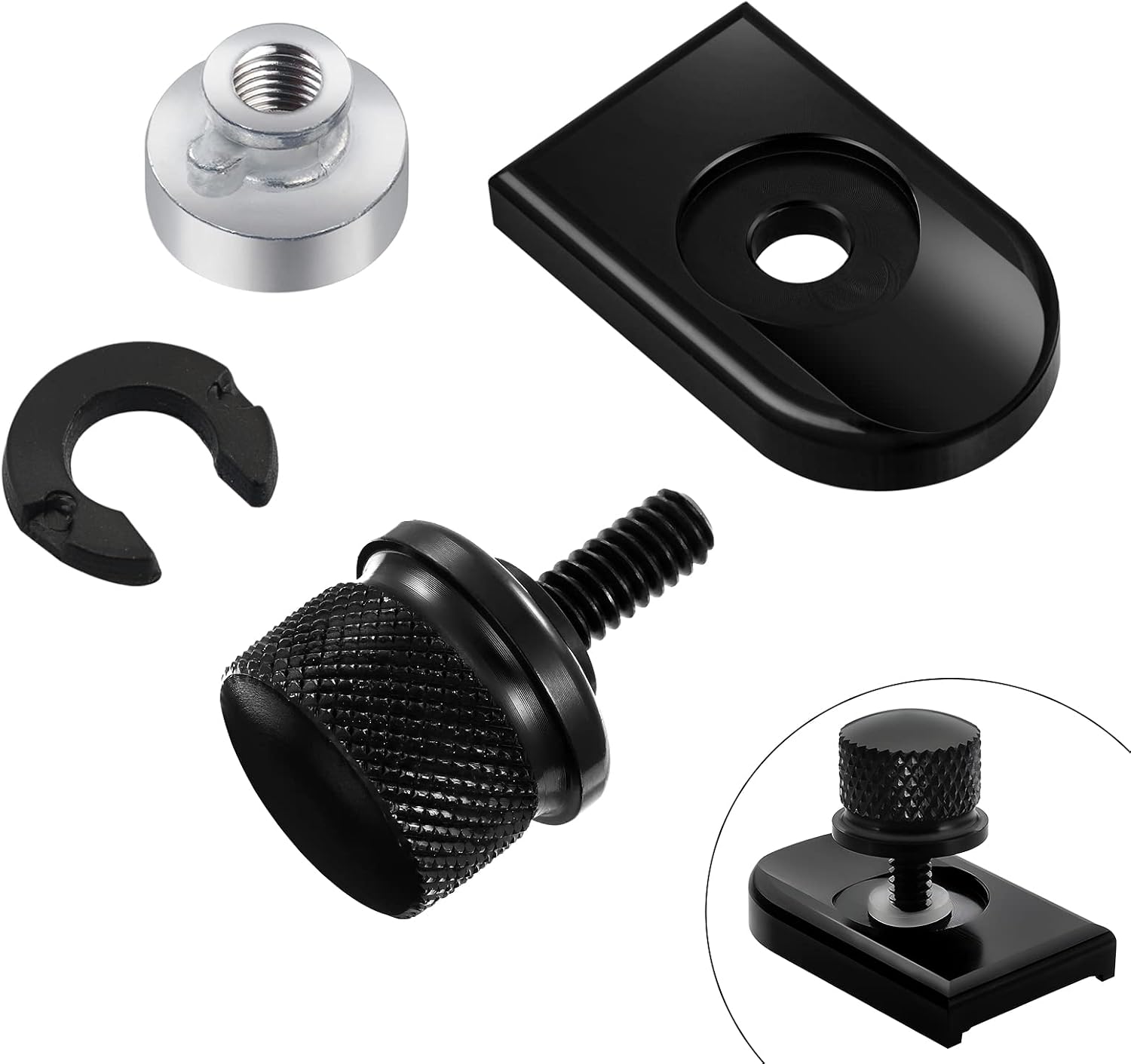
Type: quick-release seat bolt, retainer pad and seat tab cover. Aluminium with gloss black finish. Around $10.
Fits: Harley 1997 and later XG, XL, Dyna and Softail – with the exception of 2012-2017 Dyna models per the listing. Check yours.
Rating: 4.5 / 5 from 548 ratings
Ten dollars, five minutes, and it solves three problems at once: no tool needed to get under the seat, a retainer pad that stops the bolt working loose, and a cover for the bare seat tab.
With 548 ratings at 4.5 this is the most-bought seat fastener here, and the reviews are exactly what you want on a part like this – one owner reports installing it in under five minutes as a perfect replacement for the factory bolt, noting the retainer pad helps.
The one recurring complaint is packing rather than design: some kits arrive missing a piece and not quite matching the photos. At this price that is annoying rather than expensive, but check the contents when it arrives.
Note the fitment exception in bold – 2012-2017 Dyna models are excluded.
What owners say: “Installed in under 5 minutes, was a perfect replacement to the factory bolt. Retainer pad helps.”
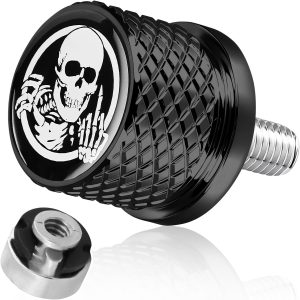
GUAIMI Seat Bolt Screw and Nut Kit, 1/4-20 Thread
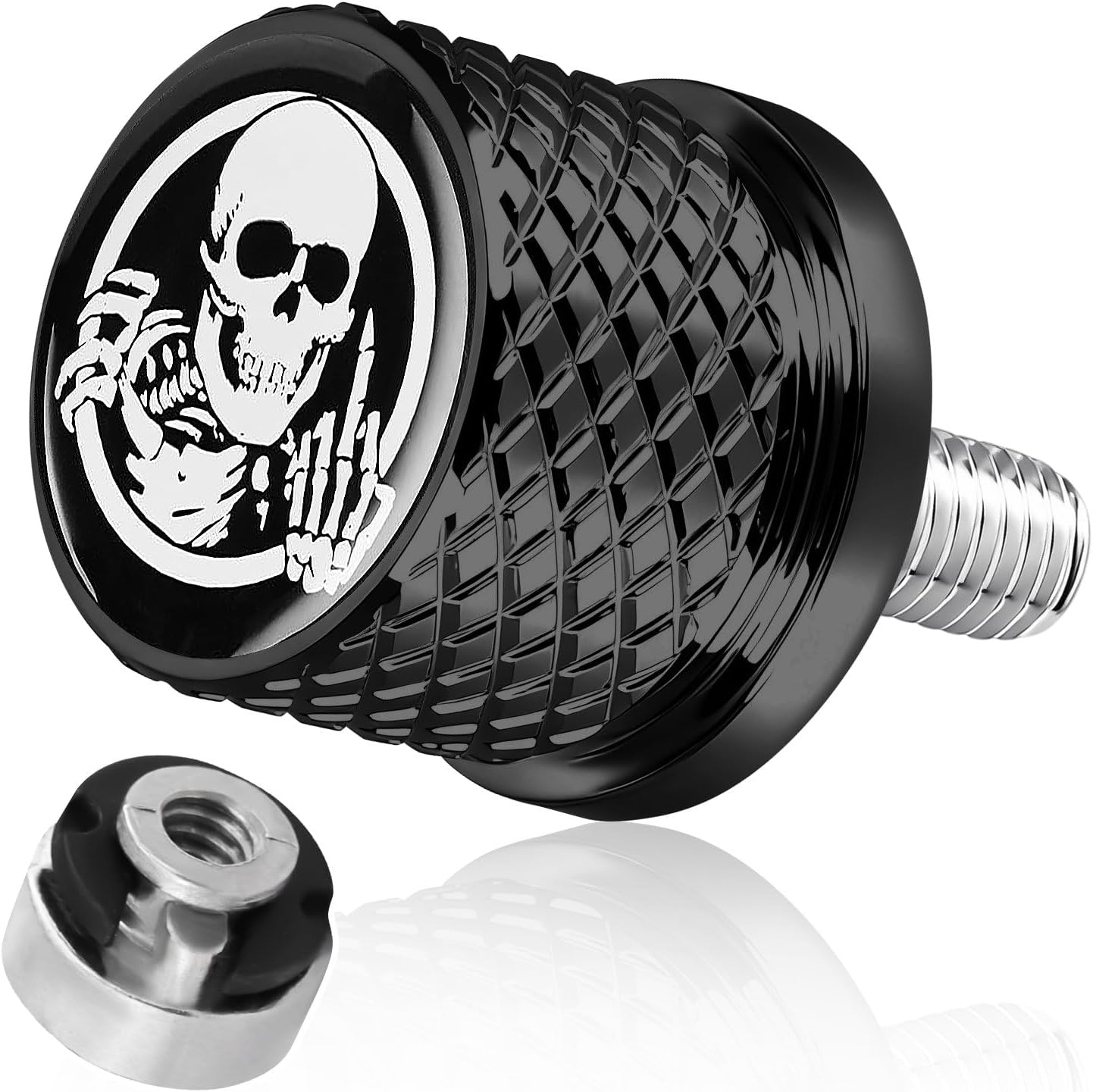
Type: decorative seat bolt with nut, tool-free removal. Stainless steel and billet aluminium. 1/4-20 thread. Around $13.
Fits: Harley 1996-2023 Sportster, Touring, Softail, Dyna, CVO and Electra Glide. Confirm your thread is 1/4-20 before ordering.
Rating: 4.5 / 5 from 266 ratings
The wider-fitment option, covering 1996 to 2023 across most of the Harley range, in stainless and billet aluminium rather than plain aluminium.
The most useful thing in these reviews is not about the bolt at all, it is an installation tip worth having: on a bagger, tape the bottom bolt to a screwdriver and feed it between the fender and the tyre. Anyone who has fought with this fastener will understand why that is in the review.
One thing to set expectations on: the decorative logo is a sticker rather than engraving. An owner puts it well – it is a sticker but it looks good, and it seats into the bolt properly. At thirteen dollars that is fair, but know it before it arrives.
Confirm your thread size first. Most Harleys use 1/4-20 and that is what this is, but it is a two-second look under the seat.
What owners say: “For bagger install, tape the bottom bolt to a screwdriver, stick it between fender and tire.”
Grasshopper Limited Driver Backrest for Harley Touring
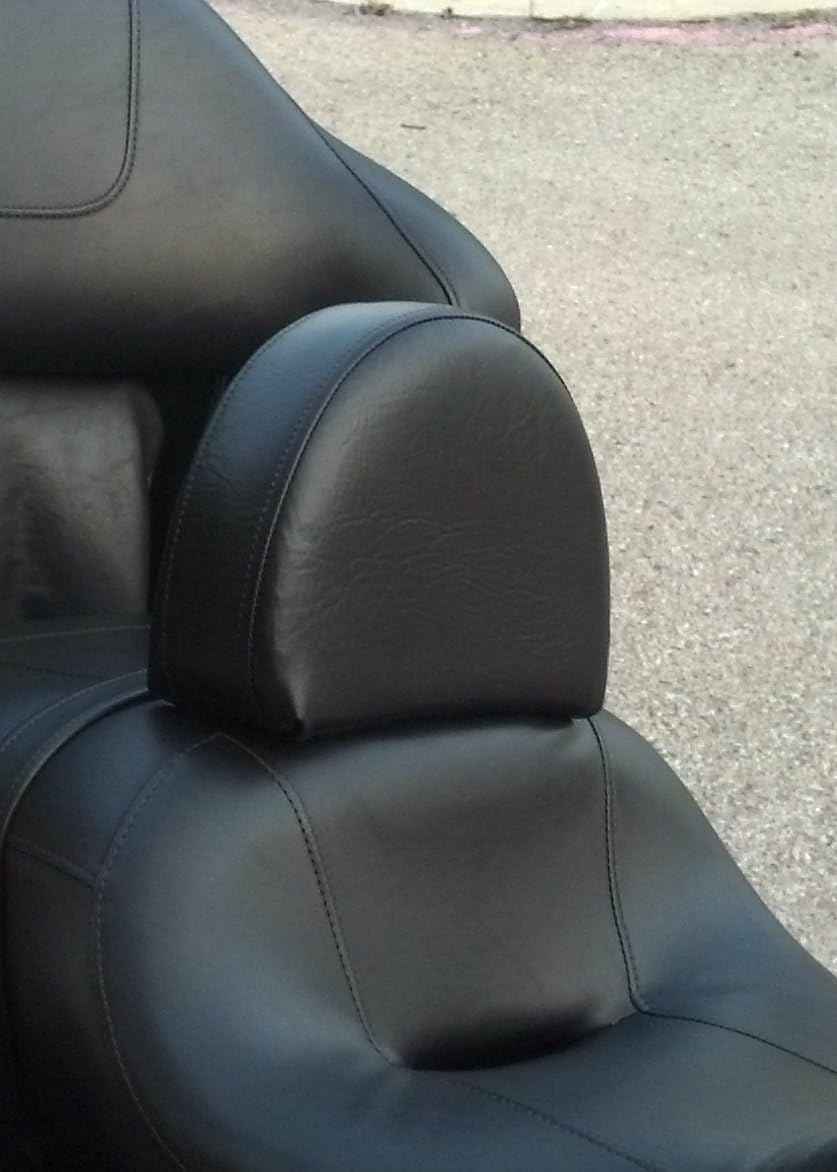
Type: quick-detachable driver backrest with mounting bracket. Adjustable fore and aft. Made in the USA. Around $93.
Fits: Harley Touring bikes WITH A SLOT IN THE SEAT for a backrest. If your seat has no cutout, this cannot mount. Check before ordering.
Rating: 4.5 / 5 from 331 ratings
The cheap way to add a driver backrest if your seat already has the cutout for one – around $93 against the roughly $250 premium Saddlemen charge for the built-in version.
Made in the USA, quick-detachable, adjustable fore and aft so you can set the distance to your back. An owner on a 2025 Street Glide Ultra reports a 100-mile ride with it and could not be more pleased.
Read the fitment line carefully, because it is the whole story: this requires a seat with a backrest slot. On a seat without one there is nothing to mount to, and that is the single reason people return it.
One design note from owners: the backrest slips into the bracket with nothing locking it in place. It stays put in normal use, but it is not secured, and that is worth knowing if you park in public.
What owners say: “Just put this on my ’25 Street Glide Ultra. I did a 100 mile ride with it and I couldn’t be more pleased. – 2025 Street Glide Ultra”
The Harley Seat Bolt: A Small Part With a Big Problem
Worth its own section, because more people search for this than for most of the seats above.
Harley secures the seat with a single bolt at the rear. It is exposed, it works loose with vibration, and it is small enough to vanish if it backs out on the road. It is also the only thing holding your seat on – and under the seat on many models sit the battery and electrical connections, which is why an unsecured seat is a genuine security issue rather than an inconvenience.
Why people replace it
- It gets lost. Backs out, falls off, and you find out when the seat shifts under you.
- It needs a tool. The factory bolt means carrying an Allen key to get under the seat – annoying if you access the battery or the fuse box often.
- It is a theft point. Anyone with a common Allen key can remove a factory seat bolt in seconds.
Quick-release kits
A quick-release bolt replaces the Allen fastener with a knurled knob you turn by hand. Ten dollars, thirty seconds to fit, and the seat comes off without tools whenever you need the battery. The two kits below have over 800 ratings between them at 4.5, which for a ten-dollar part is a strong signal.
One thing to confirm: Harley uses 1/4″-20 thread on most models, and the kits below state that size. Check yours before ordering – it is a two-second look under the seat and it saves a return.
Harley Seat Brands
Saddlemen
The name that comes up most in touring seat discussions, and Google’s own People Also Ask box literally includes the question of why Saddlemen seats are so popular. The answer is the gel-over-foam construction: SaddleGel spreads pressure where plain foam concentrates it. The Road Sofa is the flagship for two-up touring and comes in versions with and without a backrest receiver. Made in the USA. Remember the gel heat issue in strong sun.
Mustang
The other major American seat manufacturer, and the one that publishes the most usable specifications – actual widths in inches and actual reach displacement figures. Dense foam rather than gel, so expect a proper break-in period and no heat problem. The Super Touring Deluxe is their touring flagship; note its incompatibility with frame-mounted backrests.
Le Pera
Family owned, made in the USA, and the choice for custom and solo builds. The Bare Bones is the classic low-profile solo seat that appears on countless Sportster and Softail builds, and the Maverick Daddy Long Legs is one of the few reach seats with published numbers.
Harley-Davidson
Harley’s own range includes some genuinely interesting designs – the Hammock uses a suspended construction, and the Road Zeppelin is air-adjustable, letting you change firmness with a pump. Sold through dealers rather than marketplaces, so they do not appear in the list below, but worth knowing about if you want factory fitment with no compatibility questions.
Budget imports
C.C.Rider, XMT-MOTO and similar brands supply the sub-$200 end with hammock-style and step-up designs. The XMT-MOTO two-up below has 565 ratings at 4.4, which is a real sample. Expect thinner materials and less refined shaping than the American brands, and note that these do not attempt to pass themselves off as Saddlemen – they sell under their own names.
Harley Seats - FAQs
Why are Saddlemen seats so popular?
What is the most comfortable motorcycle seat for long distance riding?
What is the best extended reach seat for a Harley touring?
Will a new seat change my seat height?
Is a gel seat pad worth it instead of a new seat?
How long does it take to break in a motorcycle seat?
Will my backrest fit a new seat?
Why does my Harley seat bolt keep coming loose?
Are the Saddlemen and Mustang seats on Amazon genuine?
Conclusion
Buy in this order and you will get it right.
First, geometry. Work out whether you need to sit further back, further forward, higher or lower before you think about padding. A seat that fixes your reach transforms the bike. A seat that just adds foam usually does not.
Second, width. Where the manufacturer publishes it, take the wider option if distance is your priority. Nineteen inches at the rider does more for hour four than any amount of softness.
Third, check the backrest question before you spend anything, and check the part number against the manufacturer’s own fitment chart rather than trusting a marketplace listing that carries no model list.
Then two things about living with it. Give a new seat 500 to 1,000 miles before you decide – premium seats are firm when new and that is the point. And if you fit a taller seat and the wind noise changes, look at your windshield rather than your helmet, because you have just moved your head two inches up.
And genuinely, before spending five hundred dollars: try a forty-dollar gel pad. If your stock seat is nearly right and only becomes a problem after two hours, that may be the whole fix.
#1 Pick: Best Seat for Harley Touring
Mustang 79006 Super Touring Deluxe One-Piece Seat
The widest rider platform here at 19 inches. Give it 500-1,000 miles to break in, and confirm it clears your backrest before ordering.