Your Harley almost certainly came from the factory on Dunlops. Harley-Davidson and Dunlop have worked together for decades, and the D402, D401 and American Elite are built to Harley’s specification and carry the Harley-Davidson approval marking. So the first thing worth knowing is that “should I use the OEM tire” is not really a question about quality – it is a question about whether you want what the bike was developed with.
The second thing is more useful, and almost nobody writes about it: when you buy tires online, the single most important number is not the price or the tread pattern. It is the date the tire was made. Rubber ages whether you ride or not, and owners buying through marketplaces routinely receive stock that has been sitting for years. One buyer’s review title puts it exactly: shipped new but old tires almost a decade past the manufactured date.
So this page covers the date code first, then how to read Harley’s confusing tire sizes, what load and speed ratings actually mean on a loaded bagger, and what mileage you should realistically expect – with real numbers from owners rather than manufacturer claims. The tires come after that.
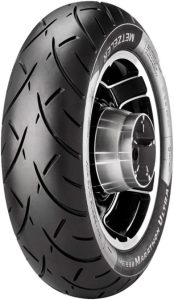
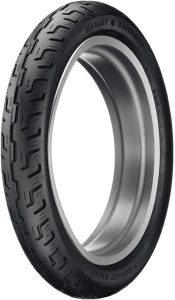
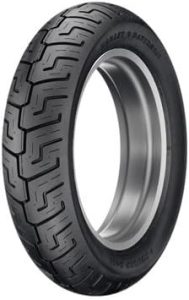
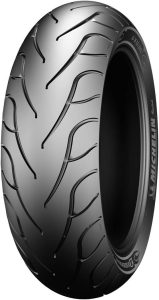
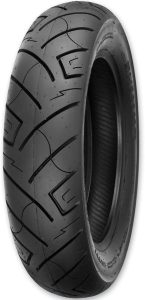
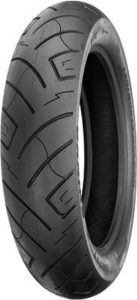
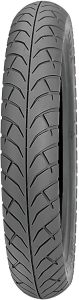
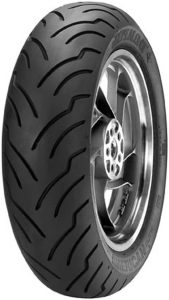
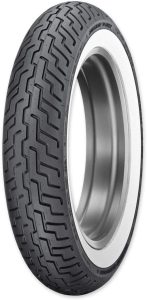
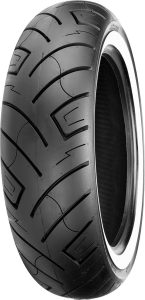
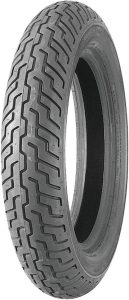
#1 Pick: Best Tire for Harley Touring
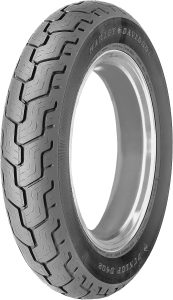
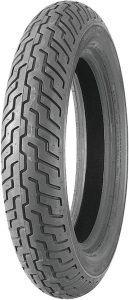
Dunlop D402 Rear Tire, MT90B-16 (74H)
The tire Harley approves for its touring bikes. 74H, 908 lb load capacity, 596 ratings at 4.8. Check the date code the day it arrives.
The top best product [hide]
The DOT Date Code: Read This Before You Buy Anything
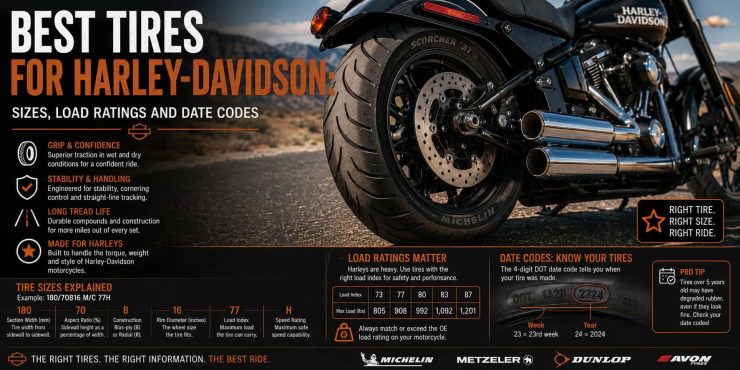
Every tire has a DOT code moulded into the sidewall. The last four digits are what matter: the first two are the week, the last two are the year. A tire stamped 4423 was made in the 44th week of 2023.
Why it matters more than tread depth
Rubber cures and hardens with time regardless of use. A tire that has sat in a warehouse for six years has lost flexibility, grips worse in the wet and is more prone to cracking – even with full tread and no miles on it. This is why tire manufacturers generally recommend replacement around five to six years from the date of manufacture, and why a Harley that does 2,000 miles a year will usually need tires because of age rather than wear.
The marketplace problem
This is where it gets practical. Online sellers move old stock, and Harley tire buyers notice. The reviews on the products below are full of it in both directions – buyers furious at receiving decade-old rubber, and buyers specifically praising a fresh code. Several owners state plainly that tires bought online because of lower prices usually end up being old tires.
Equally telling are the positive ones, because they show what experienced buyers actually check: one American Elite buyer notes a date code of the 44th week of 2022 received in April 2023. A Metzeler ME888 buyer notes a code only three months old. Another writes that the code was less than a year old, so it was really a new tire and not old stock.
What to do about it
- Check the code the moment the tire arrives, before it goes anywhere near a wheel. A mounted tire is not returnable.
- Aim for under a year old. Under two is acceptable. Over three, send it back.
- Buy from sellers who move volume. A tire model that sells hundreds of units a month cannot accumulate old stock the way a slow seller can.
- Ask before ordering if the listing is from a smaller seller. Many will tell you the code.
- Factor it into the price comparison. A cheaper tire that is four years old is not cheaper – you have bought a fraction of its usable life.
None of the competing pages on this subject mention this. It is the single most valuable thing on this page.
How to Read Harley Tire Sizes
Harley uses two different sizing systems, sometimes on the same bike, and this confuses more buyers than any other part of the purchase.
Metric sizes – the modern system
130/90B16 reads as: 130 mm section width, aspect ratio 90 (the sidewall height is 90% of the width), B for bias-belted construction, 16 inch rim.
Alphanumeric sizes – the old system Harley still uses
MT90B16 and MU85B16 come from an older American system. MT90B16 is roughly equivalent to 130/90B16, and MU85B16 is roughly 140/85B16. Roughly, not exactly – and this is why you should fit the size the bike specifies rather than converting and hoping.
The tire size for your model is on the swingarm sticker or in the owner’s manual. Use that, not a conversion chart.
Front and rear are different tires
They are not interchangeable, and the tread pattern is directional. A front tire is built to handle steering loads and braking; a rear handles drive and carries most of the weight. Fitting a rear on the front, or mounting a tire backwards, is a real and dangerous mistake.
Common Harley sizes
- Touring front: MT90B16 or 130/60B19 on newer models
- Touring rear: MU85B16, 180/65B16 on newer baggers
- Sportster front: 100/90-19
- Sportster rear: 150/80B16
- Custom bagger front: MH90-21 for the 21 inch wheel
One warning about marketplace listings
Amazon’s specification tables for tires are frequently wrong. We found a Dunlop D402 MH90-21 listing whose spec table showed 215/55R21 with a load index of 98 and a Y speed rating – car tire data, on a motorcycle tire. Another showed a load capacity of 77 pounds. Take the size and rating from the product title and the manufacturer, never from Amazon’s auto-generated table.
Load and Speed Ratings: The Numbers That Matter on a Bagger
After the size, you will see something like 77H or 81H. The number is the load index, the letter is the speed rating.
Load index
This is the maximum weight the tire can carry, and on a Harley it is not academic. A dressed Touring bike weighs around 900 lb before you add a rider, a passenger and loaded bags. A rear tire rated 77 carries roughly 908 lb; one rated 81 carries roughly 1,019 lb.
Fitting a tire with a lower load index than the bike specifies is genuinely unsafe – it is the tire equivalent of the 350 lb motorcycle jack. Never go below what the manual states. Going higher is fine.
Speed rating
H is 130 mph, V is 149 mph. Almost every Harley tire is H rated, which is far beyond anything you will do on a bagger. The rating matters less for outright speed than as an indicator of construction – it reflects the tire’s ability to handle sustained heat.
Bias-ply and radial
Most Harleys run bias-ply or bias-belted tires – the B in MT90B16 or 130/90B16. Bias construction gives the stiffer sidewall that suits a heavy cruiser and copes with the load. Some later models are designed for radials.
Do not mix constructions. Running a radial front with a bias rear, or vice versa, changes how the bike steers in a way you will not like and the manufacturers advise against it. Fit what the bike specifies, front and rear as a pair.
What Mileage Should You Actually Expect?
Manufacturer claims are optimistic. Here is what owners of the tires on this page actually report, which is more useful and considerably less flattering.
- Dunlop D401 front, 100/90-19 on a Sportster: 24,000 to 28,500 miles. The standout figure here, and it makes sense – a light bike and a front tire that does not transmit drive.
- Dunlop D402 front MH90-21: 13,000 to 15,000 miles per set, with one owner reporting four sets with no cupping.
- Dunlop American Elite front 130/60B-19 on a bagger: 10,000 to 11,000 miles.
- Dunlop American Elite whitewall rear 180/65B16: 10,000 to 12,000 miles.
- Kenda K671 front: around 6,000 miles.
What this tells you
A rear tire on a loaded Touring bike lasting 10,000 to 12,000 miles at $300 or more is the normal cost of running a bagger, not a defect. Amazon’s own review summaries for several of these tires note that durability receives mixed feedback, and the honest reading is that heavy bikes eat rear tires.
The budget end is where the maths gets interesting. A Kenda at $86 doing 6,000 miles costs roughly the same per mile as a Dunlop at $170 doing 12,000 – except you spend twice as much time getting tires fitted, and you accept worse wet grip in between. One Kenda owner is blunt about the trade: they do not do rain well.
Why rears wear faster than you expect
A Harley rear tire carries most of the weight, transmits all the drive, and on a cruiser spends most of its life on the flat centre of the tread going in a straight line. That is why cruiser rears square off rather than wearing evenly, and why the last few thousand miles feel vague when you tip into a corner.
Tire Pressure on a Harley
The most consequential free thing you can do, and the most commonly neglected.
Harley specifies different pressures for solo riding and for riding loaded or two-up, and the difference is significant – typically several psi at the rear. The figures are on the swingarm sticker or in the manual, and they are for the bike, not the tire. The number moulded on the tire sidewall is the maximum the tire can take, not what you should run.
- Check cold, before riding. A warm tire reads several psi high and you will end up underinflated.
- Underinflation is what destroys tires. It builds heat, wears the shoulders, makes the bike feel vague and is the main cause of premature failure on heavy bikes.
- Overinflation wears the centre strip, reduces the contact patch and makes the ride harsh.
- Check weekly. Tires lose about 1 psi a month on their own, and more in cold weather.
- Reset it when the load changes. If you set solo pressures and then load the bags and add a passenger for a trip, you are running underinflated for the whole trip.
Best Tires for Harley-Davidson
Sixteen tires grouped by what the bike is. Every one is currently available and checked, with the size, load and speed rating taken from the product title and the manufacturer rather than Amazon’s spec table.
Remember that front and rear are sold separately and are different tires. And check the date code the day it arrives.
Touring and Bagger Tires
Heavy bikes, high loads, long distances. Load index matters most here, and expect 10,000 to 12,000 miles from a rear.
Dunlop D402 Rear Tire, MT90B-16 (74H)
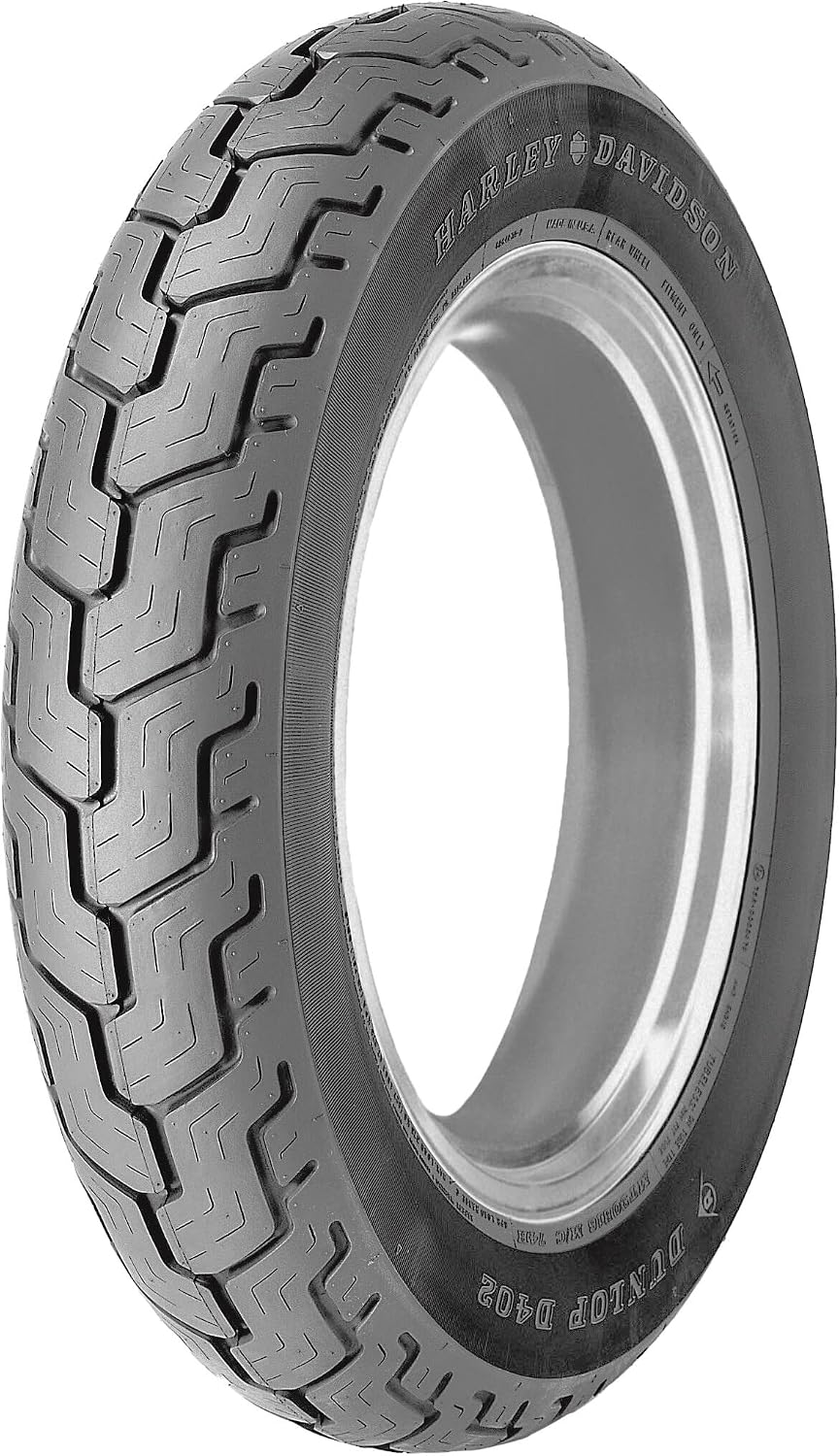
Size: MT90B-16, 74H. Load capacity 908 lb. Belted bias, 3-ply polyester casing with two fibreglass belts. Blackwall. Around $238.
Fits: Harley Touring, Softail and Dyna models specified for MT90B16 rear. Note the MT90B16 front and rear are DIFFERENT tires – ordering the wrong one is the most common mistake on this listing.
Rating: 4.8 / 5 from 596 ratings
The OEM Touring rear, and the listing states it plainly: the only tire approved by Harley-Davidson for its touring bikes. If your bike came on a D402 and you were happy, this is the no-thought replacement.
At 74H it carries 908 lb, which is what a dressed Touring bike needs at the rear. 596 ratings at 4.8 makes it one of the best-evidenced tires here.
Two things to watch. Front and rear in this size look similar in listings and buyers mix them up – check the word rear before you order. And several owners note that country of manufacture matters: US-made D402s are reported to last noticeably longer than overseas-produced ones.
What owners say: “OEM quality tire. Giving great service on my 86 Harley Heritage classic. – 1986 Heritage Classic”
Dunlop D402 Front Tire, MT90B-16
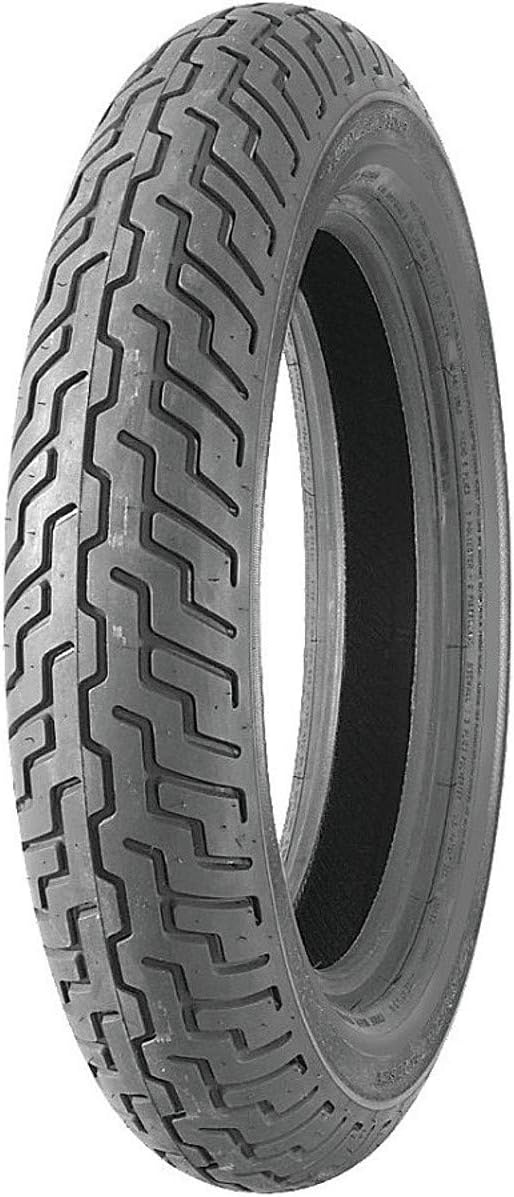
Size: MT90B-16, 72H. Load capacity 783 lb. Belted bias, 3-ply polyester casing with two fibreglass belts. Blackwall. Around $200.
Fits: Harley Touring and Softail models specified for MT90B16 front – Electra Glide FLHT/FLHTC/FLHTCU and related. This is the FRONT; the rear in the same size is a different tire.
Rating: 4.8 / 5 from 850 ratings
The matching front, and with 850 ratings it is the most-reviewed tire on this page. Same approved-for-Harley status as the rear, same construction, and the sensible partner if you are replacing both.
The most useful owner comment here is about origin rather than performance: one rider states it is a good tire if it is made in the USA and not overseas, and that you get more miles from the US-made version. Worth checking what you receive.
What owners say: “It is a good tire, if it is made in the USA and not overseas. You will get more riding miles.”
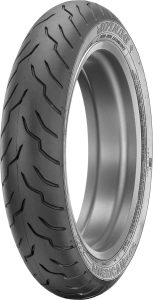
Dunlop American Elite Front, 130/60B-19 (61H)
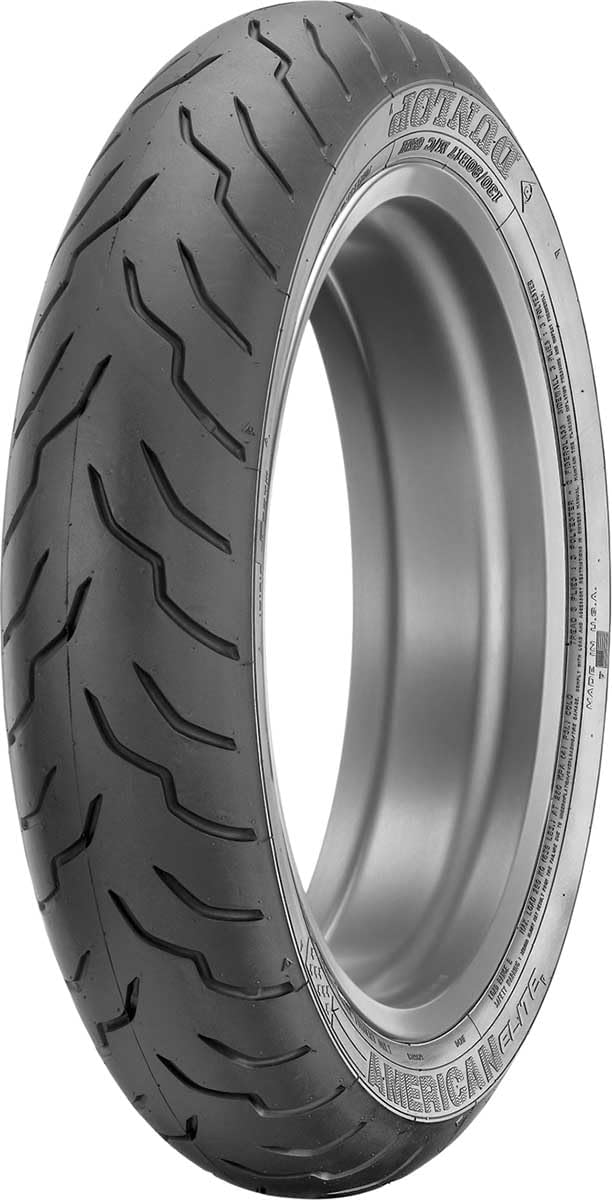
Size: 130/60B-19, 61H. Load capacity 567 lb. Belted bias, 4-ply. Blackwall. Around $205.
Fits: Harley Touring baggers with the 19-inch front – Road Glide, CVO Road Glide Custom FLTRXSE 2012-2013 and related models.
Rating: 4.8 / 5 from 598 ratings
The newer Dunlop line for baggers running the 19-inch front, and described in the listing as the only replacement tire for Harleys designed, tested and made in America.
The mileage picture is honest rather than flattering, and owners state it directly: around 10,000 to 11,000 miles is the end of its life on a bagger front. That is what a heavy bike does to a tire, and it is the figure to budget around rather than hope to beat.
This listing is also where the date code issue is most visible in the reviews – buyers explicitly check it and report codes on arrival. Do the same.
What owners say: “These are great tires. 10,000 miles is about the end of their life, maybe 11,000, but for a bagger Harley that is normal.”
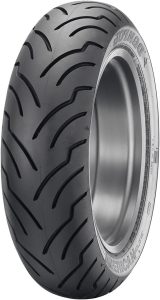
Dunlop American Elite Rear, 180/65B-16 (81H)
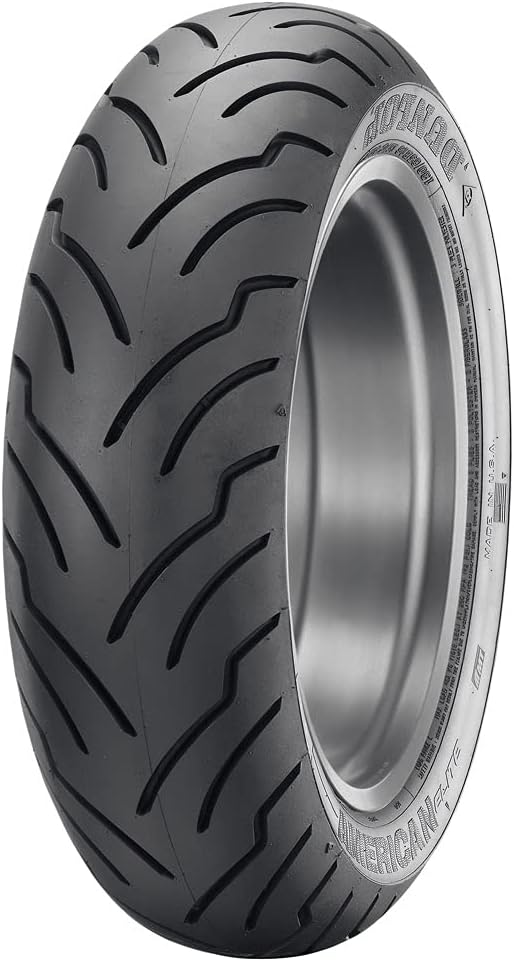
Size: 180/65B-16, 81H. Load capacity 1,019 lb. Belted bias, 8-ply with cut-breaker casing. Blackwall. Around $360.
Fits: Harley Touring 2009-2018 with the 180/65B16 rear – Electra Glide Ultra Classic FLHTCU with ABS and related baggers.
Rating: 4.9 / 5 from 62 ratings
The highest-rated tire on this page at 4.9, and the strongest load rating – 81H carries 1,019 lb, which is the margin a fully loaded two-up bagger actually needs.
The 8-ply cut-breaker casing is what justifies the price and the weight rating. One owner on a garaged bike reports around 10,000 to 15,000 miles from the same tire previously.
It is also the most expensive tire here at roughly $360, and reviewers say so even while giving it five stars. If you carry a passenger and load the bags, the load index makes the case. If you ride solo and light, a 77H rear costs considerably less.
What owners say: “I bought the same type of tire several years ago. Has lasted well around 10-15 thousand miles. Bike is garaged.”
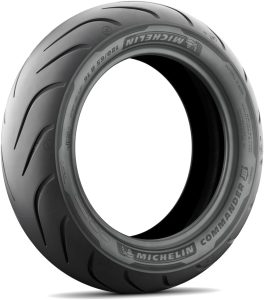
Michelin Commander III Cruiser Rear, 130/90B-16 (73H)
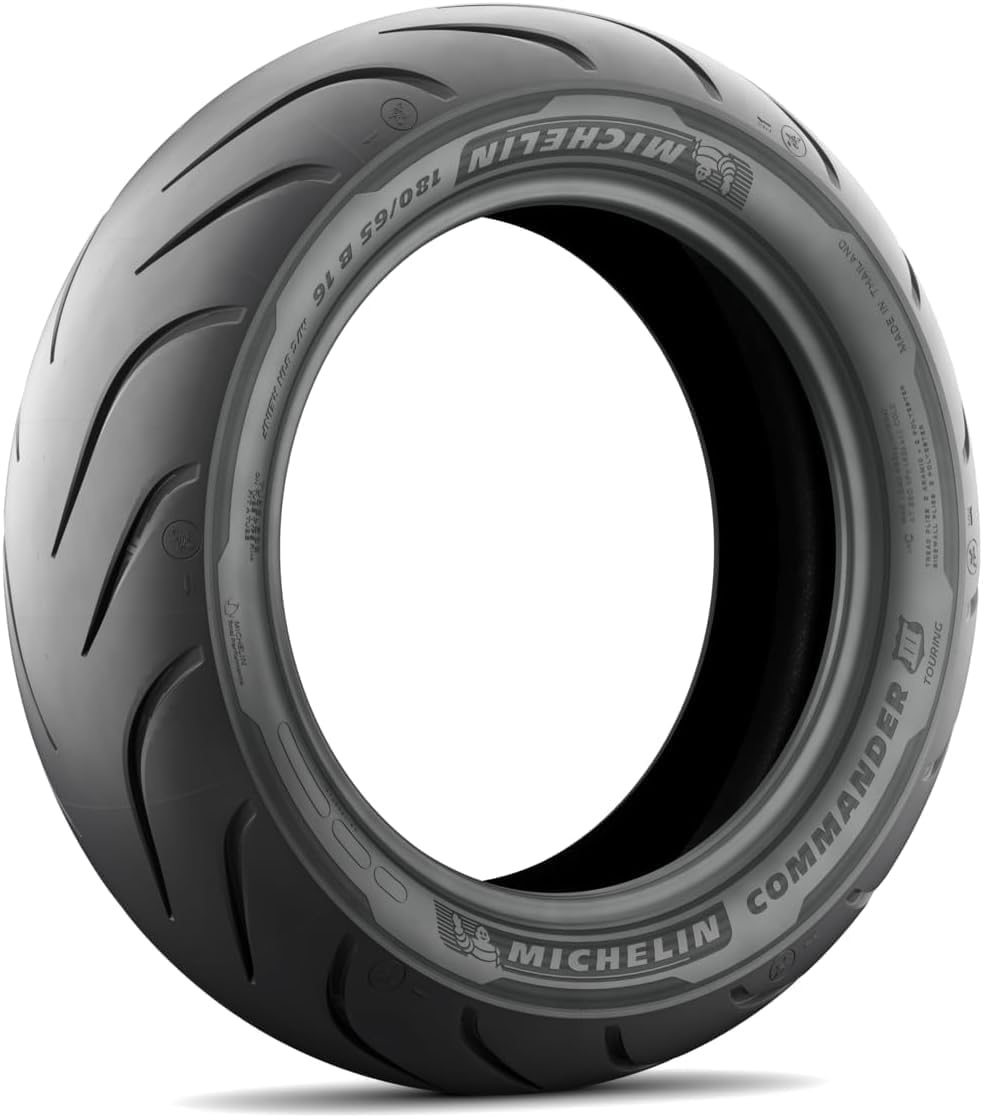
Size: 130/90B-16, 73H. Load capacity 805 lb. Belted bias. Blackwall. Around $243.
Fits: V-twin cruisers and touring bikes with a 130/90-16 rear – Harley Softail Heritage, Fat Boy, Deluxe and similar.
Rating: 4.8 / 5 from 68 ratings
The main challenger to the OEM Dunlop, and the comparison Google itself surfaces for this topic is D402 against Commander III. Michelin’s pitch is longer life and better wet grip, and owners back the wet part – one on an Ultra Classic reports great grip rain or shine.
Two honest caveats. Several owners describe a hum or high-frequency vibration through the grips that appears at certain speeds – not universal, but frequent enough that you should read the reviews for your exact size first. And it has a reputation for being awkward to seat on tubeless rims; the same owner describes resorting to the old starting fluid trick.
What owners say: “Put this on my 03 Ultra Classic. Great grip rain or shine. Pain to mount tubeless, had to use the old starting fluid trick. – 2003 Ultra Classic”
Metzeler ME888 Marathon Ultra Rear, 180/65-16 (81H)
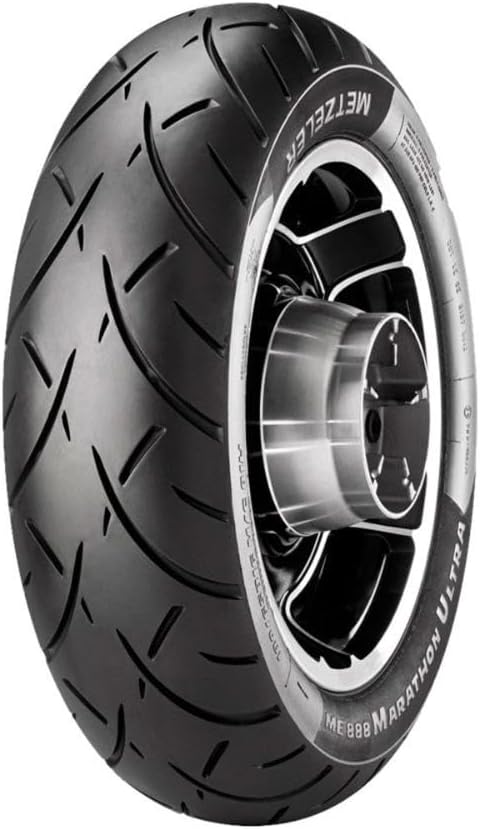
Size: 180/65-16, 81H. Load capacity 1,019 lb. Belted bias with asymmetrical tread. Blackwall. Around $304.
Fits: Harley Touring baggers with the 180/65-16 rear – Street Glide, Electra Glide Ultra Limited FLHTK and related.
Rating: 4.8 / 5 from 153 ratings
The mileage specialist. Metzeler positions the ME888 as its highest-mileage V-twin tire, and riders who are tired of replacing rears every 10,000 miles tend to end up here. Owners on Street Glides report exactly that combination – plenty of miles plus comfortable behaviour in corners.
81H gives the same 1,019 lb capacity as the American Elite rear, at roughly $55 less, with 153 ratings behind it rather than 62.
One thing to know before ordering: current production is from Brazil rather than Germany, and one owner reported that the shop fitting them raised concerns about that. The reviews overall do not support a quality problem, but you should know the badge and the factory are not the same thing here.
What owners say: “These tires are awesome on my Street Glide. You get lots of miles and they feel comfortable in corners. – Street Glide”
Sportster Tires
Lighter bike, and the mileage figures show it – the D401 front regularly passes 24,000 miles.
Dunlop D401 Front Tire, 100/90-19 (57H)
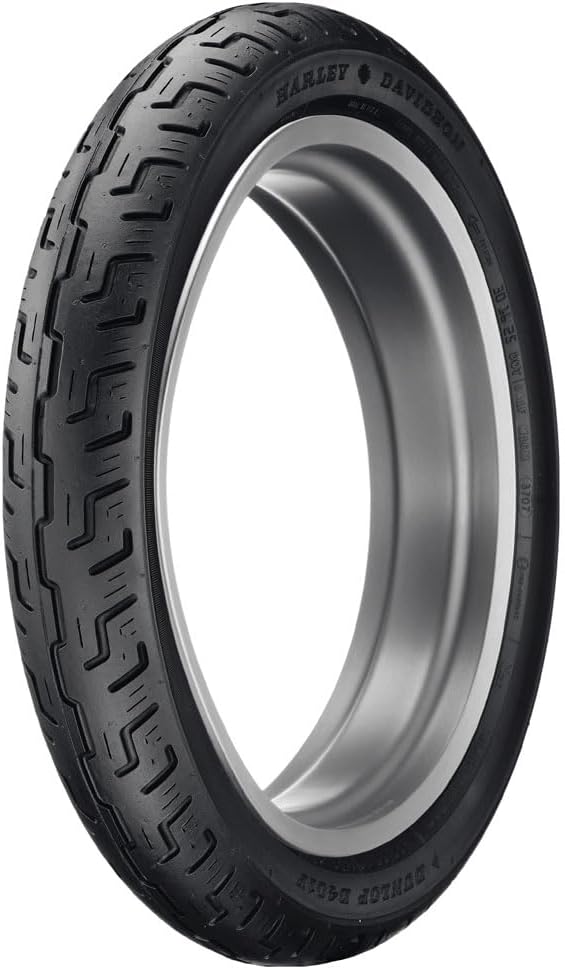
Size: 100/90-19, 57H. Load capacity 507 lb. Bias-belted, 2-ply, profile optimised to reduce cupping. Blackwall. Around $170.
Fits: Harley Sportster XL883 and XL1200, Dyna Super Glide FXD/FXDX/FXDXT 1999-2003, Softail Standard and related models with the 19-inch front.
Rating: 4.7 / 5 from 122 ratings
The best mileage figure documented anywhere in this article. One owner states he routinely expects at least 24,000 miles from this tire on a Super Glide, and other reports run to around 28,500. On a page where bagger rears manage 10,000, that is a different world – and it is what a light bike and a front tire will do.
It is the approved Harley cruiser tire and carries the Harley-Davidson name on the sidewall; one owner confirms it is exactly what came on his 2003 Dyna Super Glide Sport.
Balance that against Amazon’s own review summary, which notes durability receives mixed feedback. The averages here are strong but not universal.
What owners say: “This is by far the best front tire for my 98 Super Glide. I always expect at least 24,000 out of this tire. – 1998 Super Glide”
Dunlop D401 Rear Tire, 150/80B-16 (77H)
Size: 150/80B-16, 77H. Load capacity 908 lb. Bias-belted, 6-ply. Blackwall. Around $241.
Fits: Harley Softail Heritage Classic FLST/C/I 2004-2017 and Sportster 883/1200 models with the 150/80-16 rear.
Rating: 5.0 / 5 from 20 ratings
The matching D401 rear, and the approved Harley cruiser tire in this size. 77H gives 908 lb, 6-ply construction, and a perfect 5.0 rating – though from only 20 ratings, which is not a large enough sample to lean on.
The most useful owner note is about fitting rather than riding: the technician who mounted it said it was easy to balance. That sounds minor until you have lived with a tire that never quite balances out.
Priced close to the Touring D402 at around $241 despite being the cruiser tire, which is worth noting if you are comparing on price alone.
What owners say: “The man that mounted the tire said it was easy to balance. Now I feel safer riding.”
Michelin Commander II Cruiser Front, 100/90-19 (57H)
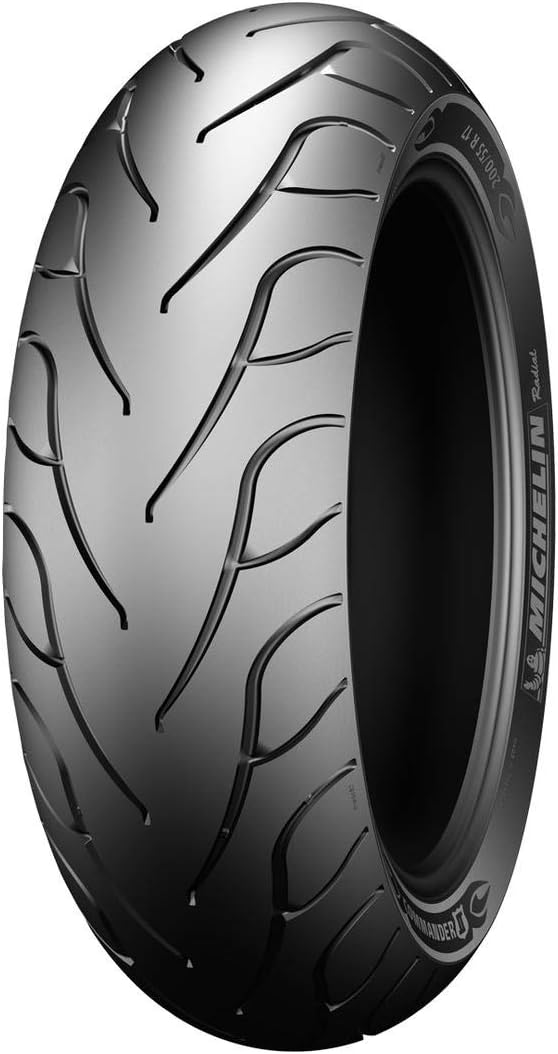
Size: 100/90-19, 57H. Load capacity 507 lb. Bias with rayon carcass ply. Blackwall. Around $152.
Fits: Harley Sportster XL883/XL1200 and Dyna models with the 19-inch 100/90 front. Owner confirms fitment on a 2001 FXDL Dyna Low Rider.
Rating: 4.7 / 5 from 268 ratings
The upgrade path away from the OEM Dunlop on a Sportster or Dyna front, and it is cheaper than the D401 at around $152 with more than twice the review base. Buyers here are explicitly replacing stock Dunlops, and the strongest review on the listing is from a Dyna Low Rider owner who disliked how the stock tires handled and describes the change in stark terms.
This is also the listing that produced the clearest warning in the whole article. One review is titled: shipped new but old tires almost a decade past the manufactured date, and goes on to say that tires ordered online because of lower prices usually end up being old tires.
That is not a reason to avoid this tire. It is a reason to check the code the day it arrives.
What owners say: “2001 Harley Davidson FXDL Dyna Low Rider. I HATE-HATE-HATED how the stock Dunlops handled. – 2001 FXDL Dyna Low Rider”
Budget Tires
Real savings up front, with a real trade in wet grip and mileage. Honest about both below.
Shinko SR777 HD Rear, 150/80B16 (77H)
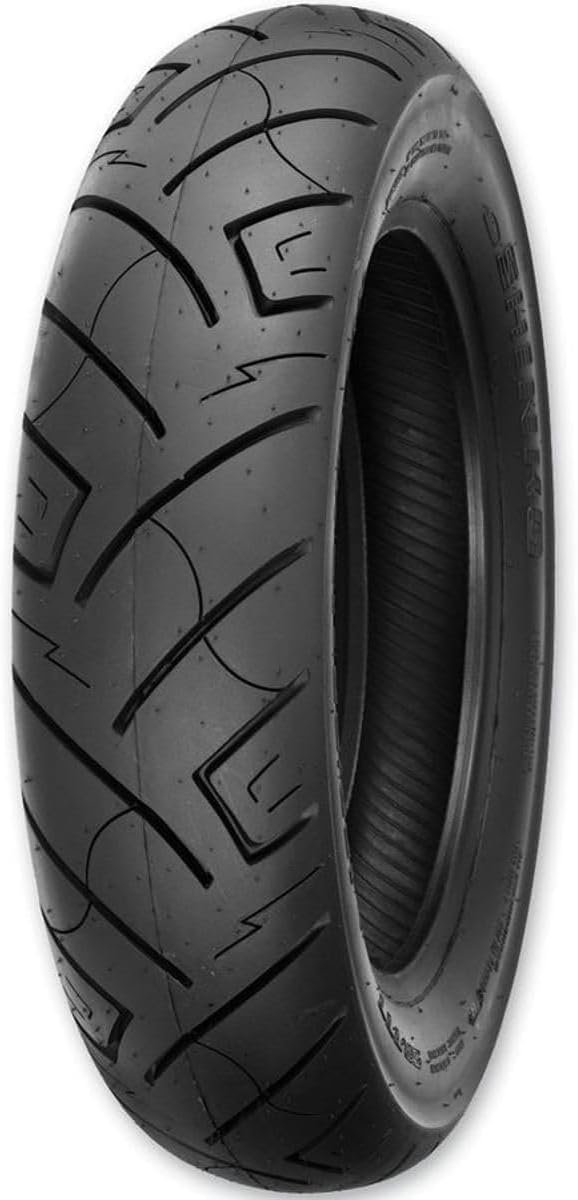
Size: 150/80B16, 77H. Load capacity 908 lb. Belted bias, 4-ply-rated carcass with aramid belting, reinforced HD construction. Blackwall. Around $160.
Fits: V-twin and metric cruisers with the 150/80-16 rear – Harley Sportster 883/1200, Softail Heritage Classic and similar.
Rating: 4.7 / 5 from 873 ratings
873 ratings is the largest review base of any rear tire here, and at around $160 it undercuts the OEM Dunlop D401 rear by roughly $80 while carrying the same 77H load rating and aramid belting.
Owners are positive about the ride quality specifically – one describes never feeling freeway expansion joints and good grip in curves.
The honest counterweight is Amazon’s own review summary, which states that while some say they hold up well, others report they do not last long. Expect fewer miles than the Dunlop. Whether that is a good trade depends entirely on your annual mileage – at half the price and two thirds of the life, the maths works for a rider doing a few thousand miles a year.
What owners say: “I never even feel the freeway expansion joints. Very nice grip on curves, great tires.”
Shinko 777 HD Front, 100/90-19 (61H)
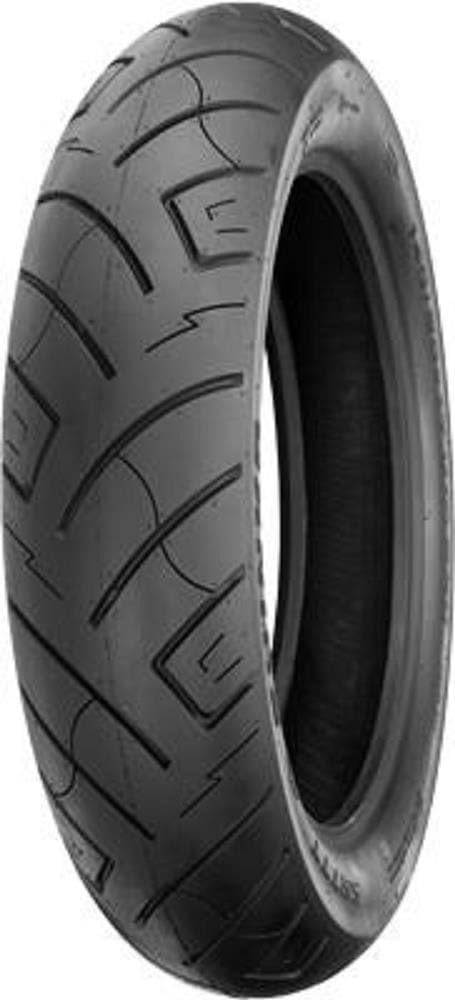
Size: 100/90-19, 61H. Belted bias, aramid-belted heavy-duty reinforced carcass. Blackwall. Around $98.
Fits: V-twin and metric cruisers with the 19-inch 100/90 front – Harley Sportster XL883/XL1200, Dyna Super Glide and similar.
Rating: 4.7 / 5 from 754 ratings
The budget front, at under $100 against $170 for the OEM D401, with 754 ratings behind it.
The most interesting owner report is not about a Harley at all: a rider with a Yamaha Bolt suffering the notorious handlebar shake says this tire fixed 98% of it. That is a useful data point about the tire’s construction and balance, and it explains why it has this many positive reviews at this price.
Same caveat as the rear: Amazon’s summary notes some report exceptional longevity and others say they wear down fast. At $98 there is room for that variance to still make sense.
What owners say: “I have a Yamaha Bolt that has the notorious handlebar shake. This has fixed 98% of it. The bike rides great.”
Kenda K671 Cruiser ST Front, 100/90-19
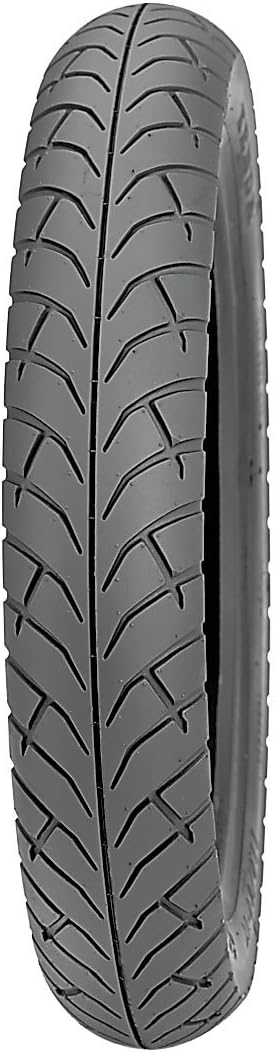
Size: 100/90-19. Bias-ply with directional tread. Blackwall. Around $86.
Fits: Harley Sportster XL883/XL1200 and light cruisers with the 19-inch 100/90 front. Check the load and speed rating against your bike before fitting.
Rating: 4.7 / 5 from 38 ratings
The cheapest tire on this page at around $86, and we are including it with a clear warning rather than a recommendation.
Owner-reported life is around 6,000 miles, and one buyer states directly that it did not last as long as the reviews claimed. Do the arithmetic: at $86 for 6,000 miles you are paying roughly the same per mile as the Shinko at $98 for more, or the Dunlop at $170 for 24,000 – except you also fit tires more often.
The bigger issue is wet weather. One owner’s summary is blunt and worth quoting exactly as written: they do not do rain well, but otherwise amazing. On a 600 lb motorcycle, wet grip is not a feature you trade away for $70.
Reasonable for a bike ridden occasionally in good weather. Not for a commuter or a tourer.
What owners say: “Great value and decent mileage, just check speed and weight ratings. They don’t do rain well but otherwise amazing.”
Whitewall Tires
A style choice with a real premium attached – expect to pay noticeably more than the blackwall equivalent of the same tire.
Dunlop American Elite Wide Whitewall Rear, 180/65B16 (81H)
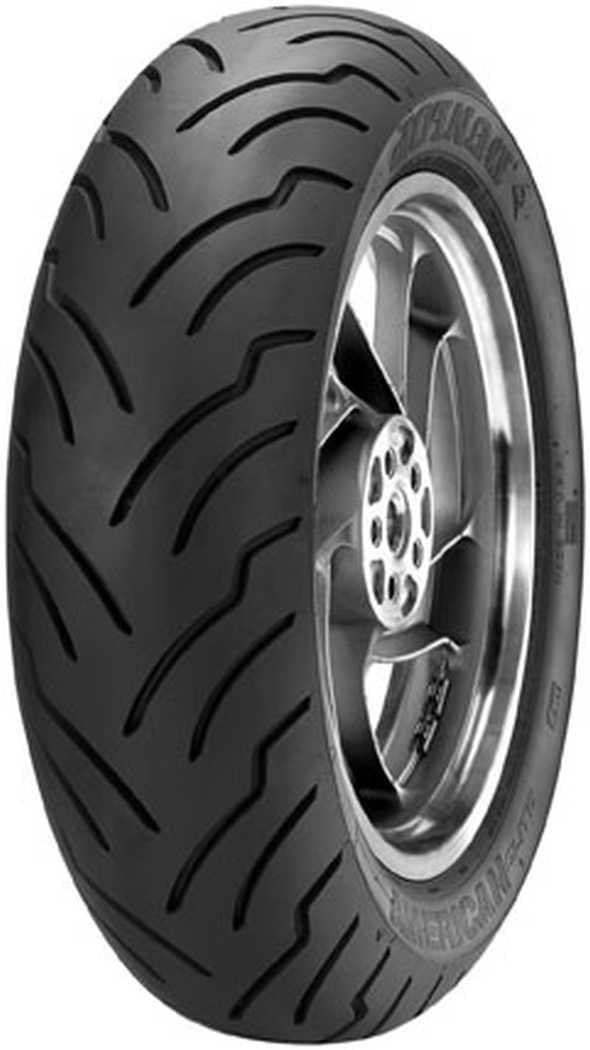
Size: 180/65B16, 81H. Load capacity 1,019 lb. Belted bias, 4-ply, Multi-Tread dual compound. Wide whitewall. Around $275.
Fits: Harley Touring 2009 and later with the 180/65B16 rear – Road King Classic FLHRC, Heritage-style baggers, Electra Glide.
Rating: 4.9 / 5 from 78 ratings
The best whitewall here and, at 4.9 from 78 ratings, one of the highest-rated tires on the page. Full 81H load rating at 1,019 lb, so no compromise for the style choice.
The Multi-Tread dual compound is the reason to pick it: a harder compound in the centre for wear, softer on the shoulders for grip. One owner explains the result precisely – the rear wears evenly because of the dual compound, and he gets ten to twelve thousand miles.
Worth being clear on cost. At $275 for the rear alone, a matching front takes a set past $450. That is the whitewall premium, and it is real.
What owners say: “The rear tire wears evenly. Dunlop dual compound is responsible for the even wear. I get ten to twelve thousand miles.”
Dunlop D402 Wide Whitewall Rear, MU85B-16 (77H)
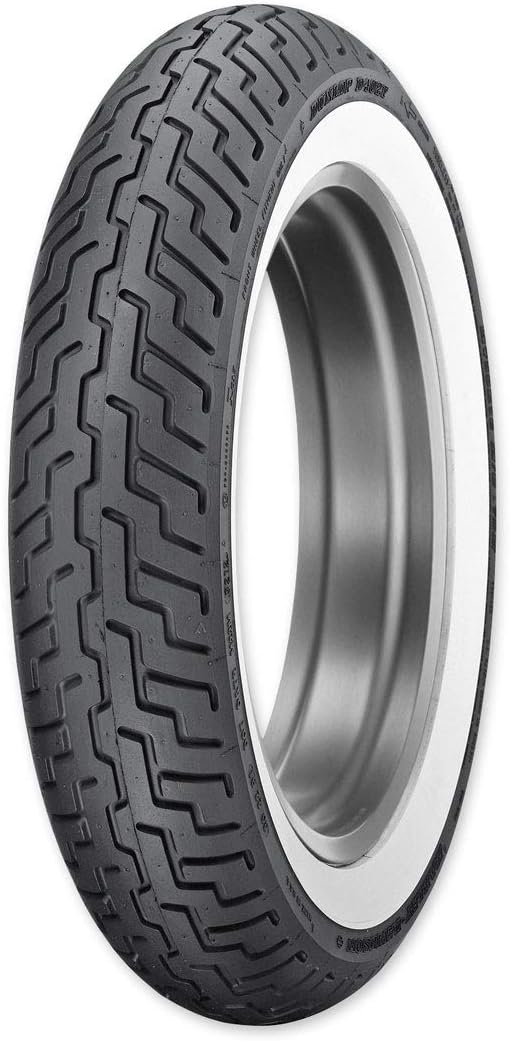
Size: MU85B-16, 77H. Load capacity 908 lb. Belted bias, 4-ply, non-directional tread. Wide whitewall, ships with a blue protective film. Made in the USA. Around $308.
Fits: Harley Softail Deluxe FLSTN 2005-2017 and Heritage Softail models. WARNING – whitewall width varies by part number and buyers regularly order the wrong width.
Rating: 4.8 / 5 from 154 ratings
The factory whitewall, described as the only tire fully approved by Harley-Davidson for its touring bikes, and one owner notes it is the same tire that comes stock on the special edition Harleys. Made in the USA.
A practical detail that confuses first-time buyers: it arrives with a blue protective film over the white wall. That is meant to be there and washes off with dish soap – do not assume you received a damaged tire.
The real risk on this listing is width. Whitewall width varies between part numbers in this size, and owners report receiving a wider white band than they wanted with limited options to exchange. Confirm the exact part number against your bike before ordering.
What owners say: “The tire is the correct OEM replacement for the stock tire on my 2010 Softail Deluxe. It had the blue protective film. – 2010 Softail Deluxe”
Shinko SR777 HD White Wall Rear, 150/80B16 (77H)
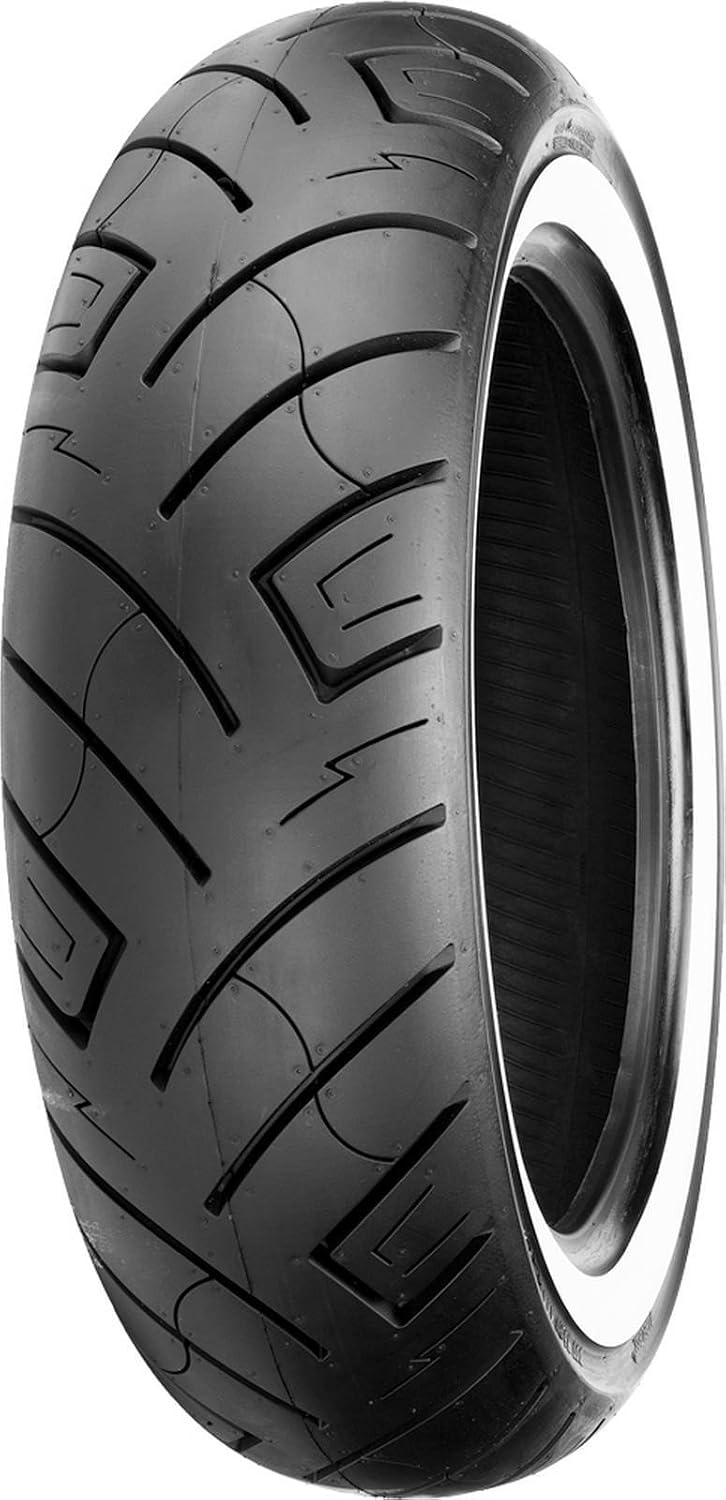
Size: 150/80B16, 77H. Load capacity 908 lb. Belted bias, 4-ply-rated with aramid belting, asymmetrical tread. White wall. Around $176.
Fits: V-twin cruisers with the 150/80-16 rear – Harley Softail Heritage Classic, Deluxe, Fat Boy and similar.
Rating: 4.7 / 5 from 812 ratings
The budget whitewall, and roughly $130 under the Dunlop D402 whitewall of comparable size with 812 ratings behind it – five times the Dunlop’s review base.
An owner sums up the value proposition better than any spec sheet: comparable in quality, handling and wear to the big-name brands at a much friendlier price. Amazon’s summary agrees that they hold up well with mileage, which is a more positive read than the blackwall version of the same tire gets.
One data caution: Amazon lists the load capacity for this tire as 77 pounds. That is a data error – 77 is the load index, and it corresponds to 908 lb. This is exactly why you take ratings from the title and the manufacturer, not the spec table.
What owners say: “They are comparable in quality, handling, and wear to the big name brands, at a much friendlier price.”
21-Inch Front Tires
For custom baggers running the big front wheel.
Dunlop D402 Front Tire, MH90-21
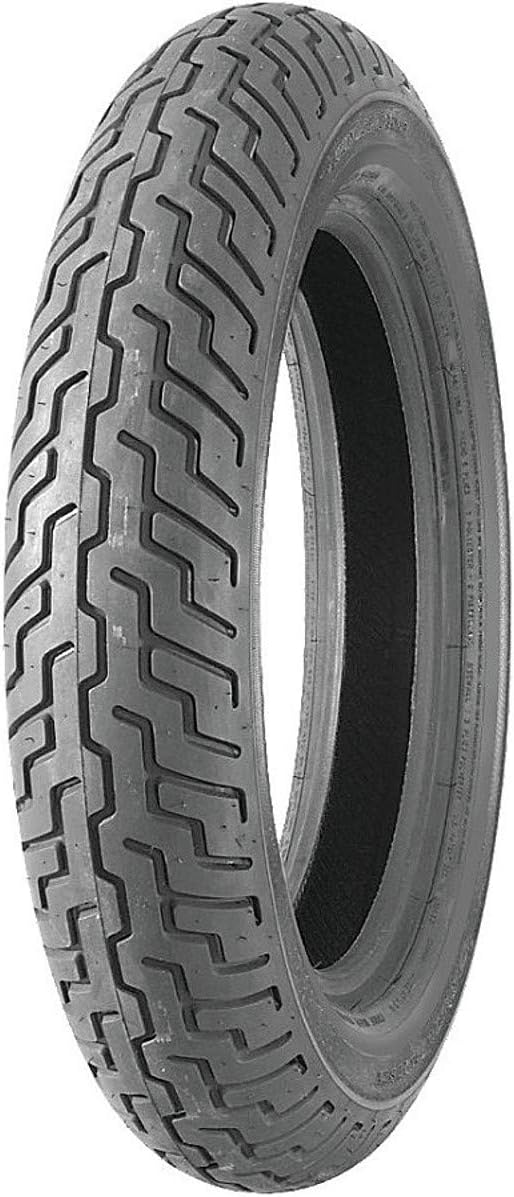
Size: MH90-21, 54H. Bias, three-ply polyester casing with two fibreglass belts. Made in the USA. Dunlop P/N 45006823, Harley OEM equivalent 43104-93A. Around $168.
Fits: Harley models with the 21-inch front – Softail Springer FXSTS, CVO Softail Deuce FXSTDSE, Dyna Wide Glide FXDWG and custom baggers running a 21.
Rating: 4.8 / 5 from 126 ratings
The approved Harley tire for the 21-inch front, and it carries the best long-term mileage report in this whole article: an owner on his fourth set averages 13,000 to 15,000 miles per set with no cupping across all four.
That is unusually good evidence. Most reviews are from one set; this is a rider who has repeated the same purchase four times and can speak to consistency.
Two warnings. Amazon’s specification table for this listing is badly wrong – it shows 215/55R21 with a load index of 98 and a Y speed rating, which is car tire data. The actual tire is MH90-21, 54H. And one four-star review consists entirely of the words: so so, watch the date of manufacturing.
What owners say: “This is the OEM tire that came on my 2005 Wide Glide. I average about 13,000 – 15,000 miles on the set. – 2005 Wide Glide”
When to Replace a Harley Tire
Tread depth
Wear bars sit in the tread grooves and become flush with the surface at the legal minimum. If you can see a continuous band of smooth rubber across the wear bars, the tire is finished. Do not wait for the bars on a rear that has already squared off – handling deteriorates well before the legal limit.
Age
Five to six years from the date code, regardless of tread remaining. This is the one that catches out low-mileage bikes, and it is why the date code section is at the top of this page.
Damage that ends a tire immediately
- A sidewall puncture or cut – sidewalls cannot be repaired, ever
- A puncture in the tread larger than about a quarter inch
- Any bulge or blister, which means the internal structure has separated
- Cracking in the sidewall or between the tread blocks – dry rot
- Riding it flat for any distance, even briefly
Plugs and patches
Most motorcycle tire manufacturers do not endorse repairs at all, and a plug on a motorcycle carries far more risk than on a car – you have two contact patches, not four, and a rear blowout at speed on a heavy bike is not survivable in the way a car’s is. A plug is a way to get home, not a repair.
Replace in pairs, or at least in sets
Front and rear wear at very different rates, so you will not always change both. But do not run a new rear against a front that is nearly finished – the handling mismatch is real, and you will be doing the job again in a few thousand miles anyway.
Harley Tire Brands
Dunlop
The factory choice, and the reason nine of the sixteen tires here are Dunlops. Harley-Davidson and Dunlop developed these tires together and they carry the Harley approval marking. The D402 is the long-running Touring tire, the D401 covers Sportsters, and the American Elite is the newer Touring tire with a broader size range. Dunlop’s US-made tires have a strong reputation; be aware some sizes are produced elsewhere.
Michelin
The main challenger, and the comparison Google itself surfaces for this search is Dunlop D402 against Michelin Commander 3. Michelin’s pitch is longer life and better wet performance, and the Commander III is the tire most often cross-shopped against the OEM Dunlop. The Scorcher range was developed specifically with Harley for Softail and Sportster models. Note the recurring owner report of a hum or vibration through the grips on the Commander III – not universal, but it comes up.
Metzeler
The ME888 Marathon Ultra is the mileage specialist – riders who want the most distance from a rear tire tend to end up here. One thing to know: current production is from Brazil rather than Germany, and at least one owner reported their fitter raising concerns about that. Judge on the reviews rather than the badge.
Shinko
The budget option with a genuine following. The 777 series covers most Harley sizes at roughly half the Dunlop price and has huge review counts – over 800 ratings on some sizes, which is more feedback than most premium tires here. Made in China. Expect shorter life and less wet grip; for a rider doing modest annual mileage the economics work.
Kenda
The cheapest option here at around $86. Around 6,000 miles and, in one owner’s words, they do not do rain well. Reasonable for a bike that gets ridden occasionally in good weather, not for a commuter or a tourer.
Avon
The Cobra Chrome is the other name that comes up in Harley tire discussions, aimed at riders who want a premium alternative to the OEM Dunlop.
Harley Tires - FAQs
What tires does Harley-Davidson use from the factory?
How do I read the date code on a motorcycle tire?
How long do Harley tires last?
What does MT90B16 mean?
Can I mix tire brands front and rear on a Harley?
Are Michelin Commander tires better than Dunlop D402?
Why do I keep getting old tires when I order online?
Can a motorcycle tire be repaired after a puncture?
What tire pressure should I run?
Conclusion
Three things decide whether you got this right.
The date code. Check it the day the tire arrives, before it is mounted. Under a year is what you want, over three goes back. This single habit protects you from the most common and least discussed problem with buying tires online, and no amount of brand choice compensates for four-year-old rubber.
The size and the load index. Take both from the swingarm sticker or the manual, and take the tire’s specification from the title and the manufacturer rather than from a marketplace spec table that may be showing car tire data. Never fit a lower load index than the bike calls for.
Honest expectations on mileage. A rear on a loaded bagger doing 10,000 to 12,000 miles is normal, not a fault. If that is the maths you dislike, the answer is a mileage-focused tire like the Metzeler, not a cheaper tire – because at the budget end you are buying fewer miles and worse wet grip at the same cost per mile.
Beyond that: if your bike came on Dunlops and you were happy, buy Dunlops – it is the tire the chassis was developed around. If you want longer life, look at the Metzeler. If you want better wet weather performance and do not mind cross-shopping the OEM, the Michelin is the tire Google’s own summary compares the Dunlop against. And keep the pressures right, because that does more for both grip and tire life than the choice between any two tires on this page.
#1 Pick: Best Tire for Harley Touring
Dunlop D402 Rear Tire, MT90B-16 (74H)
Factory-approved, 908 lb load rating, the largest review base here. Order the rear, not the front – they are different tires in the same size.